

1 Rupee – Mughal Empire
India
Context
Years: 1720–1746
Country: India 
Issuer: Mughal Empire
Ruler: Muhammad Shah
Currency:
(1540—1842)
Demonetized: Yes
Material
References
KM: #Click to copy to clipboard436.38
Numista: #469126
Value
Bullion value: $32.55
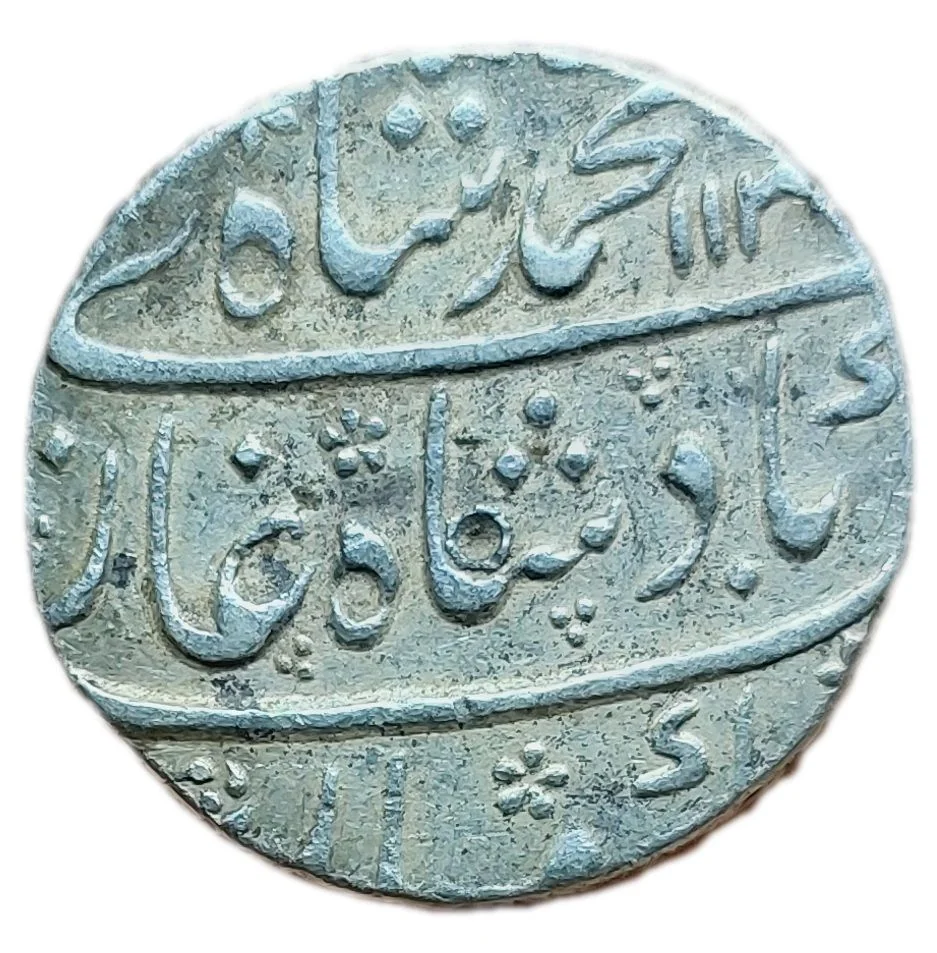
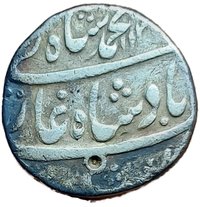
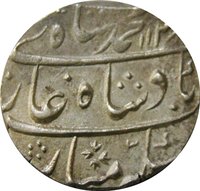
Obverse
Description:
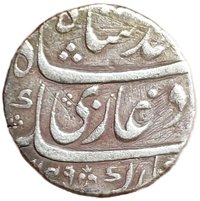
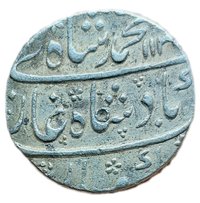
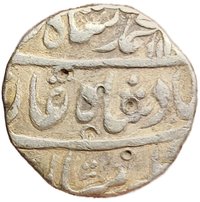
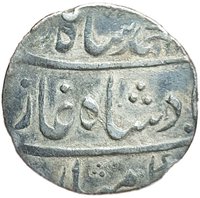
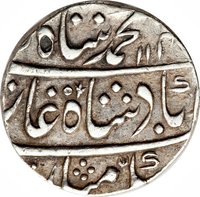
Muhammad Shah, 13th Mughal Emperor, "Sikka Mubarak"
Inscription:
113X محمدشاه
بادشاه غازى
سكه مبارك
بادشاه غازى
سكه مبارك
Script: Persian
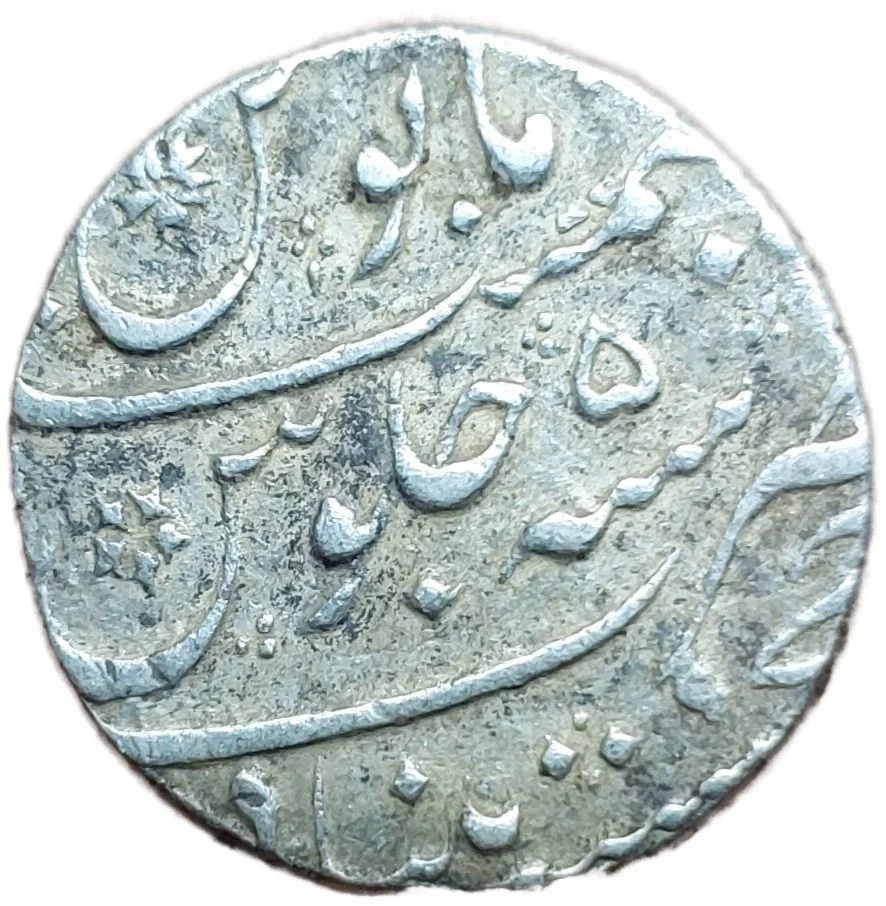
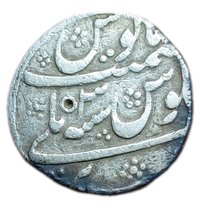
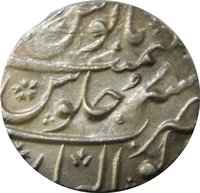
Reverse
Description:
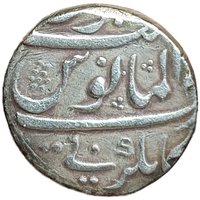
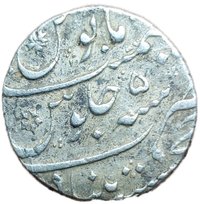
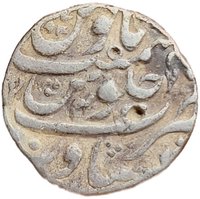
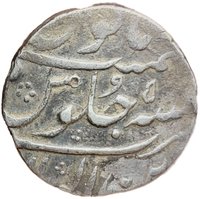
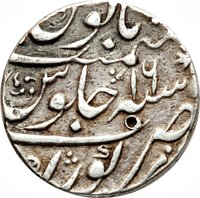
Manoos Memanat Julos RY05 Mint Khujistan Bunyad
Inscription:
میمنت المانوس
جلوس
ضرب خجستہ بنیاد
جلوس
ضرب خجستہ بنیاد
Script: Persian
Edge
Mintings
| Year | Mint Mark | Mintage | Quality | Collection |
|---|---|---|---|---|
| 1720 | — | — | ||
| 1721 | — | — | ||
| 1722 | — | — | ||
| 1723 | — | — | ||
| 1724 | — | — | ||
| 1725 | — | — | ||
| 1726 | — | — | ||
| 1727 | — | — | ||
| 1728 | — | — | ||
| 1729 | — | — | ||
| 1729 | — | — | ||
| 1730 | — | — | ||
| 1731 | — | — | ||
| 1732 | — | — | ||
| 1733 | — | — | ||
| 1734 | — | — | ||
| 1735 | — | — | ||
| 1736 | — | — | ||
| 1737 | — | — | ||
| 1738 | — | — | ||
| 1739 | — | — | ||
| 1740 | — | — | ||
| 1741 | — | — | ||
| 1742 | — | — | ||
| 1745 | — | — | ||
| 1746 | — | — |
Historical background
By 1720, the Mughal Empire's currency system, once a pillar of its centralized power and economic integration, was under severe strain. The standard silver rupee, established by Emperor Akbar, remained the primary unit of account and trade. However, the imperial treasury was chronically depleted due to decades of extravagant court expenditure, costly wars of succession, and the granting of vast revenue territories (jagirs) to nobles, which diverted funds from the center. This fiscal weakness directly impacted the minting process, as the state struggled to maintain a consistent and high-volume output of specie from its mints.
The most significant development was the rise of regional zabt (closed) mints. Powerful provincial governors and emerging regional kingdoms, like Bengal, Hyderabad, and the Maratha territories, began striking their own coins, often in direct imitation of the imperial design but with local control over purity and seigniorage. While these coins circulated widely, their varying standards created complexity in long-distance trade. Furthermore, the gold mohur, though still minted, saw its fixed exchange rate with the silver rupee destabilize due to fluctuating bullion supplies, particularly from European trade, adding another layer of monetary uncertainty.
Consequently, the currency landscape was one of decentralization and fragmentation. The imperial rupee from the Delhi, Agra, or Lahore mints still carried prestige, but its dominance was eroding. In practice, merchants and money-changers (sarrafs) became crucial intermediaries, assessing the true value of countless coin varieties based on weight, fineness, and place of origin. This period thus marks a critical transition where the uniformity of Mughal currency, a symbol of imperial authority, began to fracture in tandem with the political decentralization of the empire itself.
The most significant development was the rise of regional zabt (closed) mints. Powerful provincial governors and emerging regional kingdoms, like Bengal, Hyderabad, and the Maratha territories, began striking their own coins, often in direct imitation of the imperial design but with local control over purity and seigniorage. While these coins circulated widely, their varying standards created complexity in long-distance trade. Furthermore, the gold mohur, though still minted, saw its fixed exchange rate with the silver rupee destabilize due to fluctuating bullion supplies, particularly from European trade, adding another layer of monetary uncertainty.
Consequently, the currency landscape was one of decentralization and fragmentation. The imperial rupee from the Delhi, Agra, or Lahore mints still carried prestige, but its dominance was eroding. In practice, merchants and money-changers (sarrafs) became crucial intermediaries, assessing the true value of countless coin varieties based on weight, fineness, and place of origin. This period thus marks a critical transition where the uniformity of Mughal currency, a symbol of imperial authority, began to fracture in tandem with the political decentralization of the empire itself.
✨ Legendary