

1 Crown (Accession of Queen Elizabeth II) – Gibraltar
Non-circulating coins
Commemoration: 50th Anniversary of the Accession of Queen Elizabeth II
Series: Golden Jubilee
United Kingdom
Context
Material
Diameter: 38.6 mm
Weight: 28.28 g
Shape: Round
Composition: Copper-nickel
Technique: Milled
Alignment: Medal alignment
flip
References
KM: #Click to copy to clipboard994
Numista: #118515
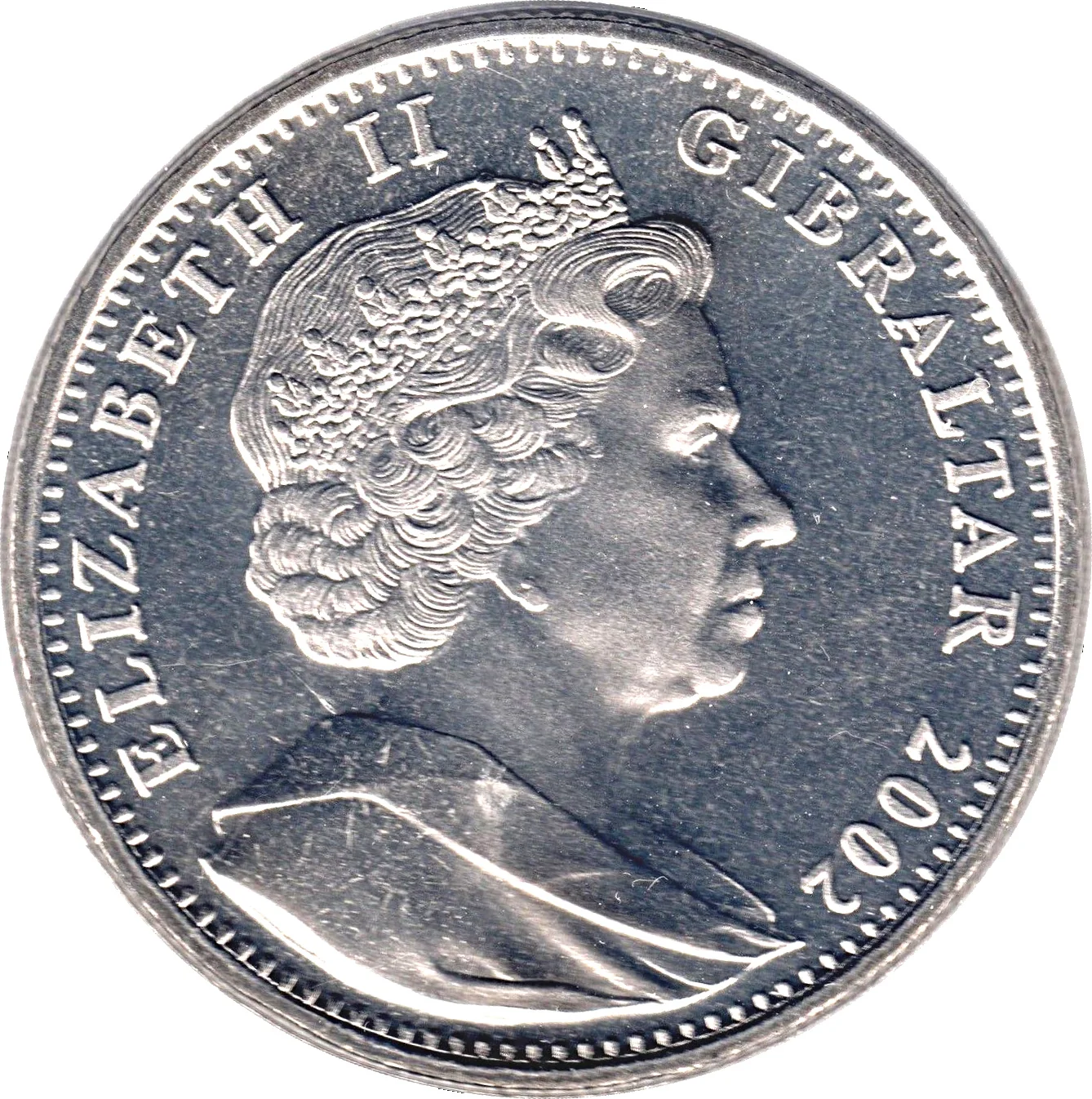
Obverse
Description:
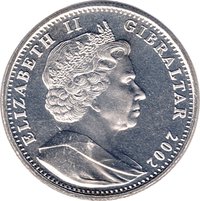
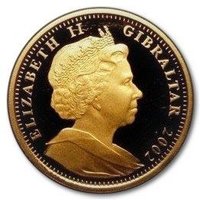
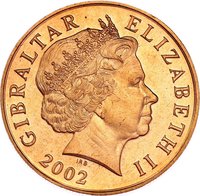
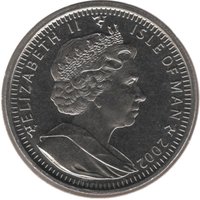
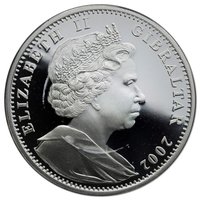
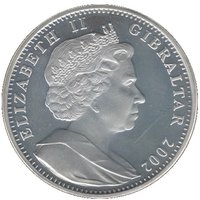
Queen Elizabeth II right-facing portrait in the "Girls of Great Britain and Ireland" Tiara, surrounded by legend and date.
Inscription:
ELIZABETH II GIBRALTAR 2002
IRB
IRB
Script: Latin
Designer: Ian Rank-Broadley
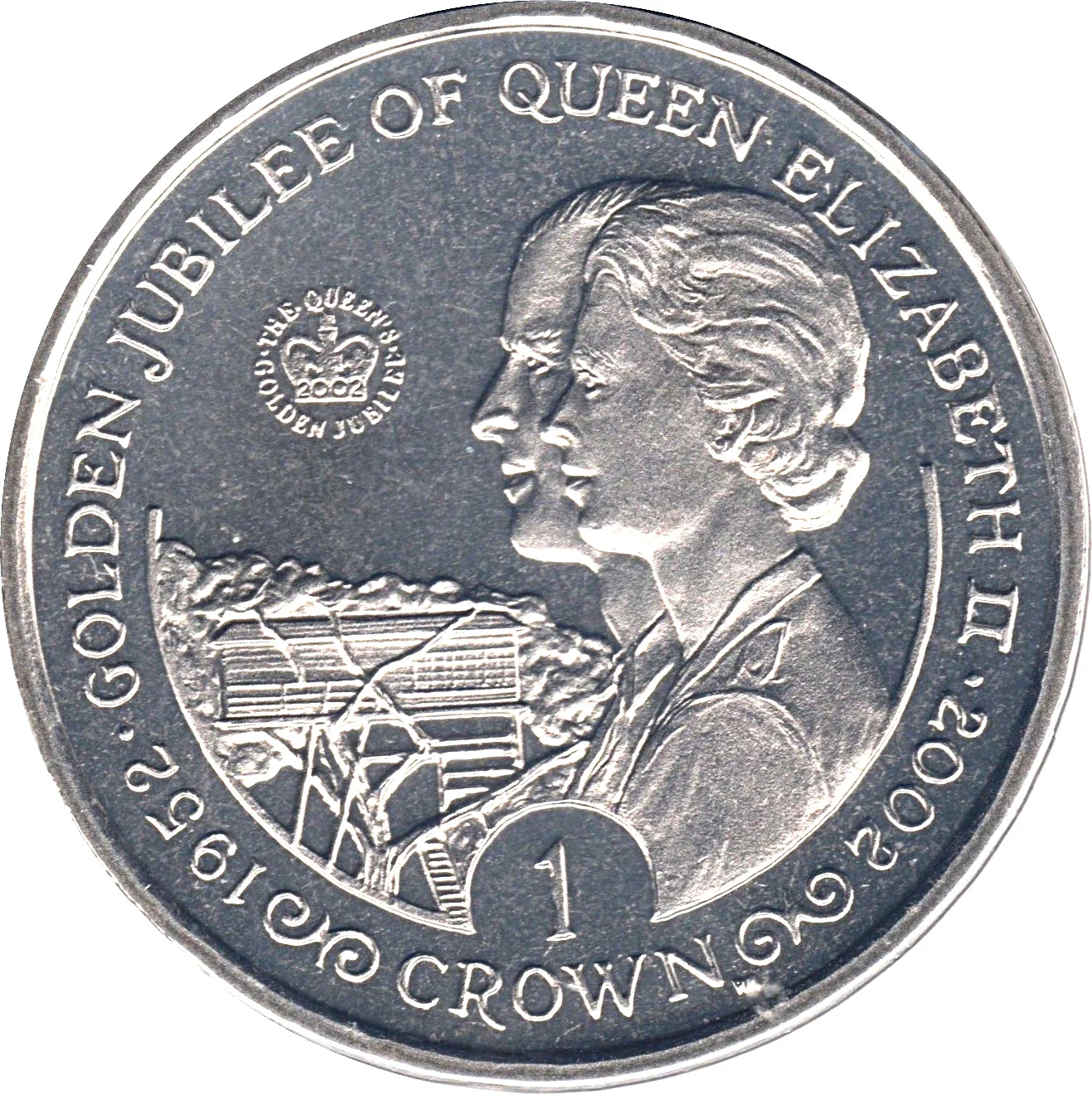
Reverse
Description:
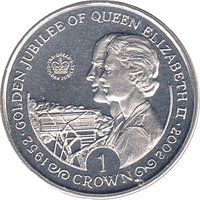
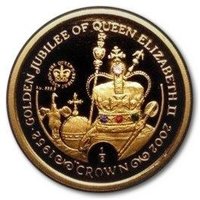
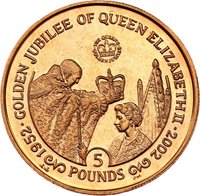
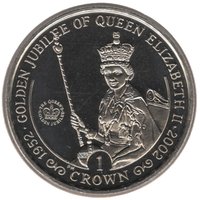
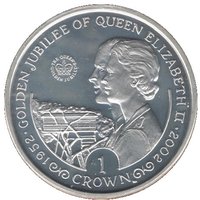
Royal couple at Treetops, Kenya.
Inscription:
1952 GOLDEN JUBILEE OF QUEEN ELIZABETH II 2002
THE QUEEN'S GOLDEN JUBILEE
1 CROWN
PM
THE QUEEN'S GOLDEN JUBILEE
1 CROWN
PM
Script: Latin
Edge
Reeded
Mints
| Name | Mark |
|---|---|
| Pobjoy Mint | (PM) |
Mintings
| Year | Mint Mark | Mintage | Quality | Collection |
|---|---|---|---|---|
| 2002 | PM | — |
Historical background
In 2002, Gibraltar's currency situation was defined by a unique duality, as it operated with both official and de facto legal tender. Officially, the Gibraltar pound (GIP) was the territory's sole currency, issued by the Government of Gibraltar and pegged at par with the British pound sterling (GBP). This long-standing peg ensured stability and guaranteed that GIP banknotes and coins were accepted interchangeably with sterling within the Rock, though they were not generally accepted in the United Kingdom itself.
However, the practical reality on the ground was more complex due to Gibraltar's geographical and economic context. Alongside the Gibraltar pound, Spanish pesetas (and soon, euro cash following its physical introduction in January 2002) circulated widely and were accepted by many businesses, especially those near the border and in the tourist sector. This was a pragmatic response to the daily influx of workers and visitors from Spain, making the economy functionally bilingual in currency terms. The Spanish peseta had been a familiar parallel currency for decades.
The year 2002 was therefore a transitional period, marked by the gradual replacement of the peseta with the euro. Gibraltar's authorities and financial institutions had to manage this shift, ensuring smooth transactions while maintaining the primacy of the sterling-pegged Gibraltar pound. This hybrid system underscored Gibraltar's distinctive position as a British Overseas Territory with deep economic and social ties to its European neighbour, navigating its monetary identity between two major currencies.
However, the practical reality on the ground was more complex due to Gibraltar's geographical and economic context. Alongside the Gibraltar pound, Spanish pesetas (and soon, euro cash following its physical introduction in January 2002) circulated widely and were accepted by many businesses, especially those near the border and in the tourist sector. This was a pragmatic response to the daily influx of workers and visitors from Spain, making the economy functionally bilingual in currency terms. The Spanish peseta had been a familiar parallel currency for decades.
The year 2002 was therefore a transitional period, marked by the gradual replacement of the peseta with the euro. Gibraltar's authorities and financial institutions had to manage this shift, ensuring smooth transactions while maintaining the primacy of the sterling-pegged Gibraltar pound. This hybrid system underscored Gibraltar's distinctive position as a British Overseas Territory with deep economic and social ties to its European neighbour, navigating its monetary identity between two major currencies.
Series: Golden Jubilee
💎 Extremely Rare