

4 Ducats – Denmark
Denmark
Context

References
KM: #Click to copy to clipboard217.1
Numista: #468770
Value
Bullion value: $2278.68
Obverse
Description:
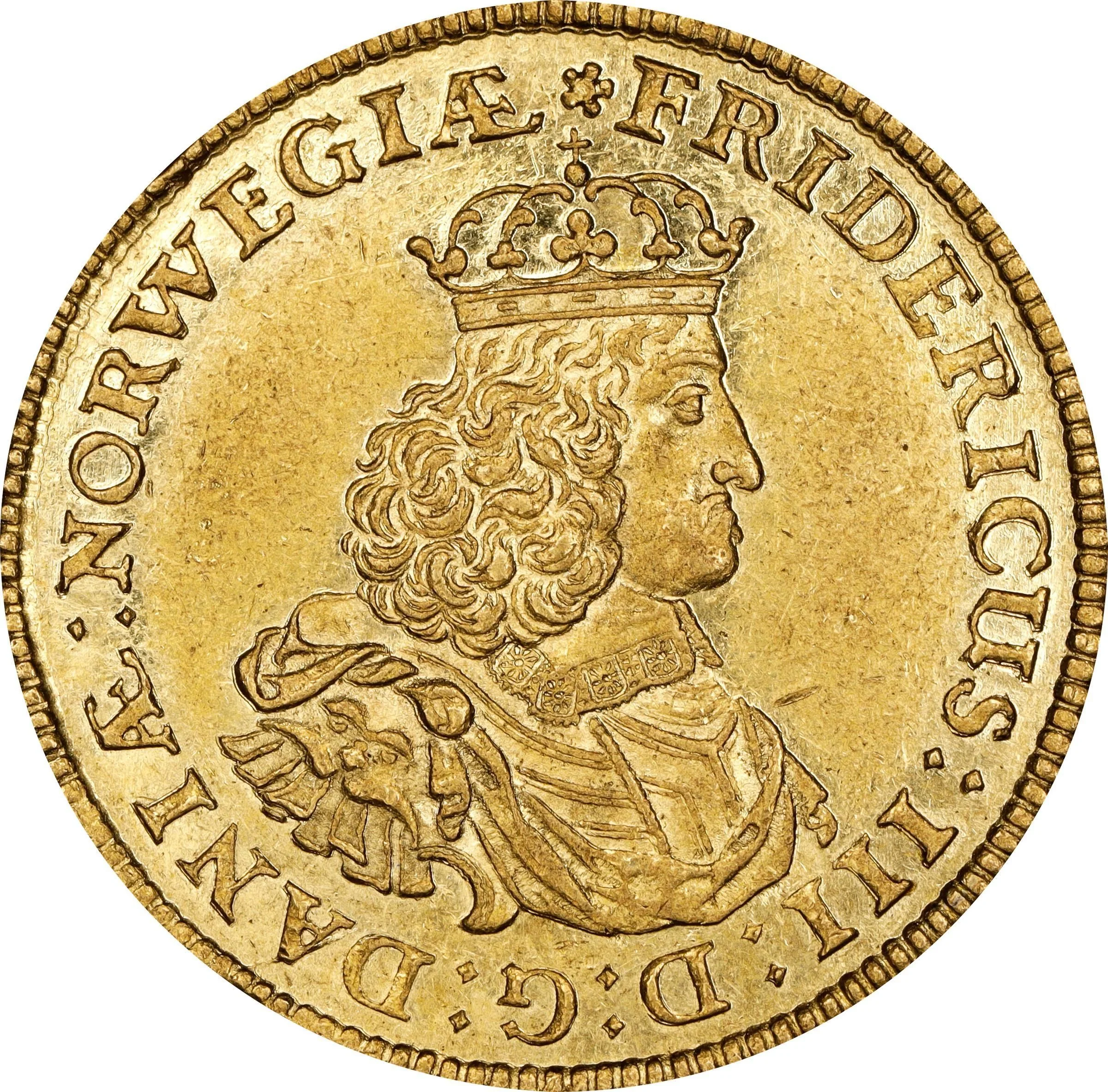
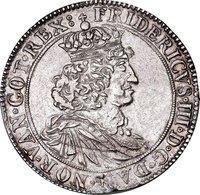
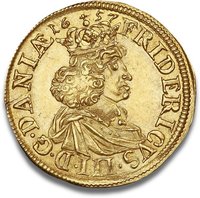
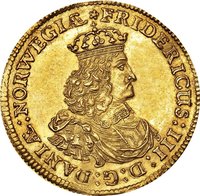
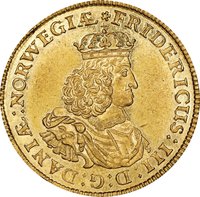
Right-facing crowned bust of Frederik III with long curly hair, surrounded by a continuous rim legend.
Inscription:
FRIDERICUS : III : D : G : DANIÆ : NORWEGIÆ
Script: Latin
Reverse
Description:
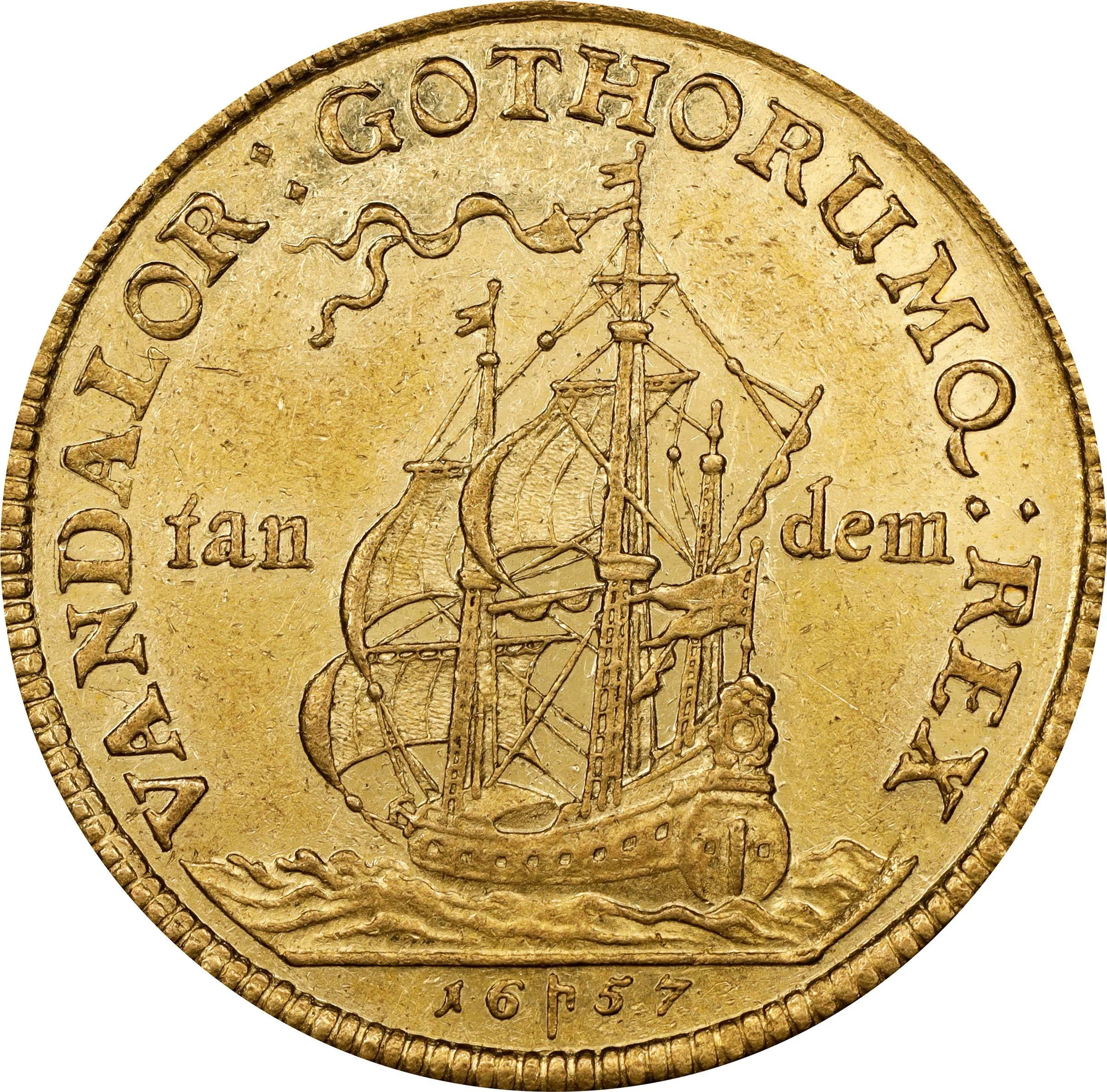
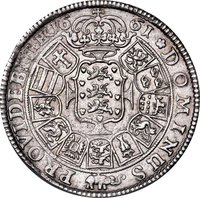
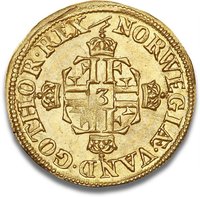
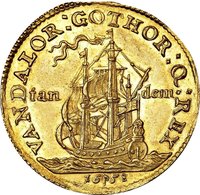
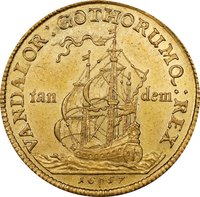
Three-masted ship sailing left on rough seas, with a large banner on its mast. The ship separates "FAN" and "DEM" within a surrounding legend. Date in exergue, split by the mintmark.
Inscription:
VANDALOR : GOTHORUMQ : REX
fan dem
16 57
fan dem
16 57
Script: Latin
Edge
Categories
| Geography> Sea |
| Transportation> Watercraft |
Mints
| Name | Mark |
|---|---|
| Copenhagen | — |
Mintings
| Year | Mint Mark | Mintage | Quality | Collection |
|---|---|---|---|---|
| 1657 | — | — | ||
| 1658 | — | — |
Historical background
In 1657, Denmark found itself in a precarious monetary situation, a direct consequence of the costly Northern Wars and the aggressive foreign policy of King Frederik III. The state treasury was severely depleted, leading to a chronic shortage of silver, the basis for high-value coinage. This scarcity forced the monarchy to repeatedly debase the currency by reducing the silver content in coins like the skilling and mark, while their face value remained the same. This practice, essentially a form of hidden taxation, generated short-term revenue for the crown but eroded public trust and sparked inflation, as people hoarded older, purer coins.
The situation was exacerbated by the outbreak of the Dano-Swedish War (1657–1658), initiated by Denmark in an attempt to regain lost territories. The war effort demanded immense and immediate funding, plunging the already fragile finances into crisis. To pay for soldiers, supplies, and fortifications, the government resorted to further extreme debasement and began issuing large quantities of low-quality copper coins. This led to a classic "bad money drives out good" scenario, where the remaining full-weight silver coins disappeared from circulation, leaving the economy reliant on increasingly worthless currency.
Consequently, by late 1657, Denmark was grappling with a severe monetary crisis characterized by a confusing mix of devalued coins, rampant price increases, and collapsing confidence in the currency system. This financial weakness directly undermined the war effort, contributing to Denmark's disastrous defeat and the loss of its eastern provinces in the subsequent treaties. The currency chaos of this period would necessitate major financial reforms in the following decades to restore stability.
The situation was exacerbated by the outbreak of the Dano-Swedish War (1657–1658), initiated by Denmark in an attempt to regain lost territories. The war effort demanded immense and immediate funding, plunging the already fragile finances into crisis. To pay for soldiers, supplies, and fortifications, the government resorted to further extreme debasement and began issuing large quantities of low-quality copper coins. This led to a classic "bad money drives out good" scenario, where the remaining full-weight silver coins disappeared from circulation, leaving the economy reliant on increasingly worthless currency.
Consequently, by late 1657, Denmark was grappling with a severe monetary crisis characterized by a confusing mix of devalued coins, rampant price increases, and collapsing confidence in the currency system. This financial weakness directly undermined the war effort, contributing to Denmark's disastrous defeat and the loss of its eastern provinces in the subsequent treaties. The currency chaos of this period would necessitate major financial reforms in the following decades to restore stability.
Series: 1657 Denmark circulation coins
✨ Legendary