

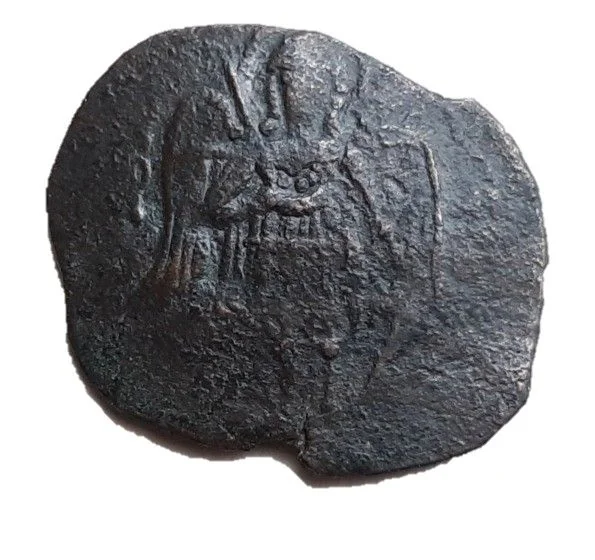
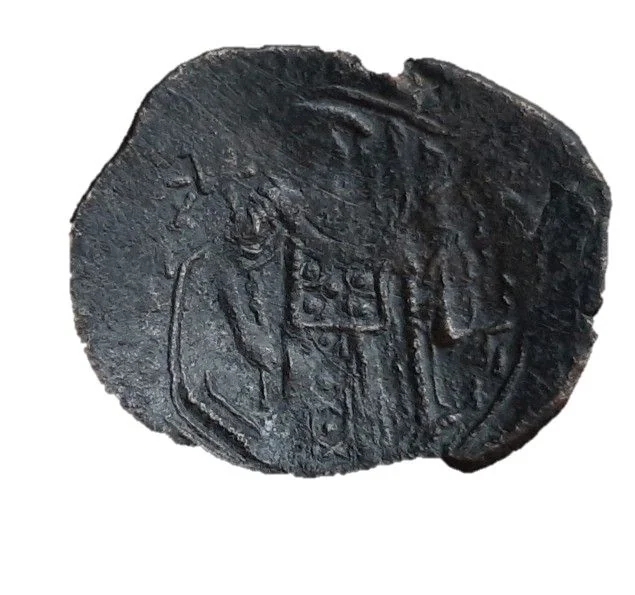
Aspron Trachy – Byzantine Empire
Context
Years: 1259–1282
Country: Byzantine states
Issuer: Byzantine Empire
Ruler: Michael VIII Palaiologos
Demonetized: Yes
Material
Diameter: 28 mm
Weight: 2.69 g
Shape: Irregular round
Composition: Bronze
Magnetic: No
Technique: Hammered
Alignment: Coin alignment
flip
References
KM: #Click to copy to clipboard114
Numista: #468024
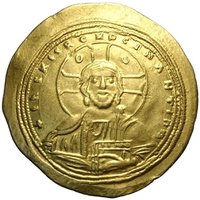
Obverse
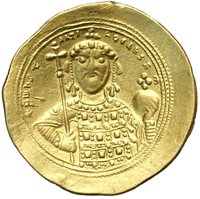
Reverse
Description:
Michael holding labarum scepter and akakia.
Inscription:
XM ΔECΠOTH
O ΠAΛEOΛOΓΟS
O ΠAΛEOΛOΓΟS
Script: Greek
Edge
Mints
| Name | Mark |
|---|---|
| Constantinople | — |
Mintings
| Year | Mint Mark | Mintage | Quality | Collection |
|---|---|---|---|---|
| — | — | — |
Historical background
By 1259, the Byzantine Empire’s currency system was in a state of severe degradation, a direct reflection of the empire’s shrunken political and economic fortunes. Following the catastrophic sack of Constantinople by the Fourth Crusade in 1204, the empire had fractured. Although Michael VIII Palaiologos had recaptured Constantinople in 1261, at this precise moment he was still consolidating power from the rival Empire of Nicaea. The once-gold-dominated and stable coinage of the Komnenian era had collapsed. The primary circulating coin was the debased hyperpyron (nomisma), which by this time contained little actual gold, having been progressively alloyed with silver and copper over the preceding century. Its value was largely notional, maintained by state fiat rather than intrinsic precious metal content.
The monetary landscape was fragmented and chaotic. Alongside the debased imperial hyperpyron, a plethora of older and foreign coins circulated, including Venetian ducats and grossi, which were trusted for their consistent silver and gold content. These Italian currencies dominated Mediterranean trade, undermining Byzantine economic sovereignty. Within the empire’s remaining territories, especially in Greece, petty local lords and Frankish crusader states minted their own low-value copper and billon coins for daily transactions, further complicating commerce and tax collection. The state treasury, drained by constant military campaigns to survive, lacked the bullion reserves needed to reform and restore a sound, unified currency.
This monetary crisis posed a fundamental challenge to Michael VIII’s project of restoration. A weak and unreliable currency stifled internal trade, made long-term financial planning difficult, and eroded the fiscal foundation necessary to fund the army and rebuild the capital. Upon securing Constantinople, Michael VIII would initiate a limited monetary reform, introducing a new silver basilikon and stabilizing the hyperpyron, but in 1259 the system remained a symbol and cause of imperial weakness, awaiting the stability that only lasting political control could provide.
The monetary landscape was fragmented and chaotic. Alongside the debased imperial hyperpyron, a plethora of older and foreign coins circulated, including Venetian ducats and grossi, which were trusted for their consistent silver and gold content. These Italian currencies dominated Mediterranean trade, undermining Byzantine economic sovereignty. Within the empire’s remaining territories, especially in Greece, petty local lords and Frankish crusader states minted their own low-value copper and billon coins for daily transactions, further complicating commerce and tax collection. The state treasury, drained by constant military campaigns to survive, lacked the bullion reserves needed to reform and restore a sound, unified currency.
This monetary crisis posed a fundamental challenge to Michael VIII’s project of restoration. A weak and unreliable currency stifled internal trade, made long-term financial planning difficult, and eroded the fiscal foundation necessary to fund the army and rebuild the capital. Upon securing Constantinople, Michael VIII would initiate a limited monetary reform, introducing a new silver basilikon and stabilizing the hyperpyron, but in 1259 the system remained a symbol and cause of imperial weakness, awaiting the stability that only lasting political control could provide.
✨ Legendary