

Histamenon – Byzantine Empire
Context
Years: 1042–1055
Country: Byzantine states
Issuer: Byzantine Empire
Ruler: Constantine IX Monomachos
Demonetized: Yes
Material
References
KM: #Click to copy to clipboard1-4
Numista: #400194
Value
Bullion value: $726.94
Obverse
Description:
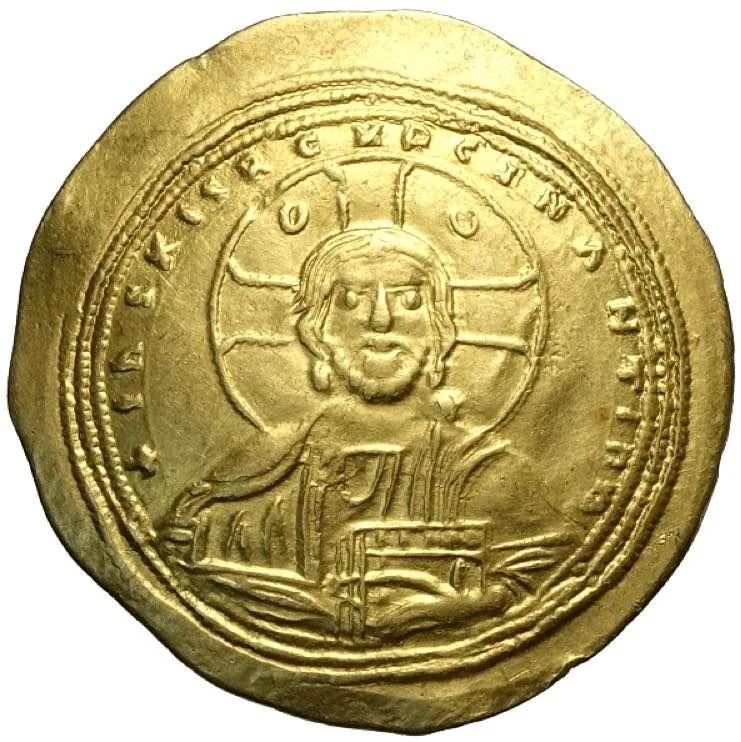
Christ Pantocrator facing, bearded, with cross in halo.
Inscription:
✠ IҺS XIS RЄX RЄGNANƮINM
Reverse
Description:
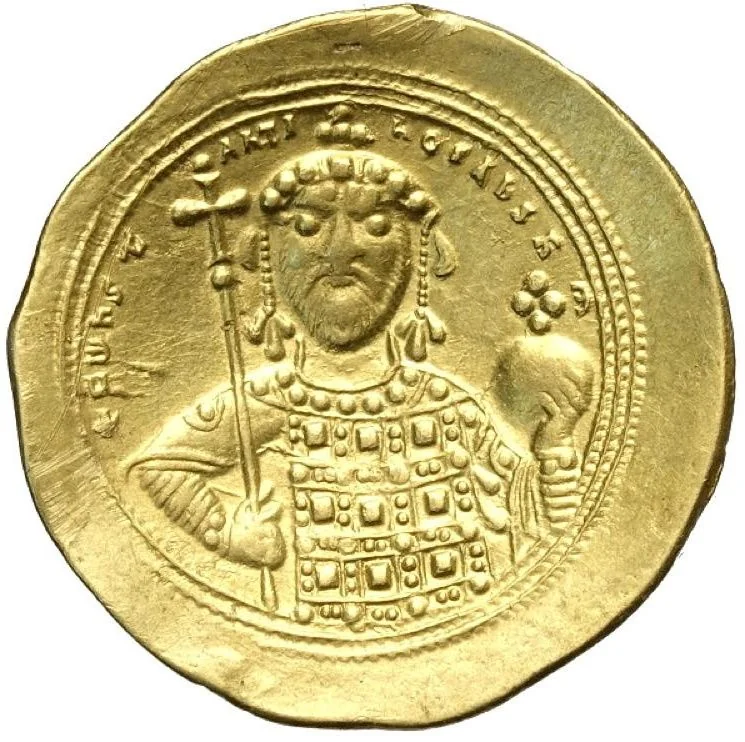
Emperor crowned, holding sceptre and globus cruciger, legend around.
Inscription:
✠ CѠNSƮANƮN ЬASILEYS RM
Edge
Mints
| Name | Mark |
|---|---|
| Constantinople | — |
Mintings
| Year | Mint Mark | Mintage | Quality | Collection |
|---|---|---|---|---|
| — | — | — | ||
| — | — | — | BU |
Historical background
In 1042, the Byzantine Empire’s currency system, the most sophisticated in Christendom for centuries, was under severe strain. The bedrock of the economy was the gold nomisma (or solidus), renowned for its consistent purity and weight since the time of Constantine. This stability had made it the dominant trade currency from Scandinavia to the Indian Ocean. However, the empire had recently endured a period of fiscal crisis and civil war, culminating in the reign of Michael V, who was overthrown in a popular uprising just months before in April 1042. The treasury had been depleted by massive expenditures, including lavish donations to the Church and the costly buy-off of foreign threats, which pressured the state's ability to maintain its monetary integrity.
The immediate pressure was on the subsidiary coinage. While the gold nomisma largely retained its standard, the lower-denomination silver miliaresion and especially the copper follis were frequently debased or irregularly issued to meet state expenses. This debasement, though not yet catastrophic, caused practical difficulties in everyday commerce and eroded public confidence. The monetary policy was reactive, often manipulated to cover short-term budgetary shortfalls rather than guided by long-term economic strategy, creating inflation in local markets and hardship for the common population who relied on copper and silver coins.
The situation called for decisive reform, which would be addressed by Constantine IX Monomachos, who came to the throne in June 1042. His administration recognized the need to restore confidence and streamline the system. One of his significant monetary reforms was the introduction of a new gold coin, the nomisma histamenon, struck on a broader, thinner flan, while the older, thicker style continued as the nomisma tetarteron. This innovation, alongside efforts to stabilize the fractional coinage, aimed to simplify transactions and reassert imperial control over the currency. Thus, 1042 stands as a pivotal year, marking the end of a period of fiscal uncertainty and the beginning of a concerted, if not entirely successful, effort to restore the legendary soundness of Byzantine money.
The immediate pressure was on the subsidiary coinage. While the gold nomisma largely retained its standard, the lower-denomination silver miliaresion and especially the copper follis were frequently debased or irregularly issued to meet state expenses. This debasement, though not yet catastrophic, caused practical difficulties in everyday commerce and eroded public confidence. The monetary policy was reactive, often manipulated to cover short-term budgetary shortfalls rather than guided by long-term economic strategy, creating inflation in local markets and hardship for the common population who relied on copper and silver coins.
The situation called for decisive reform, which would be addressed by Constantine IX Monomachos, who came to the throne in June 1042. His administration recognized the need to restore confidence and streamline the system. One of his significant monetary reforms was the introduction of a new gold coin, the nomisma histamenon, struck on a broader, thinner flan, while the older, thicker style continued as the nomisma tetarteron. This innovation, alongside efforts to stabilize the fractional coinage, aimed to simplify transactions and reassert imperial control over the currency. Thus, 1042 stands as a pivotal year, marking the end of a period of fiscal uncertainty and the beginning of a concerted, if not entirely successful, effort to restore the legendary soundness of Byzantine money.
💎 Extremely Rare