

1 Mohar – Nepal
Nepal
Context
Material
References
KM: #Click to copy to clipboard472
Numista: #46799
Value
Bullion value: $15.52
Obverse
Reverse
Edge
Mintings
| Year | Mint Mark | Mintage | Quality | Collection |
|---|---|---|---|---|
| 1773 | — | — | ||
| 1774 | — | — | ||
| 1775 | — | — | ||
| 1776 | — | — | ||
| 1777 | — | — |
Historical background
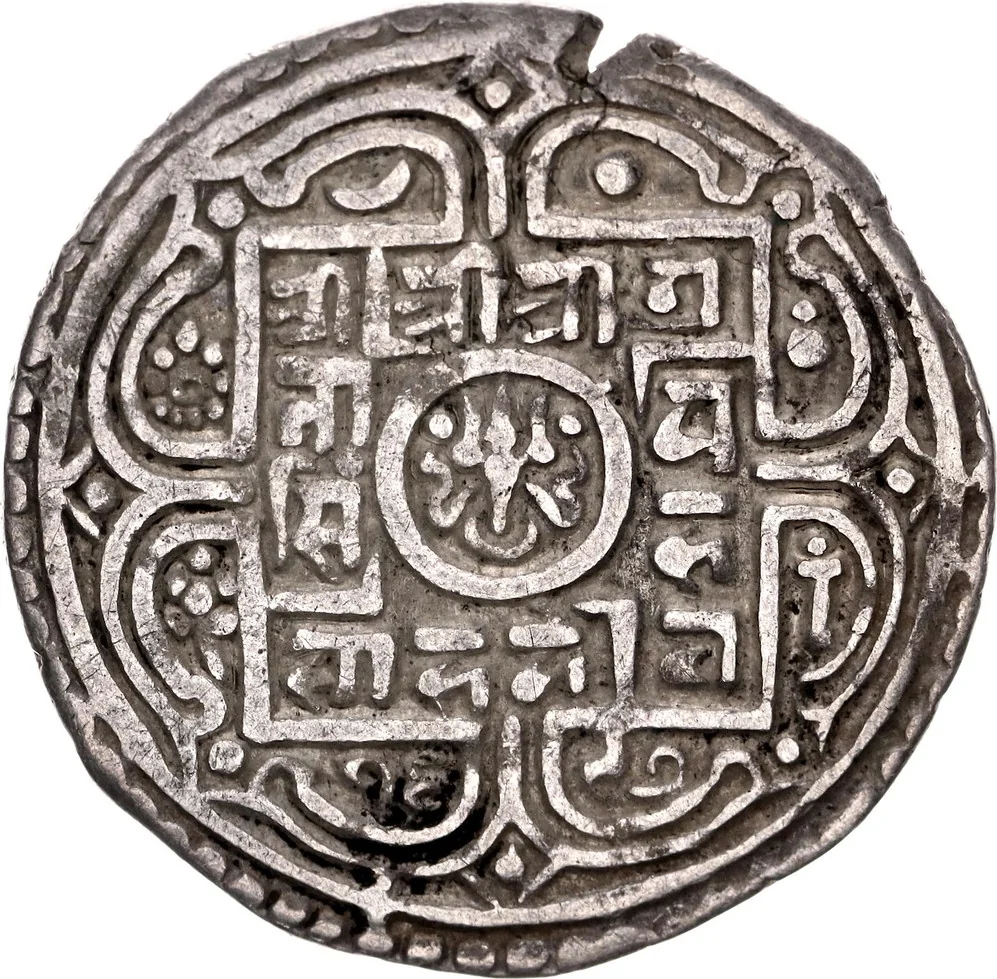
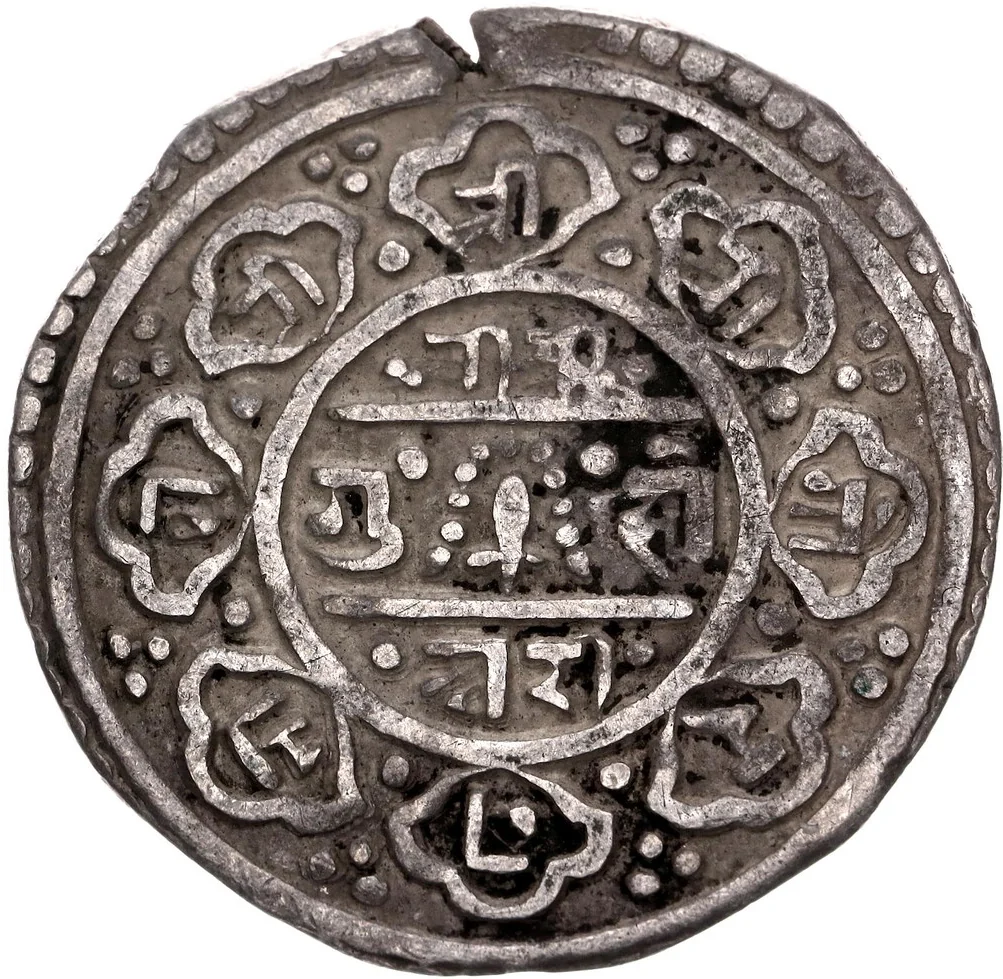
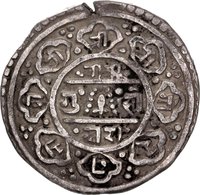
In 1773, Nepal was not a unified nation but a patchwork of small, often warring kingdoms, primarily the Gorkha Kingdom, the Kathmandu Valley's three Malla states (Kathmandu, Patan, Bhaktapur), and numerous others. There was no single, standardized currency system across these regions. The dominant economic and cultural influence was from the south, particularly the Mughal Empire and its successor states in the Indian subcontinent. Consequently, the most widely accepted and circulated medium of exchange was not a local coin but the Mohar of the Malla Kings within the Valley and, more significantly, silver rupees minted by various Indian powers, especially the Mughal Silver Rupee. These Indian coins flowed into Nepal via extensive trade links.
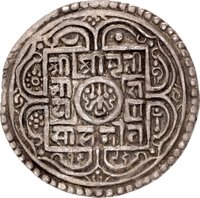
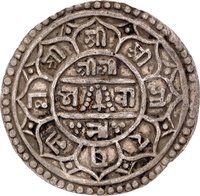
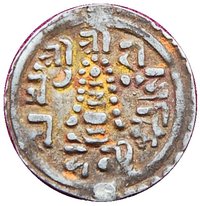
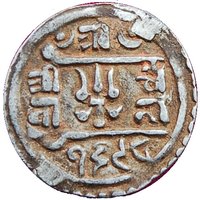
Within the Kathmandu Valley, the Newar Malla kings minted their own distinct silver and copper coins. The most notable was the silver Mohar, which often featured intricate designs of deities, animals, and symbols like the lotus, and carried inscriptions in Sanskrit. Each of the three rival Malla kingdoms issued their own versions, creating a localized but fragmented system. Meanwhile, in the rising Gorkha Kingdom under Prithvi Narayan Shah, the currency situation was simpler but less developed. Gorkha primarily relied on a mix of barter trade and the use of circulated Indian coins, as its own minting capacity was limited before its conquest of the Valley.
This fragmented monetary landscape was on the cusp of dramatic change. Prithvi Narayan Shah's Gorkha kingdom was in the final stages of its decades-long campaign to conquer the Kathmandu Valley, which it would complete in 1768-69. By 1773, the unification campaign was consolidating, and one of the key acts of the new Shah dynasty was to assert monetary control. While the precise Nepali Rupee was formally established later, the period around 1773 was a transitional one where the old Malla coinage was being phased out, and the new Gorkhali state was beginning to standardize currency as a tool of political integration and economic sovereignty, laying the foundation for a national monetary system.
Within the Kathmandu Valley, the Newar Malla kings minted their own distinct silver and copper coins. The most notable was the silver Mohar, which often featured intricate designs of deities, animals, and symbols like the lotus, and carried inscriptions in Sanskrit. Each of the three rival Malla kingdoms issued their own versions, creating a localized but fragmented system. Meanwhile, in the rising Gorkha Kingdom under Prithvi Narayan Shah, the currency situation was simpler but less developed. Gorkha primarily relied on a mix of barter trade and the use of circulated Indian coins, as its own minting capacity was limited before its conquest of the Valley.
This fragmented monetary landscape was on the cusp of dramatic change. Prithvi Narayan Shah's Gorkha kingdom was in the final stages of its decades-long campaign to conquer the Kathmandu Valley, which it would complete in 1768-69. By 1773, the unification campaign was consolidating, and one of the key acts of the new Shah dynasty was to assert monetary control. While the precise Nepali Rupee was formally established later, the period around 1773 was a transitional one where the old Malla coinage was being phased out, and the new Gorkhali state was beginning to standardize currency as a tool of political integration and economic sovereignty, laying the foundation for a national monetary system.
💎 Very Rare