

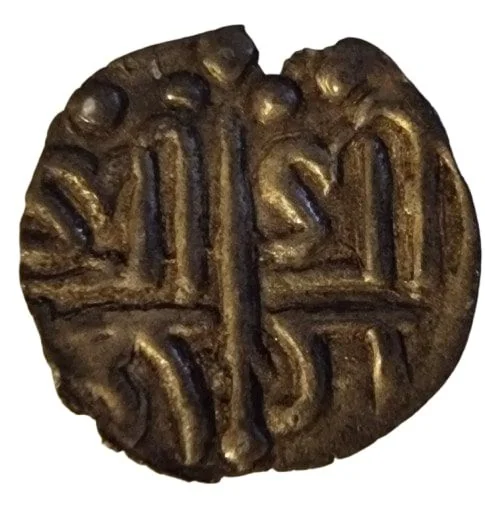
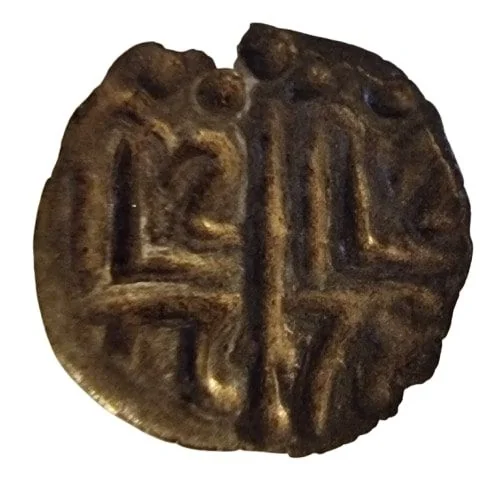
1 Dam – Bhaktapur Kingdom
Nepal
Context
Years: 1644–1673
Country: Nepal 
Issuer: Bhaktapur Kingdom
Ruler: Jagat Prakasha Malla
Currency:
(1546—1932)
Demonetized: Yes
Material
Diameter: 8 mm
Weight: 0.04 g
Silver weight: 0.04 g
Shape: Irregular round
Composition: Silver
Magnetic: No
Technique: Hammered
References
KM: #Click to copy to clipboard–
Numista: #466381
Value
Bullion value: $0.11
Obverse
Inscription:
Sri Sri
Ja Ga
Ja Ga
Reverse
Edge
Mintings
| Year | Mint Mark | Mintage | Quality | Collection |
|---|---|---|---|---|
| — | — | — |
Historical background
In 1644, the Bhaktapur Kingdom, one of the three rival Newar city-states in the Kathmandu Valley (alongside Kathmandu and Patan), operated within a sophisticated and multi-layered monetary system. The primary currency in circulation was the Mohar, a silver coin that was the standard unit of account and trade. These coins were typically struck by the Malla kings themselves, often bearing the symbol of a stylized lotus and inscriptions in Sanskrit or Nepal Bhasa, asserting royal authority and Hindu-Buddhist iconography. However, the purity and weight of these coins could vary between the three kingdoms, leading to complex exchange calculations in inter-valley trade.
The currency situation was not isolated; it was deeply integrated into regional networks. Alongside locally minted Mohars, Indian silver rupees and copper dam coins from the Mughal Empire to the south flowed into the valley via vital trade routes. Furthermore, due to Bhaktapur's position on the trans-Himalayan trade between Tibet and India, Tibetan silver tangkas and even Chinese currency in the form of silver ingots or sycee played a significant role in larger mercantile transactions. This created a de facto multi-currency environment where merchants and officials had to be adept at assessing metal purity and calculating exchange rates.
Economically, the kingdom's currency was underpinned by a highly productive agrarian base and renowned craft industries, particularly pottery and weaving. The royal court tightly controlled minting rights, using currency to collect taxes, pay officials, and fund grand religious monuments and festivals that legitimized the ruler's power. In 1644, under the reign of King Jagat Prakasha Malla, this system was likely stable but inherently competitive, as Bhaktapur vied with its neighbors for economic dominance, with currency serving as both a tool of commerce and a symbol of sovereign prestige.
The currency situation was not isolated; it was deeply integrated into regional networks. Alongside locally minted Mohars, Indian silver rupees and copper dam coins from the Mughal Empire to the south flowed into the valley via vital trade routes. Furthermore, due to Bhaktapur's position on the trans-Himalayan trade between Tibet and India, Tibetan silver tangkas and even Chinese currency in the form of silver ingots or sycee played a significant role in larger mercantile transactions. This created a de facto multi-currency environment where merchants and officials had to be adept at assessing metal purity and calculating exchange rates.
Economically, the kingdom's currency was underpinned by a highly productive agrarian base and renowned craft industries, particularly pottery and weaving. The royal court tightly controlled minting rights, using currency to collect taxes, pay officials, and fund grand religious monuments and festivals that legitimized the ruler's power. In 1644, under the reign of King Jagat Prakasha Malla, this system was likely stable but inherently competitive, as Bhaktapur vied with its neighbors for economic dominance, with currency serving as both a tool of commerce and a symbol of sovereign prestige.
✨ Legendary