

1 Speziesthaler – Anhalt-Köthen
Germany
Context
Year: 1747
Country: Germany 
Issuer: Anhalt-Köthen
Ruler: Augustus Louis
Currency:
Subdivision: 1 Speziesthaler = 1⅓ Thaler
Demonetized: Yes
Material
References
KM: #Click to copy to clipboard26
Numista: #46385
Value
Bullion value: $72.49
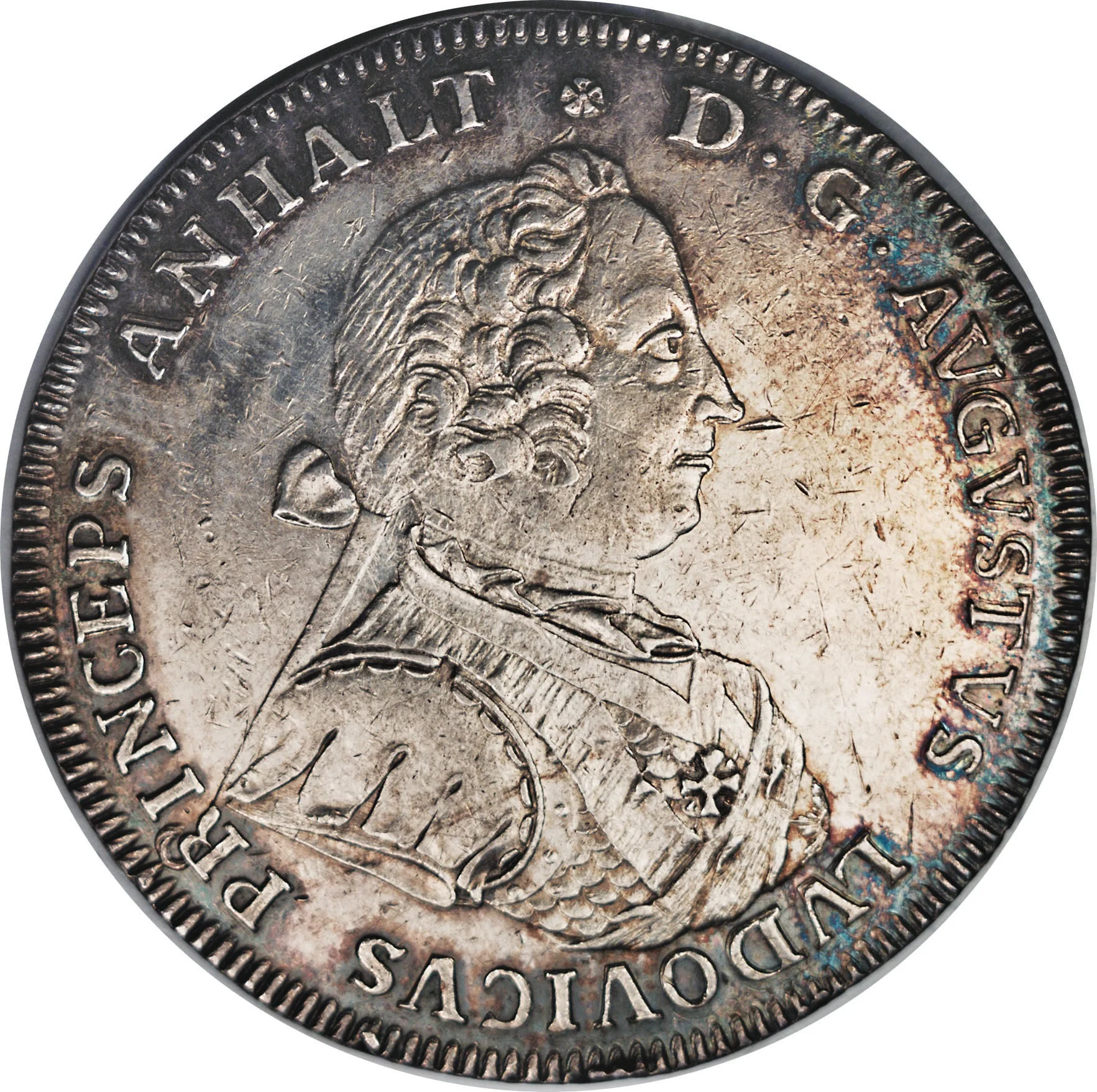
Obverse
Description:
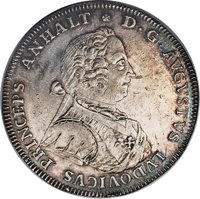
Armored bust right, also known as Senioratstaler.
Inscription:
D·G·AVGVSTVS LVDOVICVS PRINCEPS ANHALT *
Script: Latin
Engraver: Alexius Wegelin
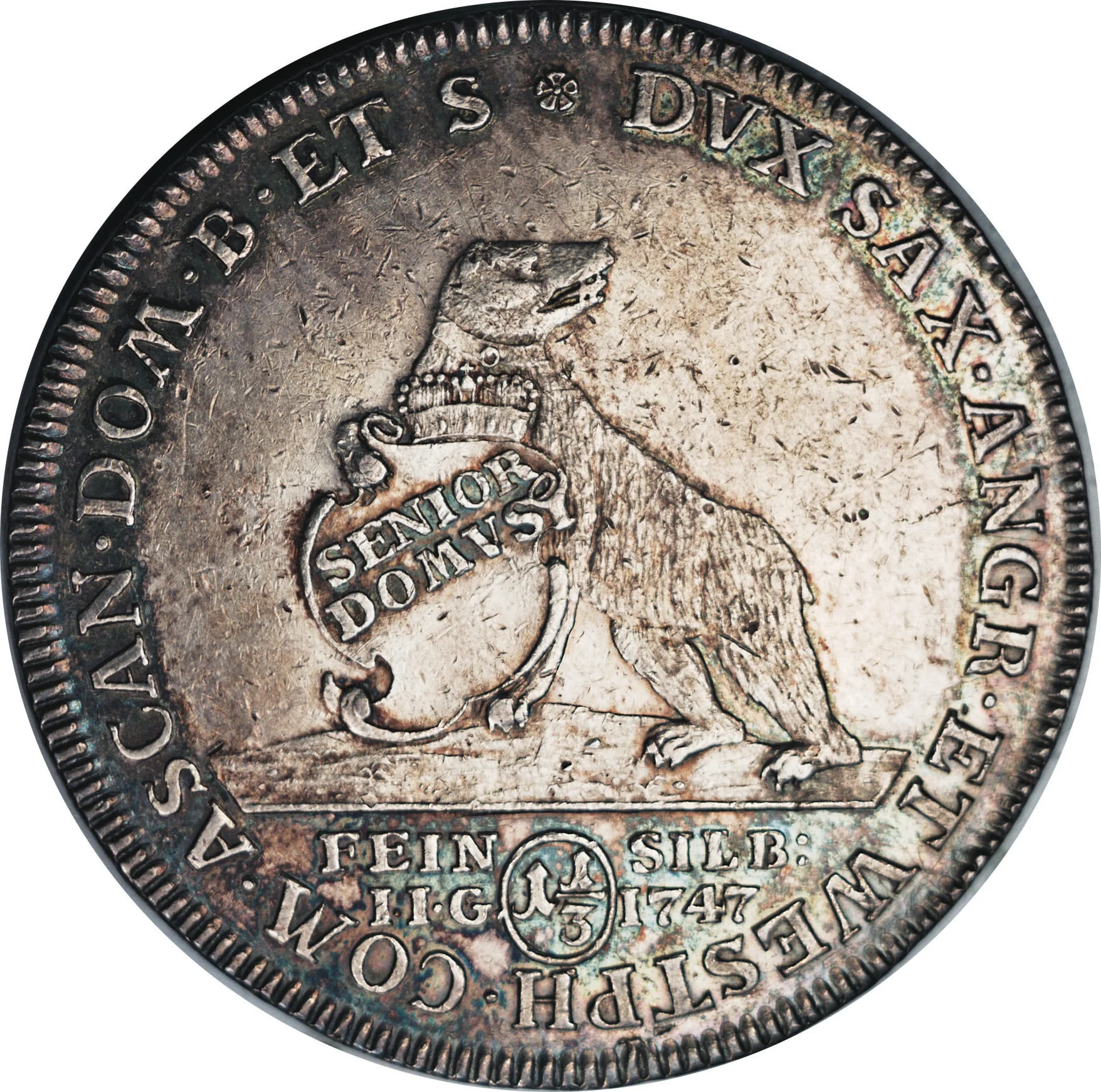
Reverse
Description:
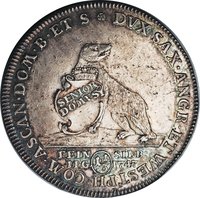
Shield-bearing bear. Denomination and date.
Inscription:
DVX SAX·ANGR·ET WESTPH·COM·ASCAN·DOM·B·ET S *
SENIOR DOMVS
FEIN SILB:
I·I·G 1⅓ 1747
SENIOR DOMVS
FEIN SILB:
I·I·G 1⅓ 1747
Script: Latin
Engraver: Alexius Wegelin
Edge
Mints
| Name | Mark |
|---|---|
| Köthen | — |
Mintings
| Year | Mint Mark | Mintage | Quality | Collection |
|---|---|---|---|---|
| 1747 | — | — |
Historical background
In 1747, the currency situation in the small central German principality of Anhalt-Köthen was characterized by the pervasive instability common across the Holy Roman Empire. The region operated within a complex monetary system where multiple coinage standards overlapped: the Reichsthaler (Imperial Thaler) set by the Empire's official coinage ordinances, the regional Saxon-Thuringian Gulden (florin), and the local Gute Groschen. This fragmentation was exacerbated by the circulation of coins from neighboring states, each with varying silver content and value, leading to chronic confusion, exchange difficulties, and widespread opportunity for debasement.
The root of the problem lay in the sovereign right of each prince, including Prince August Ludwig of Anhalt-Köthen, to mint his own coinage. Faced with the immense financial pressures of maintaining a court and funding state operations—especially after the costly construction of the Ludwigsbau palace—rulers were often tempted to issue lightweight or debased coins to generate seigniorage profit. This practice, while providing short-term fiscal relief, eroded public trust, drove good-quality money out of circulation (Gresham's Law), and disrupted commerce. Merchants and subjects in Köthen had to constantly refer to fluctuating exchange rate lists to conduct basic business.
Therefore, the year 1747 did not represent an isolated crisis but a point within a continuous struggle. The principality's monetary policy was a tightrope walk between internal fiscal demands, the need for stable commerce, and the obligation to conform, at least nominally, to imperial monetary regulations. Any attempt at reform in Köthen was constrained by the actions of its neighbors, making unilateral stabilization nearly impossible and embedding monetary disorder as a persistent feature of economic life until broader German monetary unification centuries later.
The root of the problem lay in the sovereign right of each prince, including Prince August Ludwig of Anhalt-Köthen, to mint his own coinage. Faced with the immense financial pressures of maintaining a court and funding state operations—especially after the costly construction of the Ludwigsbau palace—rulers were often tempted to issue lightweight or debased coins to generate seigniorage profit. This practice, while providing short-term fiscal relief, eroded public trust, drove good-quality money out of circulation (Gresham's Law), and disrupted commerce. Merchants and subjects in Köthen had to constantly refer to fluctuating exchange rate lists to conduct basic business.
Therefore, the year 1747 did not represent an isolated crisis but a point within a continuous struggle. The principality's monetary policy was a tightrope walk between internal fiscal demands, the need for stable commerce, and the obligation to conform, at least nominally, to imperial monetary regulations. Any attempt at reform in Köthen was constrained by the actions of its neighbors, making unilateral stabilization nearly impossible and embedding monetary disorder as a persistent feature of economic life until broader German monetary unification centuries later.
✨ Legendary