

1 Quattrino – Papal States
Vatican City
Context
Years: 1624–1625
Country: Vatican City 
Issuer: Papal States
Ruler: Urban VIII
Currency:
(1534—1835)
Demonetized: Yes
References
KM: #Click to copy to clipboard130
Numista: #463553
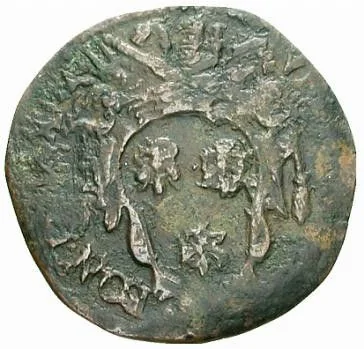
Obverse
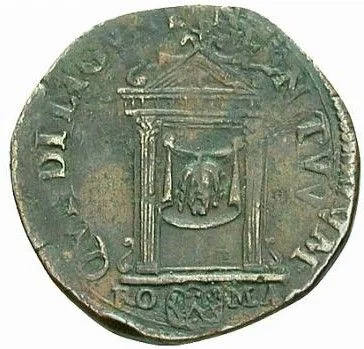
Reverse
Description:
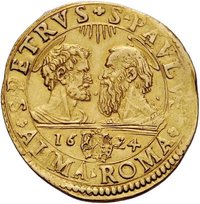
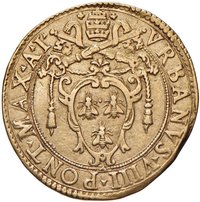
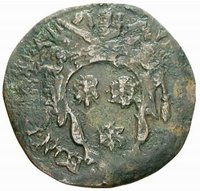
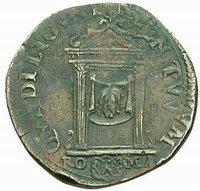
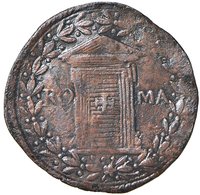
Open door with veil, Christ's face in doorway. Mint name divided by small shield in exergue.
Inscription:
QVI DILIGVNT NOMEN TVVM
ROMA
ROMA
Script: Latin
Edge
Categories
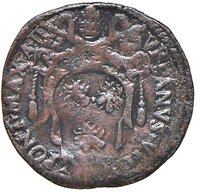
| Symbols> Coat of Arms |
Mints
| Name | Mark |
|---|---|
| Rome | — |
Mintings
| Year | Mint Mark | Mintage | Quality | Collection |
|---|---|---|---|---|
| 1624 | — | — | ||
| 1625 | — | — |
Historical background
In 1624, the Papal States under Pope Urban VIII faced a complex and deteriorating currency situation, a legacy of fiscal pressures from the Thirty Years' War and immense papal patronage. The primary unit was the papal scudo, a silver coin, but its value was being systematically undermined. The treasury, drained by military expenditures and the lavish costs of fortifying Rome and supporting the arts, resorted to repeated debasement. This involved reducing the silver content in newly minted coins while officially maintaining their old face value, a short-term revenue strategy with severe long-term consequences.
This practice created a destructive two-tier monetary system. Older, purer silver coins (known as scudi di buona lega) were hoarded by the public or exported, following Gresham’s Law that "bad money drives out good." Meanwhile, the newer, debased coins (scudi di moneta) circulated at a forced official rate, causing widespread distrust in the currency. The situation was exacerbated by a proliferation of subsidiary copper coinage (baiocchi and quattrini), which flooded the market to facilitate small daily transactions but further fueled inflation, particularly harming the poor.
The monetary chaos had tangible economic and social effects within the Papal States. It disrupted trade, as merchants struggled with unstable values, and eroded real wages, leading to quiet discontent among the populace. While the Papacy maintained a monopoly on minting, its inability to manage the currency stemmed from structural fiscal weakness. Thus, in 1624, the currency was not merely an economic instrument but a clear symptom of the broader conflict between the Papacy's lofty political ambitions and its strained financial realities.
This practice created a destructive two-tier monetary system. Older, purer silver coins (known as scudi di buona lega) were hoarded by the public or exported, following Gresham’s Law that "bad money drives out good." Meanwhile, the newer, debased coins (scudi di moneta) circulated at a forced official rate, causing widespread distrust in the currency. The situation was exacerbated by a proliferation of subsidiary copper coinage (baiocchi and quattrini), which flooded the market to facilitate small daily transactions but further fueled inflation, particularly harming the poor.
The monetary chaos had tangible economic and social effects within the Papal States. It disrupted trade, as merchants struggled with unstable values, and eroded real wages, leading to quiet discontent among the populace. While the Papacy maintained a monopoly on minting, its inability to manage the currency stemmed from structural fiscal weakness. Thus, in 1624, the currency was not merely an economic instrument but a clear symptom of the broader conflict between the Papacy's lofty political ambitions and its strained financial realities.
✨ Legendary