

1 Rupee – Mughal Empire
India
Context
Years: 1589–1604
Country: India 
Issuer: Mughal Empire
Ruler: Akbar
Currency:
(1540—1842)
Demonetized: Yes
Material
Weight: 11.15 g
Silver weight: 11.15 g
Thickness: 4 mm
Shape: Irregular square
Composition: Silver
Magnetic: No
Technique: Hammered
References
KM: #Click to copy to clipboard90.1
Numista: #463271
Value
Bullion value: $32.40
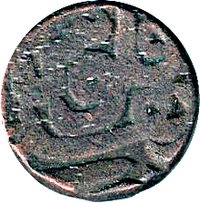
Obverse
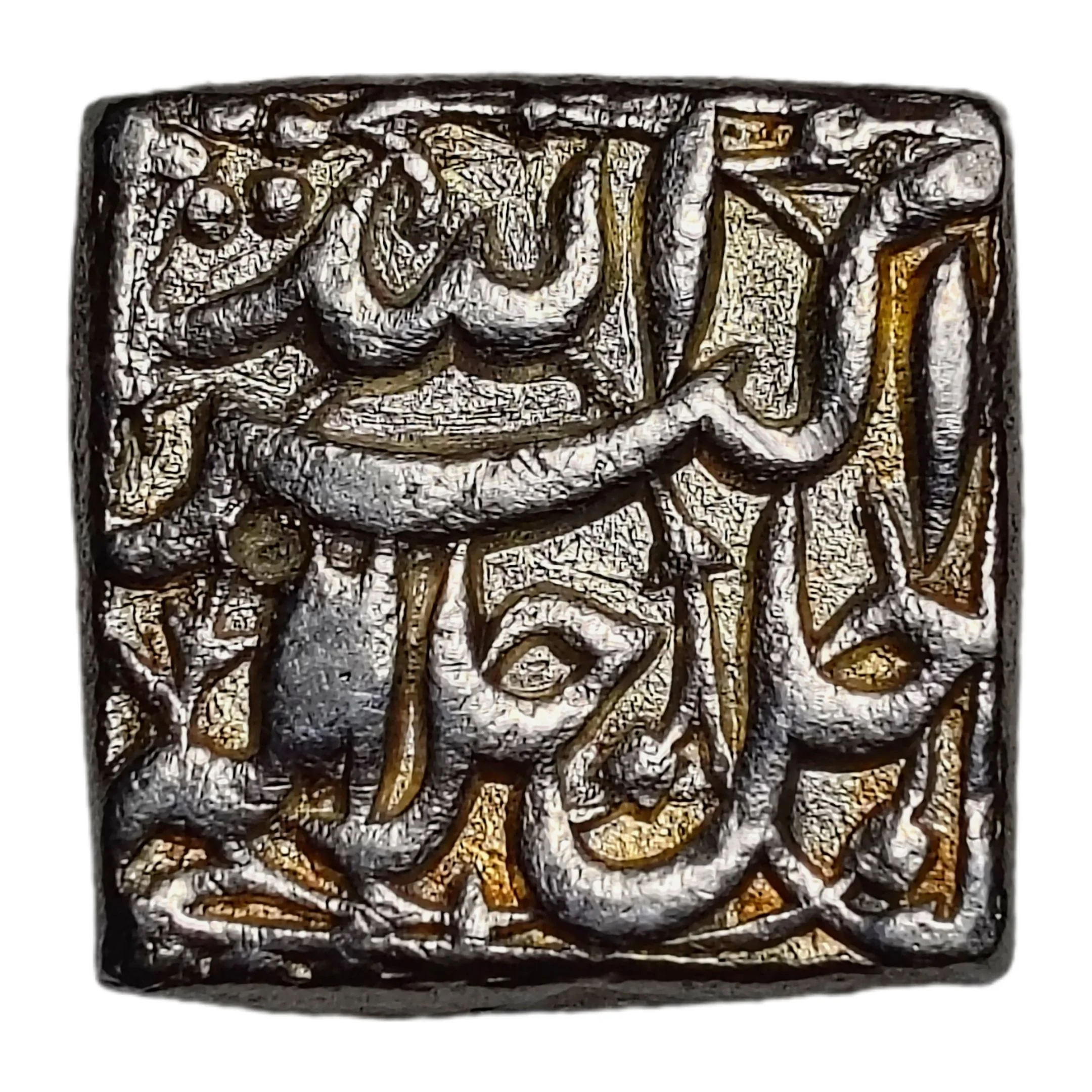
Description:
Persian legends with floral background ornamentation.
Inscription:
الله یا اکبر
جل جلاله
جل جلاله
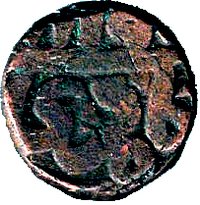
Reverse
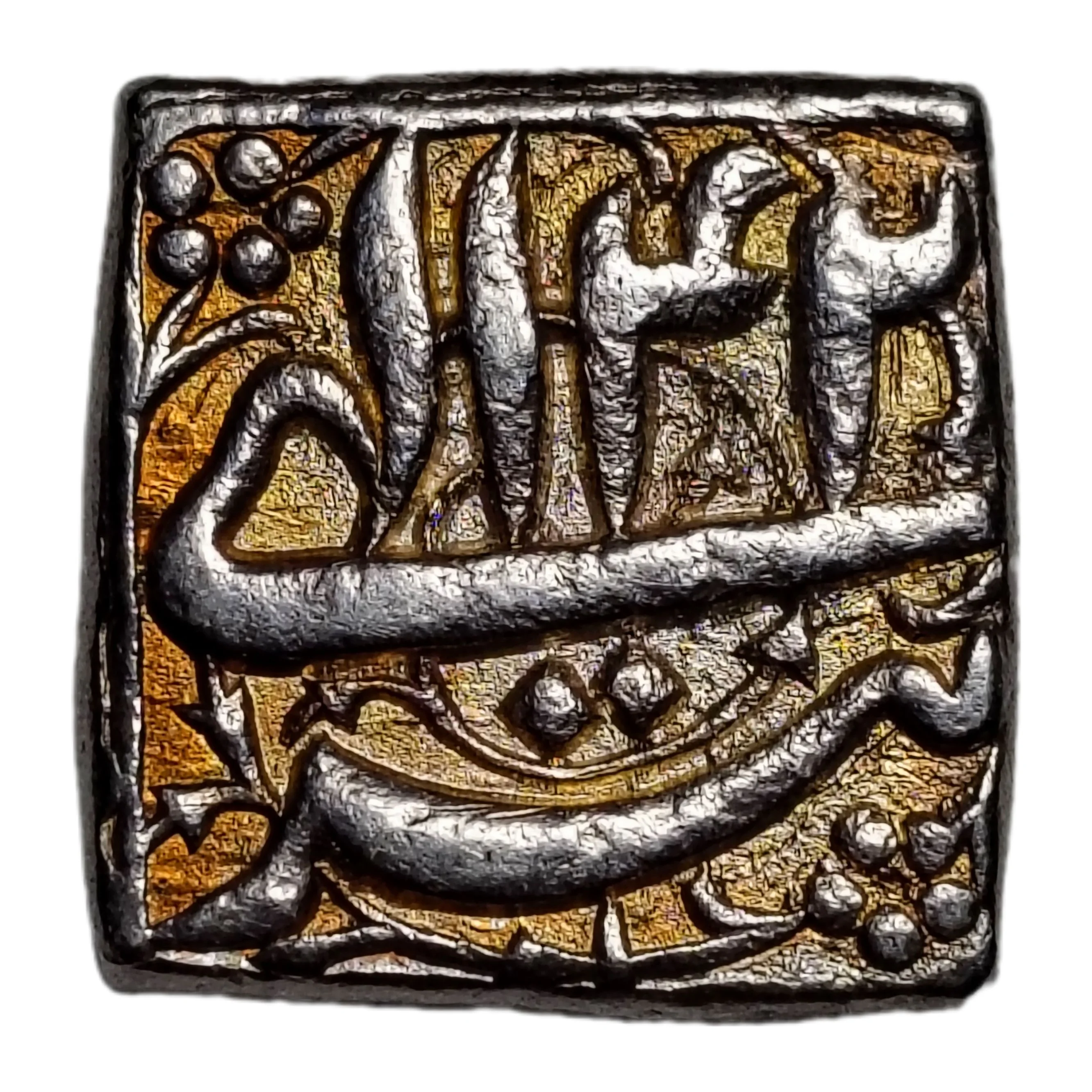
Description:
Persian Ilahi year and month with floral background.
Inscription:
الهی ۴٢
تیر
تیر
Edge
Plain
Mintings
| Year | Mint Mark | Mintage | Quality | Collection |
|---|---|---|---|---|
| — | — | — |
Historical background
In 1589, the Mughal Empire's currency system was a well-established and sophisticated mechanism under the reign of Emperor Akbar (r. 1556–1605), reflecting his broader administrative and economic consolidation. The empire operated on a bimetallic standard, primarily using silver rupees and gold mohurs, alongside a vast array of copper dams for smaller, everyday transactions. The system was highly centralized, with coins minted in imperial mints (dar al-zarb) across the empire, such as in Lahore, Delhi, and Ahmedabad, under strict quality control to ensure uniformity and trust in the currency's intrinsic metallic value.
This period saw the currency as a powerful tool of imperial authority and economic policy. Akbar had recently implemented significant reforms, standardizing weights, designs, and the purity of metals. The silver rupee, weighing approximately 11.5 grams, was the principal unit of account for revenue assessment, state expenditure, and large-scale trade. The copper dam, valued at 1/40th of a rupee, was crucial for the agrarian economy, facilitating the payment of wages and small-scale trade. The stability and wide acceptance of these coins were vital for the smooth functioning of the empire's vast bureaucracy and its complex zabt revenue system, which assessed taxes in cash.
Furthermore, the currency situation in 1589 was directly influenced by both internal prosperity and external trade flows. The empire's expanding frontiers and political stability attracted a significant influx of New World silver, particularly via trade with the Portuguese and other European entities, which helped monetize the economy and prevent shortages of precious metals. This period represents a high point of Mughal numismatic excellence, where coins were not merely economic instruments but also carriers of political propaganda, often inscribed with religious and imperial legitimizing phrases, reinforcing Akbar's centralised authority in a diverse and growing empire.
This period saw the currency as a powerful tool of imperial authority and economic policy. Akbar had recently implemented significant reforms, standardizing weights, designs, and the purity of metals. The silver rupee, weighing approximately 11.5 grams, was the principal unit of account for revenue assessment, state expenditure, and large-scale trade. The copper dam, valued at 1/40th of a rupee, was crucial for the agrarian economy, facilitating the payment of wages and small-scale trade. The stability and wide acceptance of these coins were vital for the smooth functioning of the empire's vast bureaucracy and its complex zabt revenue system, which assessed taxes in cash.
Furthermore, the currency situation in 1589 was directly influenced by both internal prosperity and external trade flows. The empire's expanding frontiers and political stability attracted a significant influx of New World silver, particularly via trade with the Portuguese and other European entities, which helped monetize the economy and prevent shortages of precious metals. This period represents a high point of Mughal numismatic excellence, where coins were not merely economic instruments but also carriers of political propaganda, often inscribed with religious and imperial legitimizing phrases, reinforcing Akbar's centralised authority in a diverse and growing empire.
✨ Legendary