

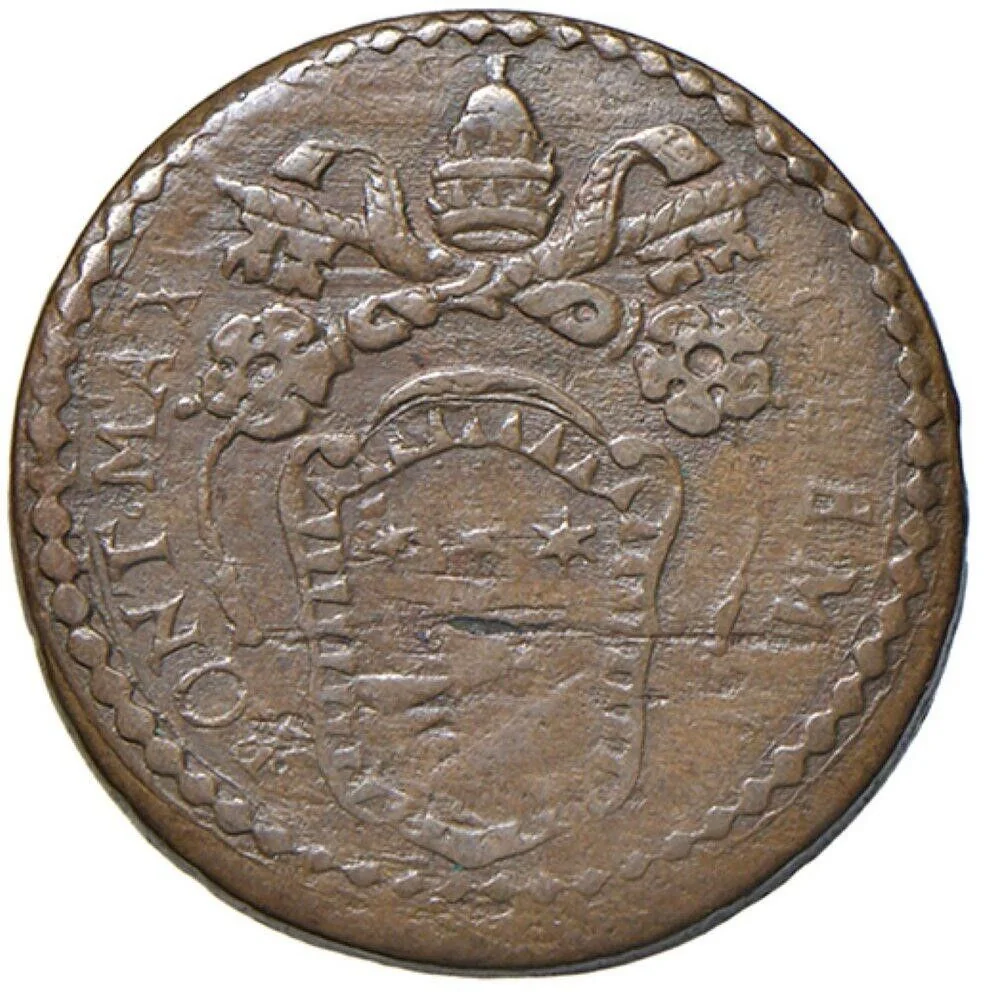
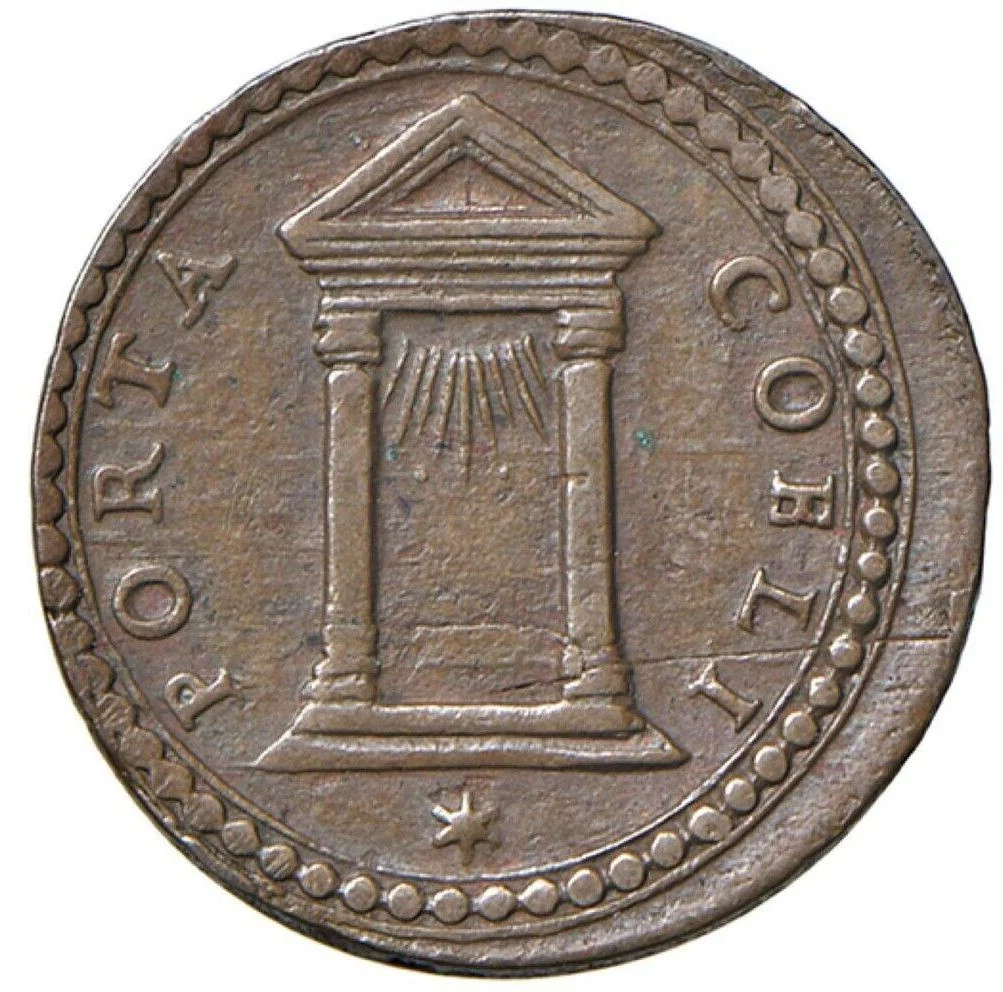
1 quattrino – Gubbio
Add to wishlist
Italy
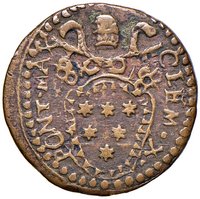
Obverse
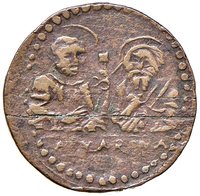
Reverse
Edge
Plain
Categories
| Symbols> Coat of Arms |
Mints
| Name | Mark |
|---|---|
| Gubbio | — |
Mintings
| Year | Mint Mark | Mintage | Quality | Collection |
|---|---|---|---|---|
| 1675 | — | — |
Historical background
In 1675, the Italian city-state of Gubbio, like much of the Papal States under which it fell, navigated a complex and often chaotic monetary environment. The official currency was the Papal scudo, a silver coin minted in Rome, which served as the standard for larger transactions and state finances. However, the daily reality for Gubbio's merchants, artisans, and peasants was a fragmented system where various foreign coins, including Tuscan fiorini, Spanish reales, and even old local grossetti, circulated simultaneously. This proliferation was due to regional trade and the common practice of "clipping" or debasing coins, which eroded public trust in any single denomination.
The local economy, heavily reliant on ceramics, wool, and agriculture, suffered from this instability. The value of coins was not fixed by their face but by their fluctuating metallic weight and purity, requiring money-changers (campsores) at every market to assess and exchange a bewildering array of specie. This created significant friction in commerce, as prices for goods like grain, oil, or hand-painted majolica were difficult to standardize. Furthermore, Gubbio’s authorities faced the persistent challenge of controlling the money supply, as older, debased coins drove out the newer, full-weight papal issues—a classic example of Gresham's Law in action.
Ultimately, monetary policy was dictated from Rome, leaving Gubbio with little direct control. The Papal Treasury, concerned with broader fiscal needs, periodically recalled and re-minted coins, often altering their silver content to generate seigniorage revenue. These reforms, while stabilizing state finances in the capital, frequently exacerbated confusion in provincial centers like Gubbio. Thus, in 1675, the city's currency situation was one of subservience to papal decrees, characterized by a cumbersome multiplicity of circulating media that complicated daily life and reflected its diminished political autonomy within the early modern papal system.
The local economy, heavily reliant on ceramics, wool, and agriculture, suffered from this instability. The value of coins was not fixed by their face but by their fluctuating metallic weight and purity, requiring money-changers (campsores) at every market to assess and exchange a bewildering array of specie. This created significant friction in commerce, as prices for goods like grain, oil, or hand-painted majolica were difficult to standardize. Furthermore, Gubbio’s authorities faced the persistent challenge of controlling the money supply, as older, debased coins drove out the newer, full-weight papal issues—a classic example of Gresham's Law in action.
Ultimately, monetary policy was dictated from Rome, leaving Gubbio with little direct control. The Papal Treasury, concerned with broader fiscal needs, periodically recalled and re-minted coins, often altering their silver content to generate seigniorage revenue. These reforms, while stabilizing state finances in the capital, frequently exacerbated confusion in provincial centers like Gubbio. Thus, in 1675, the city's currency situation was one of subservience to papal decrees, characterized by a cumbersome multiplicity of circulating media that complicated daily life and reflected its diminished political autonomy within the early modern papal system.
✨ Legendary