

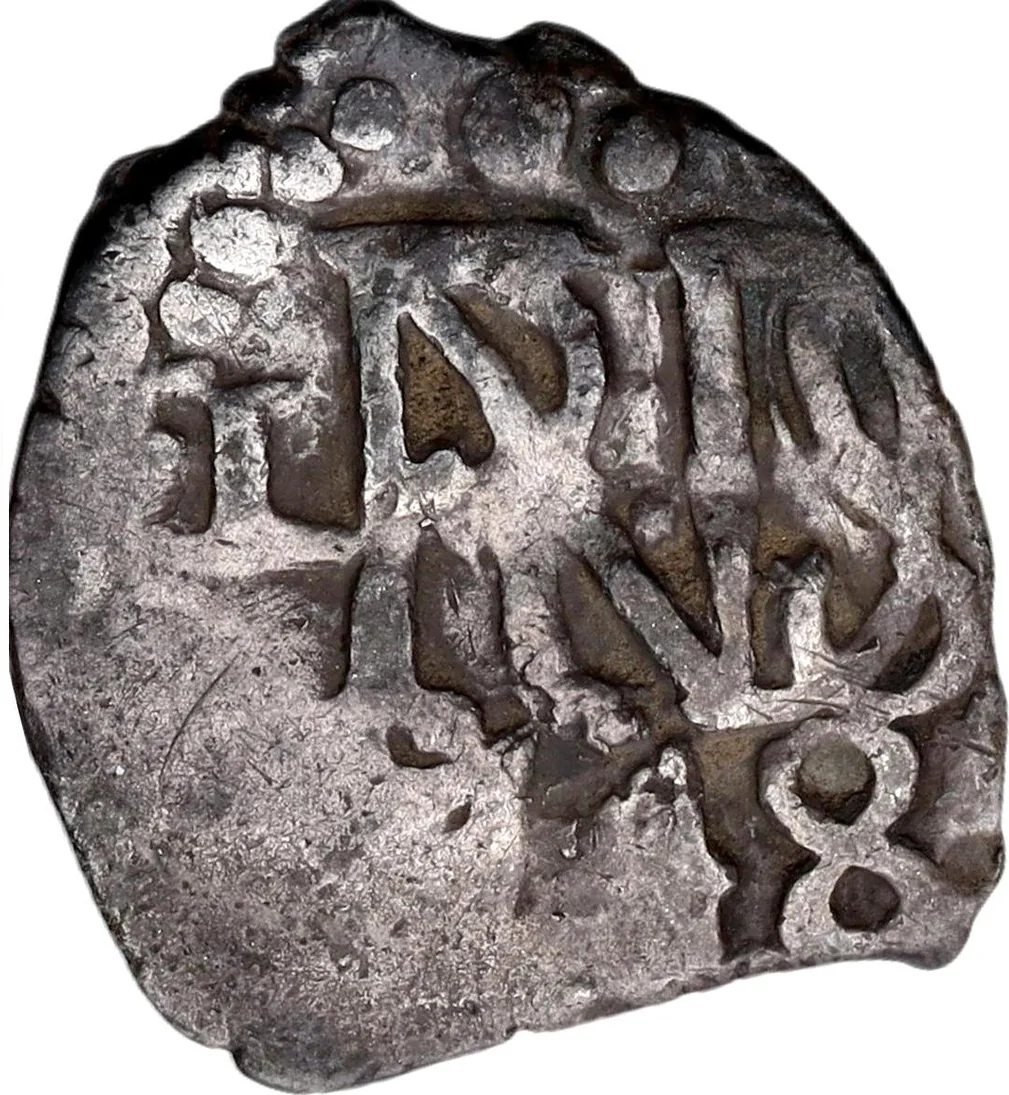
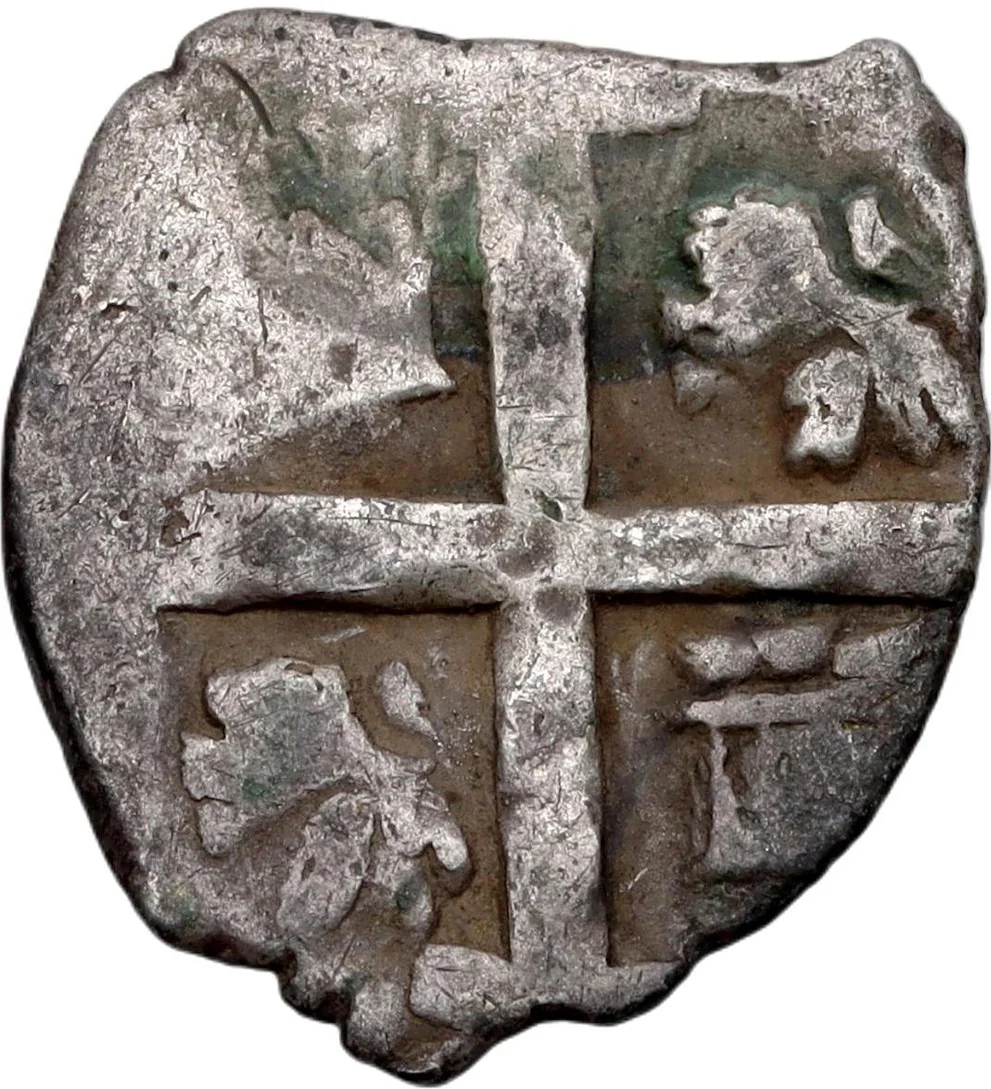
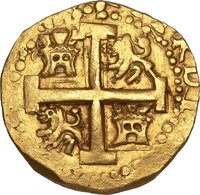
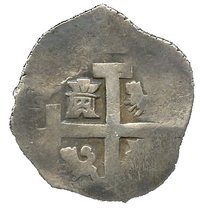
Obverse
Description:
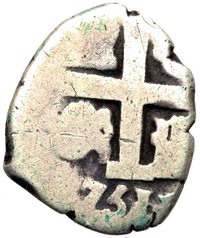
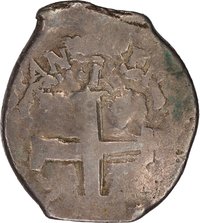
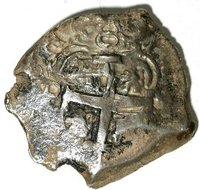
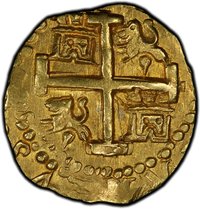
Jerusalem Cross with Lima-style castles and lions, crowned, within a dotted border. Mint mark left, assayer right.
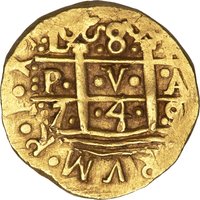
Reverse
Description:
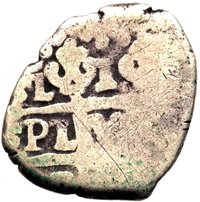
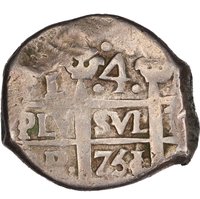
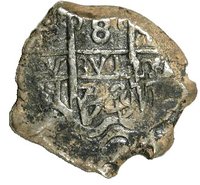
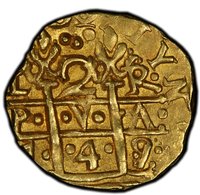
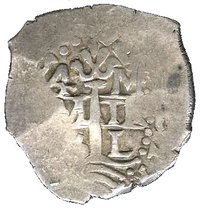
King Ferdinand VI monogram and date. Mint mark left, assayer right. Dotted border. Legend, often faint or abbreviated, reads a variant of "FERNANDVS VI.DG. REX. YNDIARVM - LIMA .ANO. 1747". Final 1/2 real cob from Lima (1747-1752). Assayers: "V" (Vargas, 1747-1749, 1749 rare) and "R" (Rodriguez, 1749-1752). Distinct from Potosi's clear "FDI" monogram; Lima's appears as a jumbled "R\DS" or "F\DS".
Inscription:
FERNANDVS VI.DG. REX. YNDIARVM - LIMA .ANO. 1747
Edge
Mintings
| Year | Mint Mark | Mintage | Quality | Collection |
|---|---|---|---|---|
| 1747 | L | — | ||
| 1748 | L | — | ||
| 1749 | L | — | ||
| 1750 | L | — | ||
| 1751 | L | — |
Historical background
In 1747, the Viceroyalty of Peru was grappling with a severe and chronic currency crisis rooted in the depletion of the Potosí silver mines, the economic engine of Spanish South America. After over two centuries of intense extraction, the mines' yields were in steep decline, leading to a critical shortage of silver for minting coins at the royal mint in Lima. This scarcity was exacerbated by a massive outflow of silver to Spain and other colonies to pay for imports and royal taxes, leaving the local economy starved of circulating medium. The result was a contraction in commercial activity and growing reliance on barter and credit among merchants, stifling trade and causing widespread economic anxiety.
The Spanish Crown's monetary policies further complicated the situation. The primary circulating coin was the silver real, with the famous "piece of eight" (8 reales) being the standard. However, the shortage led to the proliferation of debased and counterfeit coins, which eroded public trust in the currency. Furthermore, the government attempted to maintain a fixed bimetallic ratio between silver and gold, but the intrinsic value of the metals often differed from their official face value, leading to hoarding and the disappearance of full-weight coins from circulation—a classic example of Gresham's Law. This monetary instability created a complex and inefficient system where the value and authenticity of every coin were subject to doubt.
This crisis occurred within a broader context of Bourbon Reforms, as the Spanish Crown sought to centralize control and increase revenue from its colonies. The monetary dysfunction of 1747 highlighted the structural weaknesses of Peru's colonial economy and directly prompted later reforms. Notably, it set the stage for the establishment of new royal mints, such as the one created in Santiago de Chile in 1749, to better manage regional coinage. The situation underscored the Viceroyalty's declining position as the sole financial hub of South America and foreshadowed the economic recentering that would gradually shift commercial and monetary influence toward the Atlantic coast in the coming decades.
The Spanish Crown's monetary policies further complicated the situation. The primary circulating coin was the silver real, with the famous "piece of eight" (8 reales) being the standard. However, the shortage led to the proliferation of debased and counterfeit coins, which eroded public trust in the currency. Furthermore, the government attempted to maintain a fixed bimetallic ratio between silver and gold, but the intrinsic value of the metals often differed from their official face value, leading to hoarding and the disappearance of full-weight coins from circulation—a classic example of Gresham's Law. This monetary instability created a complex and inefficient system where the value and authenticity of every coin were subject to doubt.
This crisis occurred within a broader context of Bourbon Reforms, as the Spanish Crown sought to centralize control and increase revenue from its colonies. The monetary dysfunction of 1747 highlighted the structural weaknesses of Peru's colonial economy and directly prompted later reforms. Notably, it set the stage for the establishment of new royal mints, such as the one created in Santiago de Chile in 1749, to better manage regional coinage. The situation underscored the Viceroyalty's declining position as the sole financial hub of South America and foreshadowed the economic recentering that would gradually shift commercial and monetary influence toward the Atlantic coast in the coming decades.
Series: 1747 Peru circulation coins

✨ Legendary