

½ Real – Peru
Peru

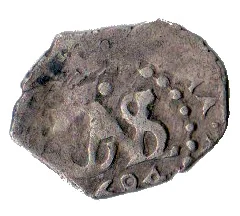
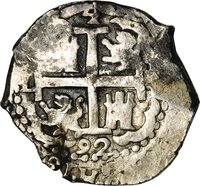
Obverse
Description:
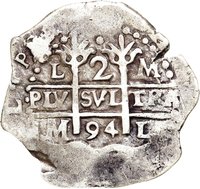
CII monogram with partial date
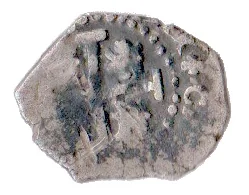
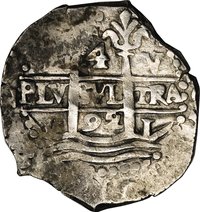
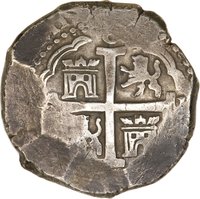
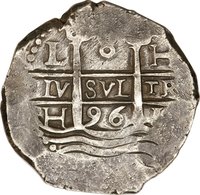
Reverse
Description:
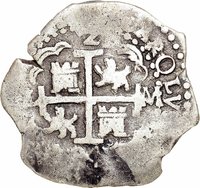
Jerusalem Cross with lions and castles in the quarters.
Edge
Mintings
| Year | Mint Mark | Mintage | Quality | Collection |
|---|---|---|---|---|
| 1684 | V | 1,445,458 | ||
| 1685 | R | 1,009,154 | ||
| 1686 | R | — | ||
| 1687 | R | — | ||
| 1688 | R | — | ||
| 1689 | V | — | ||
| 1690 | V | — | ||
| 1691 | R | — | ||
| 1692 | V | — | ||
| 1693 | V | 95,039 | ||
| 1694 | M | 214,534 | ||
| 1695 | R | 202,474 | ||
| 1696 | H | 122,476 | ||
| 1697 | H | 114,744 | ||
| 1698 | H | 104,989 | ||
| 1699 | R | — | ||
| 1700 | H | 271,986 | ||
| 1701 | H | — |
Historical background
In 1684, the Viceroyalty of Peru was grappling with a severe and multifaceted currency crisis that threatened the economic stability of Spain's most valuable South American possession. The root of the problem lay in the widespread debasement and counterfeiting of silver coins, particularly the ubiquitous reales, produced at the Potosí mint. For decades, illicit practices by mint officials and private assayers had systematically reduced the silver content in coins, creating a flood of underweight currency that corroded trust in the monetary system both within the colony and in international trade.
The crisis prompted decisive action from the Spanish Crown. That very year, Viceroy Melchor de Navarra y Rocafull, the Duke of La Palata, implemented a drastic monetary reform known as the "Reducción de la moneda." His government ordered the recall and recoinage of all suspect currency, forcibly melting down millions of pesos in debased coins to be restruck to the proper standard. This process was economically painful, causing short-term disruption and liquidity shortages, but it was deemed essential to restore the credibility of Peruvian silver, which was the lifeblood of the global Spanish Empire.
The 1684 reform had profound consequences. It successfully reestablished the integrity of the peso for commerce, but the recoinage came at a significant cost to private holders, who saw the value of their circulating currency sharply reduced. Furthermore, the crisis and its resolution underscored the Crown's increasing focus on administrative control over its colonial economies. The episode solidified the importance of the Potosí mint and set a precedent for stricter royal oversight, aiming to prevent such a collapse of monetary confidence from ever happening again.
The crisis prompted decisive action from the Spanish Crown. That very year, Viceroy Melchor de Navarra y Rocafull, the Duke of La Palata, implemented a drastic monetary reform known as the "Reducción de la moneda." His government ordered the recall and recoinage of all suspect currency, forcibly melting down millions of pesos in debased coins to be restruck to the proper standard. This process was economically painful, causing short-term disruption and liquidity shortages, but it was deemed essential to restore the credibility of Peruvian silver, which was the lifeblood of the global Spanish Empire.
The 1684 reform had profound consequences. It successfully reestablished the integrity of the peso for commerce, but the recoinage came at a significant cost to private holders, who saw the value of their circulating currency sharply reduced. Furthermore, the crisis and its resolution underscored the Crown's increasing focus on administrative control over its colonial economies. The episode solidified the importance of the Potosí mint and set a precedent for stricter royal oversight, aiming to prevent such a collapse of monetary confidence from ever happening again.
Series: 1684 Peru circulation coins
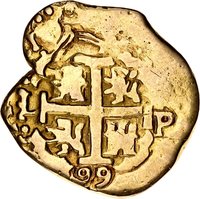
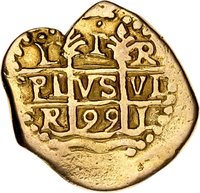
💎 Extremely Rare