

2 Speciedaler – Norway
Norway
Context

Material
References
KM: #Click to copy to clipboard110
Numista: #462112
Value
Bullion value: $143.74
Obverse
Description:
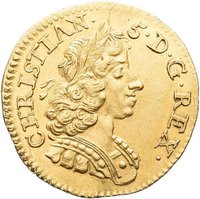
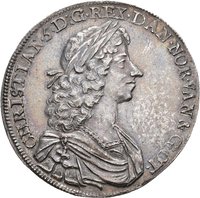
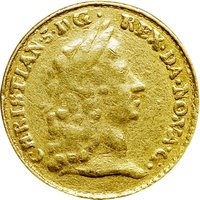
Bust of King Christian V with laurel wreath and long hair, facing right, encircled by an inscription. Rim with beaded ring.
Inscription:
CHRISTIAN·5·D·G·REX·DAN·NOR·VAN&GOT·
Script: Latin
Reverse
Description:
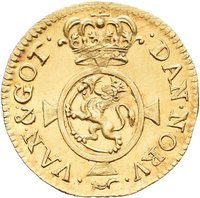
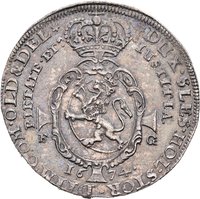
Norwegian lion with axe in crowned oval shield on a cross, flanked by inscriptions. Shield divides initials and date. Beaded rim.
Inscription:
🟌 DUX·SLES·HOL·STOR· DITM·COM·OLD&DEL 🟌
PIETATE·ET· IUSTITIA·
F G
16 74·
PIETATE·ET· IUSTITIA·
F G
16 74·
Script: Latin
Edge
Plain
Mints
| Name | Mark |
|---|---|
| Christiania | — |
Mintings
| Year | Mint Mark | Mintage | Quality | Collection |
|---|---|---|---|---|
| 1674 | — | — |
Historical background
In 1674, Norway found itself in a precarious monetary crisis, a direct consequence of its political union with Denmark under the absolutist King Christian V. The kingdom’s currency, the riksdaler, was fundamentally undermined by a severe shortage of silver, the metal that backed its value. This scarcity was exacerbated by decades of costly warfare and a chronic negative trade balance, which drained precious metal from the realm. Furthermore, the official minted coins were consistently undervalued compared to their intrinsic metal worth, leading to widespread hoarding and the export of full-weight coins, leaving only degraded currency in domestic circulation.
The situation was critically worsened by the circulation of vast quantities of low-quality klippe coins—crudely minted, square-shaped tokens of copper and billon (a base silver alloy). Originally introduced as emergency wartime money, these coins flooded the Norwegian economy. Their face value was artificially mandated by royal decree (kurs), but their actual metal content was far inferior, creating a destructive divergence between official and market value. This practice, effectively a form of seigniorage, generated short-term revenue for the crown but at the cost of devastating public trust in the currency and fueling rampant inflation.
Consequently, daily economic life in 1674 Norway was characterized by monetary chaos. Merchants and the public struggled with a confusing dual system of "good" silver coins used for foreign trade and nearly worthless token coins for domestic purchases. Prices soared as the value of the klippe plummeted, causing significant hardship, particularly for wage earners and those on fixed incomes. This crisis set the stage for a major monetary reform, which would arrive in 1686 with the introduction of a new, unified silver-based currency, but in 1674, the Norwegian economy remained mired in instability and depreciating coinage.
The situation was critically worsened by the circulation of vast quantities of low-quality klippe coins—crudely minted, square-shaped tokens of copper and billon (a base silver alloy). Originally introduced as emergency wartime money, these coins flooded the Norwegian economy. Their face value was artificially mandated by royal decree (kurs), but their actual metal content was far inferior, creating a destructive divergence between official and market value. This practice, effectively a form of seigniorage, generated short-term revenue for the crown but at the cost of devastating public trust in the currency and fueling rampant inflation.
Consequently, daily economic life in 1674 Norway was characterized by monetary chaos. Merchants and the public struggled with a confusing dual system of "good" silver coins used for foreign trade and nearly worthless token coins for domestic purchases. Prices soared as the value of the klippe plummeted, causing significant hardship, particularly for wage earners and those on fixed incomes. This crisis set the stage for a major monetary reform, which would arrive in 1686 with the introduction of a new, unified silver-based currency, but in 1674, the Norwegian economy remained mired in instability and depreciating coinage.
Series: 1674 Norway circulation coins

✨ Legendary