

2 Marks – Sweden
Sweden
Context

Material
References
KM: #Click to copy to clipboard98
Numista: #114993
Value
Bullion value: $22.45
Obverse
Description:
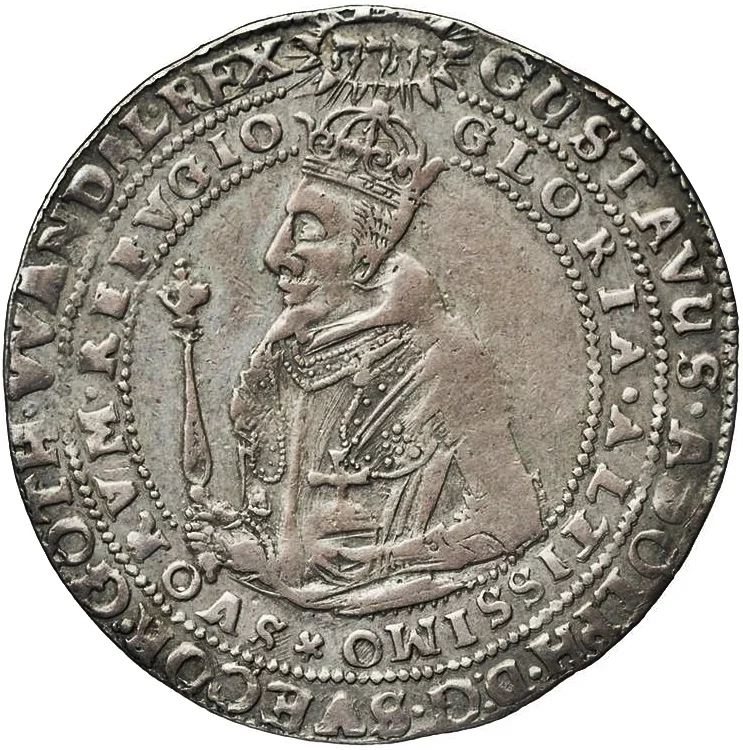
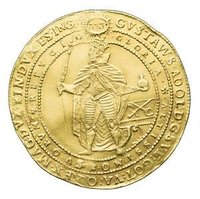
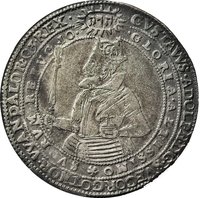
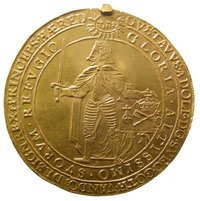
Armored bust of King Gustav Adolf, crowned and holding a scepter and Globus Cruciger. Two inscribed lines encircle him, with the radiant Hebrew name of Jehovah above his head between them.
Inscription:
GVSTAVUS·ADOLPH·D:G·SVECOR·GOTH·WANDAL·REX
( יהוה )
GLORIA · ALTISSIMO * SVORVM · REFUGIO
( יהוה )
GLORIA · ALTISSIMO * SVORVM · REFUGIO
Reverse
Description:
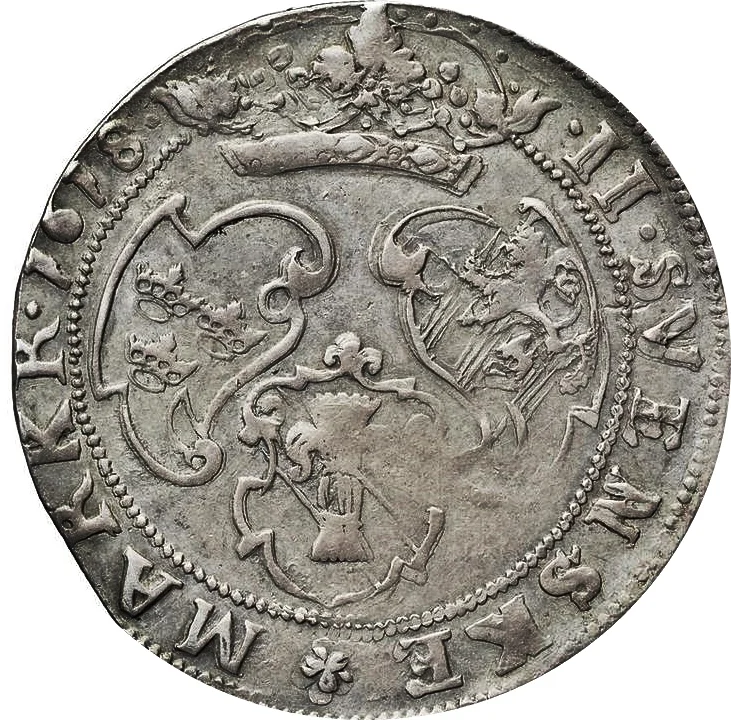
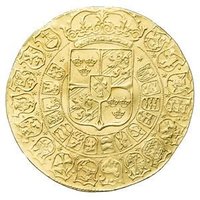
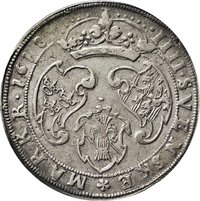
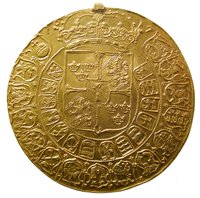
Crown above three shields in a triangular frame: the top two (Sweden's Three Crowns and the Folkungs Lion) bend inward, above a shield with the Vasa Arms. This central motif is encircled by beads, with the value and date around the outside.
Inscription:
· II · SVENSKE * MARKR · 1618 ·
Script: Latin
Edge
Mintings
| Year | Mint Mark | Mintage | Quality | Collection |
|---|---|---|---|---|
| 1618 | — | — | ||
| 1619 | — | — |
Historical background
In 1618, Sweden was in the midst of a profound monetary crisis rooted in the aggressive foreign policy of King Gustavus Adolphus. The kingdom was embroiled in costly wars, first against Russia and Poland-Livonia, and was on the brink of deeper involvement in the Thirty Years' War. To finance these vast military ambitions, the state resorted to heavy taxation and, most damagingly, the severe debasement of its coinage. The Swedish riksdaler and öre were systematically minted with reduced silver content, flooding the realm with inferior coins and causing rampant inflation.
This practice, known as "myntförsämring" (coin deterioration), created economic chaos. Trust in the currency collapsed as people hoarded older, purer coins, leading to Gresham's Law in action: "bad money drives out good." Prices for goods and services soared, severely impacting the peasantry and townsfolk whose fixed incomes or wages bought less. The Crown's short-term gain from seigniorage (the profit from minting) was offset by long-term economic instability and social discontent, as the real value of tax revenues also fell.
The situation demanded radical reform, which would soon arrive under Chancellor Axel Oxenstierna. In the early 1620s, just after this period, he would oversee a complete monetary recoinage, establishing a stable, standardized system based on the newly created riksdaler specie. Thus, the currency situation in 1618 represents the crisis point that made Sweden's subsequent financial and administrative modernization not just beneficial, but essential for its survival and emergence as a great power.
This practice, known as "myntförsämring" (coin deterioration), created economic chaos. Trust in the currency collapsed as people hoarded older, purer coins, leading to Gresham's Law in action: "bad money drives out good." Prices for goods and services soared, severely impacting the peasantry and townsfolk whose fixed incomes or wages bought less. The Crown's short-term gain from seigniorage (the profit from minting) was offset by long-term economic instability and social discontent, as the real value of tax revenues also fell.
The situation demanded radical reform, which would soon arrive under Chancellor Axel Oxenstierna. In the early 1620s, just after this period, he would oversee a complete monetary recoinage, establishing a stable, standardized system based on the newly created riksdaler specie. Thus, the currency situation in 1618 represents the crisis point that made Sweden's subsequent financial and administrative modernization not just beneficial, but essential for its survival and emergence as a great power.
✨ Legendary