

1 jefimok ruble – Russian Empire
Add to wishlist
Russia
Obverse
Description:
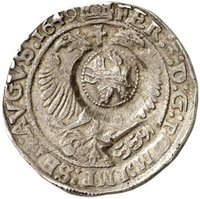
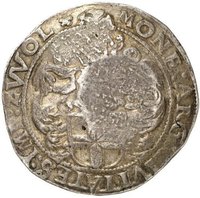
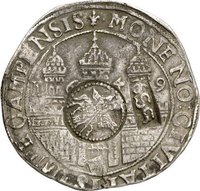
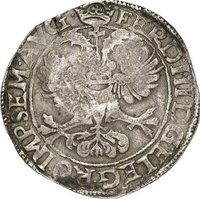
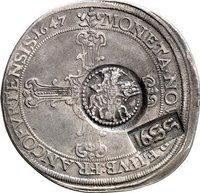
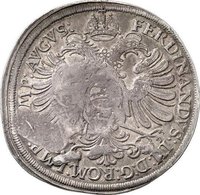
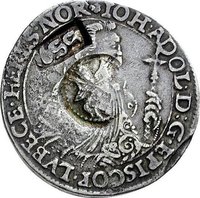
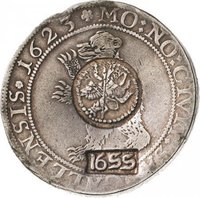
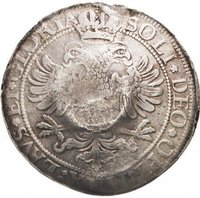
Jefimok Rouble: A Polish Thaler (host coin 1633-1638) counterstamped with a date and a speared horseman. Dav# 4374.
Inscription:
1655
Script: Latin
Reverse
Script: Latin
Edge
Mintings
| Year | Mint Mark | Mintage | Quality | Collection |
|---|---|---|---|---|
| 1655 | — | — |
Historical background
In 1655, the Russian Empire was grappling with a severe monetary crisis rooted in the policies of Tsar Alexis I. The primary currency was the silver denga, but a chronic shortage of domestic silver bullion had long plagued the state. To finance an expensive war with the Polish-Lithuanian Commonwealth (the Thirteen Years' War), the government resorted to a desperate measure: debasing the coinage. Starting in 1654, the treasury began minting large quantities of copper kopecks and altyns, officially assigning them the same face value as their silver counterparts despite their vastly lower intrinsic worth.
This move triggered immediate economic chaos. The rapid influx of unbacked copper coins caused rampant inflation, as the market quickly distinguished between the two metals. Prices for essential goods, particularly grain, skyrocketed, devastating peasants, soldiers, and urban dwellers on fixed incomes. The situation was exacerbated by widespread counterfeiting and the government's own insistence on collecting taxes in silver while paying salaries and military stipends in the nearly worthless copper. This created a destructive cycle that eroded public trust in the currency and the state's financial authority.
The crisis, which would escalate into the violent "Copper Riot" (Medny bunt) of 1662 in Moscow, revealed the fundamental weaknesses of the Muscovite fiscal system. It was a classic case of a pre-modern state attempting to fund a major war through monetary manipulation rather than sustainable taxation or credit. By 1655, the policy was already failing, sowing deep social discontent and economic dislocation that would threaten the stability of the Tsar's reign for years to come.
This move triggered immediate economic chaos. The rapid influx of unbacked copper coins caused rampant inflation, as the market quickly distinguished between the two metals. Prices for essential goods, particularly grain, skyrocketed, devastating peasants, soldiers, and urban dwellers on fixed incomes. The situation was exacerbated by widespread counterfeiting and the government's own insistence on collecting taxes in silver while paying salaries and military stipends in the nearly worthless copper. This created a destructive cycle that eroded public trust in the currency and the state's financial authority.
The crisis, which would escalate into the violent "Copper Riot" (Medny bunt) of 1662 in Moscow, revealed the fundamental weaknesses of the Muscovite fiscal system. It was a classic case of a pre-modern state attempting to fund a major war through monetary manipulation rather than sustainable taxation or credit. By 1655, the policy was already failing, sowing deep social discontent and economic dislocation that would threaten the stability of the Tsar's reign for years to come.

✨ Legendary