

1 lira – San Marino
Add to wishlist
Non-circulating coins
Commemoration: Marinus at Monte Titano
San Marino
Context
Year: 1994
Issuer: San Marino
Period:
(since 301)
Currency:
(1864—2001)
Demonetization: 1 March 2002
Total mintage: 40,000
Material
References
KM: #
Numista: #11840
Value
Exchange value: 1 SML
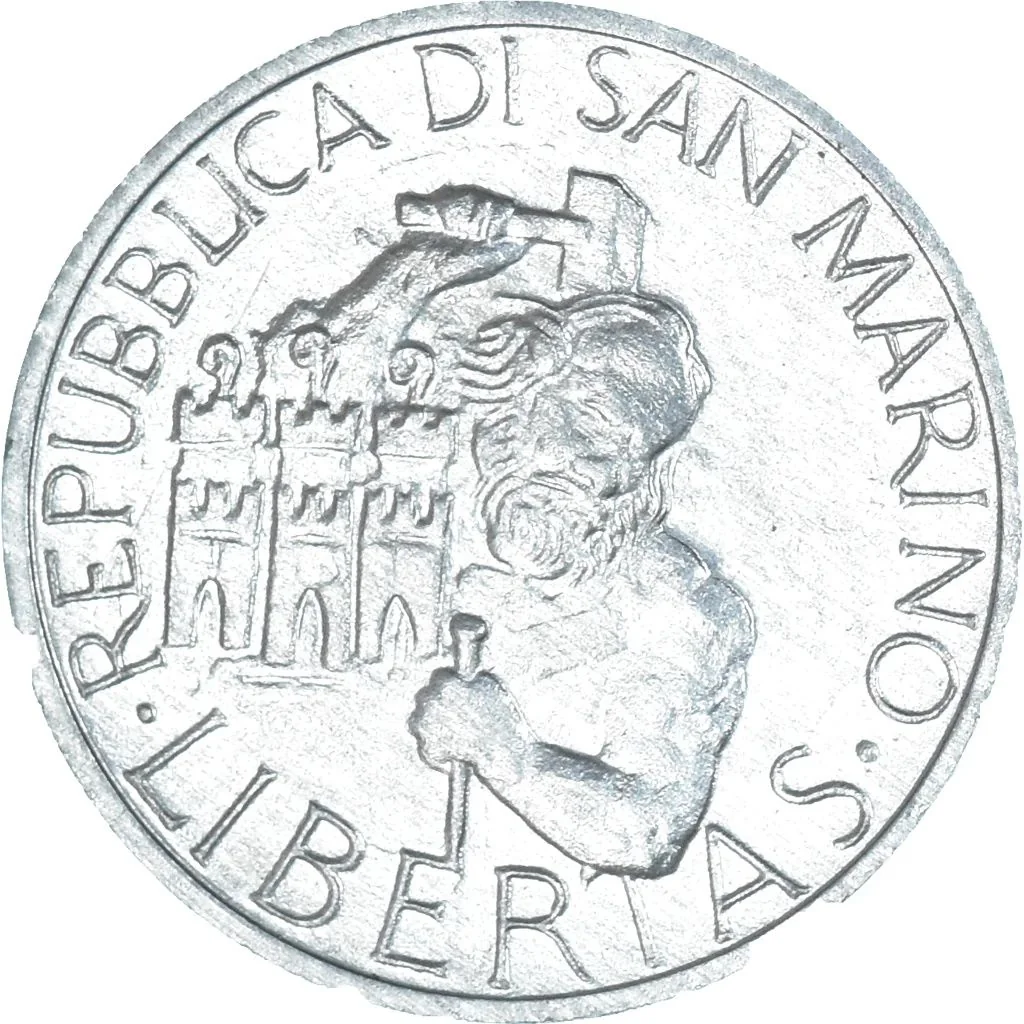
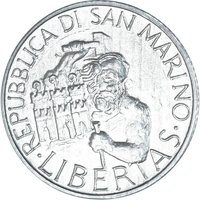
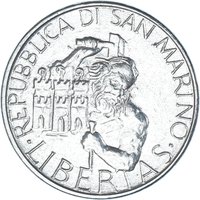
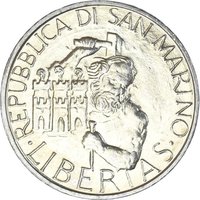
Obverse
Description:
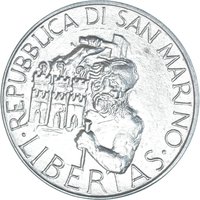
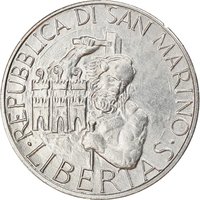
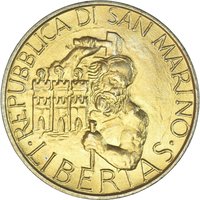
San Marinus holding a mallet and chisel, with three feathered towers beside him.
Inscription:
REPUBBLICA DI SAN MARINO
LIBERTAS
LIBERTAS
Translation:
Liberty Republic of San Marino
Script: Latin
Engraver: Alojz Lujo Lozica
Designer: Eugenio Driutti
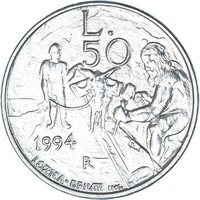
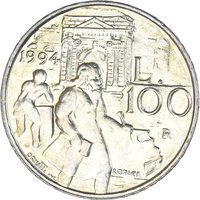
Reverse
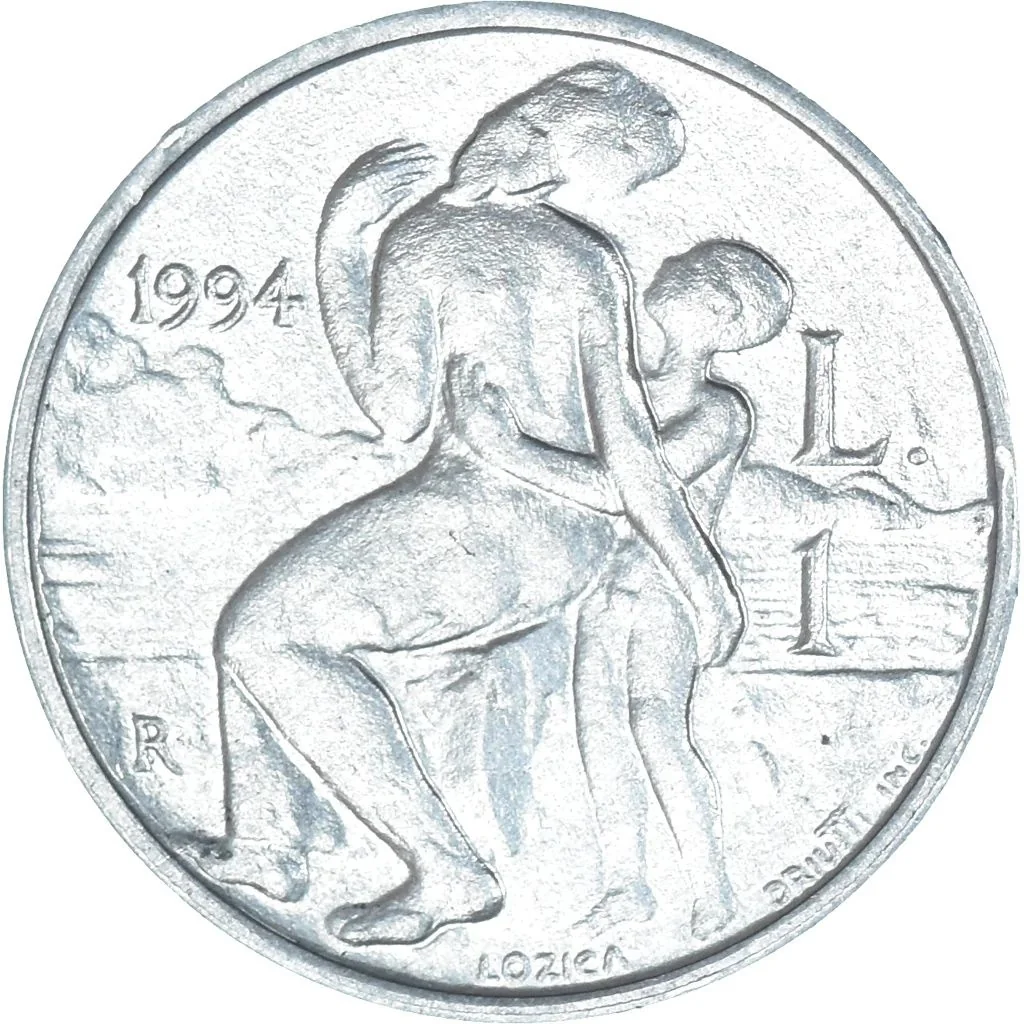
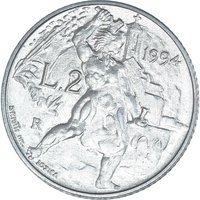
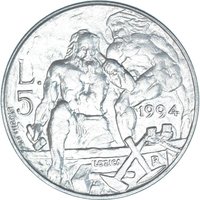
Description:
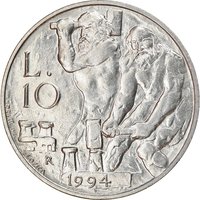
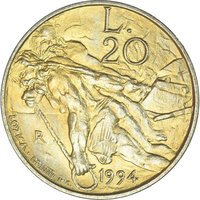
Mother with child
Inscription:
1994
L1
R
L1
R
Script: Latin
Engraver: Alojz Lujo Lozica
Designer: Eugenio Driutti
Edge
Plain
Mints
| Name | Mark |
|---|---|
| Rome | R |
Mintings
| Year | Mint Mark | Mintage | Quality | Collection |
|---|---|---|---|---|
| 1994 | R | 40,000 | In sets |
Historical background
In 1994, the currency situation in the Republic of San Marino was defined by its long-standing and intricate monetary relationship with Italy, formalized in a series of bilateral conventions. While the Sammarinese lira was the official national currency, it was pegged at par with the Italian lira and circulated interchangeably within the microstate. Italy, in turn, was obligated to mint San Marino's coinage (both in lira and higher-value commemorative gold and silver scudi) and to supply a portion of its circulating currency, a critical arrangement for a country without its own central bank or mint. This system granted San Marino a stable and internationally recognized currency but came at the cost of ceding direct monetary sovereignty to its much larger neighbor.
The year 1994 fell within a period of significant European monetary transition, as the Maastricht Treaty (1992) had set the path for Economic and Monetary Union (EMU). While Italy was a member of the European Exchange Rate Mechanism (ERM), the lira had experienced severe turbulence and was forced to exit in 1992. Consequently, San Marino's currency was indirectly tied to this volatile European context through the Italian lira. Domestically, San Marino was already preparing for the future introduction of the euro, engaging in discussions to secure a new agreement that would allow it to continue using a partner nation's currency, just as it had with the lira.
Therefore, the background of 1994 is one of a stable but dependent system in its final phase. The existing lira-based convention with Italy functioned effectively for daily transactions, but the looming European integration project rendered it obsolete. Sammarinese authorities were actively negotiating with Italy and the European Community to ensure a smooth transition, seeking the right to mint its own euro coins—a privilege it would eventually secure—to maintain a symbol of national identity and a source of numismatic revenue in the post-1999 monetary landscape.
The year 1994 fell within a period of significant European monetary transition, as the Maastricht Treaty (1992) had set the path for Economic and Monetary Union (EMU). While Italy was a member of the European Exchange Rate Mechanism (ERM), the lira had experienced severe turbulence and was forced to exit in 1992. Consequently, San Marino's currency was indirectly tied to this volatile European context through the Italian lira. Domestically, San Marino was already preparing for the future introduction of the euro, engaging in discussions to secure a new agreement that would allow it to continue using a partner nation's currency, just as it had with the lira.
Therefore, the background of 1994 is one of a stable but dependent system in its final phase. The existing lira-based convention with Italy functioned effectively for daily transactions, but the looming European integration project rendered it obsolete. Sammarinese authorities were actively negotiating with Italy and the European Community to ensure a smooth transition, seeking the right to mint its own euro coins—a privilege it would eventually secure—to maintain a symbol of national identity and a source of numismatic revenue in the post-1999 monetary landscape.
🌟 Uncommon