

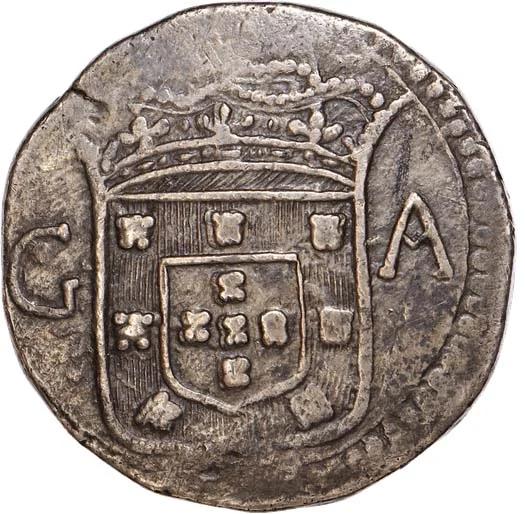
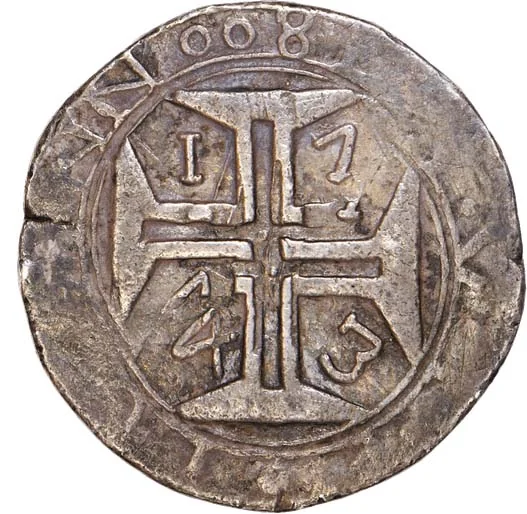
800 réis – Mozambique
Add to wishlist
Mozambique
Context
Material
Diameter: 26 mm
Weight: 11.6 g
Silver Weight:: 10.63 g
Shape: Irregular round
Composition: 91.6% Silver
Magnetic: No
Technique: Hammered
References
KM: #
Numista: #45760
Value
Bullion value: $27.15
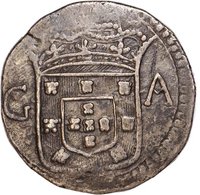
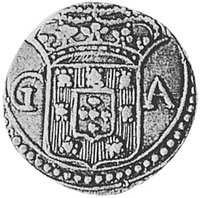
Obverse
Inscription:
G A
Script: Latin
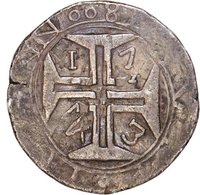
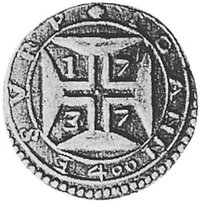
Reverse
Inscription:
800 / IOANNES V D G R P
1 7
3 5
1 7
3 5
Script: Latin
Edge
Mintings
| Year | Mint Mark | Mintage | Quality | Collection |
|---|---|---|---|---|
| 1735 | G | — | ||
| 1737 | G | — | ||
| 1743 | G | — |
Historical background
In 1735, the currency situation in the Mozambique presídios (coastal forts) and trading settlements was a complex hybrid system dominated by the Indian Ocean trade network. The official Portuguese currency, the real, was in circulation but was not the primary medium for major commerce. Instead, long-standing regional currencies held sway. The most important of these was the Mexican silver real or "pataca", a sturdy, widely recognized silver coin that arrived via trade routes from the Americas and Asia. It served as the key currency for high-value transactions, particularly the purchase of ivory and gold, which were the colony's main exports at the time.
Alongside silver, two forms of cloth currency were fundamental units of account, especially for the purchase of enslaved people and for local trade. The most prevalent was the "pano" (cloth), specifically a type of Indian cotton cloth imported from Gujarat. These panos were standardized in quality and length, forming a reliable barter currency. Additionally, "machiras" – a coarser, locally produced cotton cloth – circulated for smaller, everyday transactions. This system created a multi-layered economy: silver for international trade and state finances, imported cloth for the slave trade and regional commerce, and local cloth for subsistence markets.
This monetary environment reflected Mozambique’s role as a periphery within both the Portuguese empire and the wider Indian Ocean economy. Lisbon's control was tenuous, and the chronic shortage of official Portuguese coinage forced authorities to accept and use the existing trade currencies. Furthermore, the thriving but illicit trade with French, Dutch, and English interlopers, who paid in silver, further entrenched the use of non-Portuguese currency. Thus, in 1735, Mozambique's currency was not a unified system but a pragmatic mosaic of commodity money and foreign coin, underpinning a economy increasingly oriented toward supplying enslaved laborers to French plantations in the Mascarene Islands.
Alongside silver, two forms of cloth currency were fundamental units of account, especially for the purchase of enslaved people and for local trade. The most prevalent was the "pano" (cloth), specifically a type of Indian cotton cloth imported from Gujarat. These panos were standardized in quality and length, forming a reliable barter currency. Additionally, "machiras" – a coarser, locally produced cotton cloth – circulated for smaller, everyday transactions. This system created a multi-layered economy: silver for international trade and state finances, imported cloth for the slave trade and regional commerce, and local cloth for subsistence markets.
This monetary environment reflected Mozambique’s role as a periphery within both the Portuguese empire and the wider Indian Ocean economy. Lisbon's control was tenuous, and the chronic shortage of official Portuguese coinage forced authorities to accept and use the existing trade currencies. Furthermore, the thriving but illicit trade with French, Dutch, and English interlopers, who paid in silver, further entrenched the use of non-Portuguese currency. Thus, in 1735, Mozambique's currency was not a unified system but a pragmatic mosaic of commodity money and foreign coin, underpinning a economy increasingly oriented toward supplying enslaved laborers to French plantations in the Mascarene Islands.
✨ Legendary