

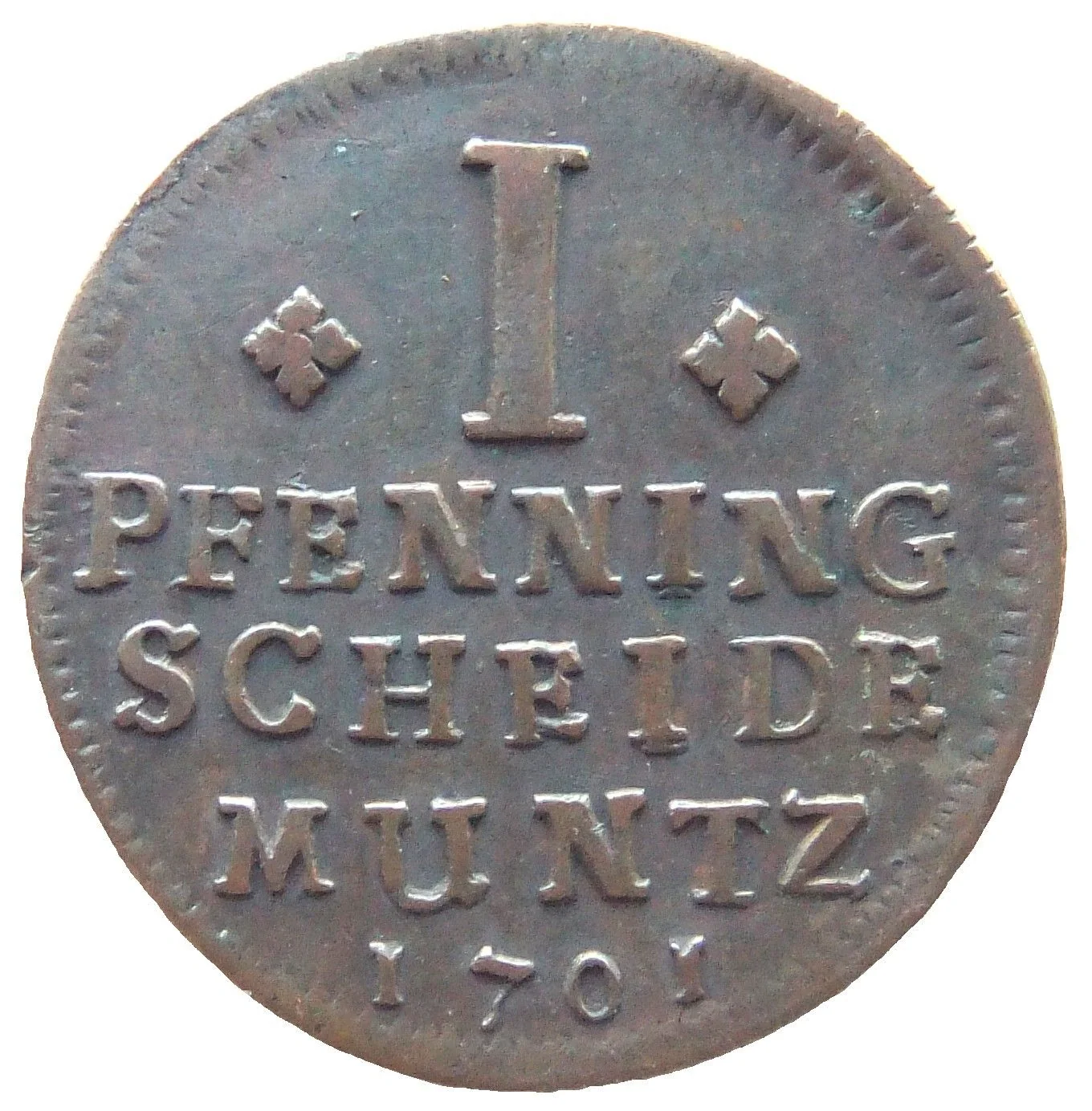
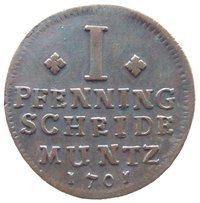
1 Pfennig – Brunswick-Lüneburg-Celle
Germany
Context
Year: 1701
Country: Germany 
Issuer: Brunswick-Lüneburg-Celle
Ruler: George William
Currency:
Demonetized: Yes
References
KM: #Click to copy to clipboard361
Numista: #456149
Obverse
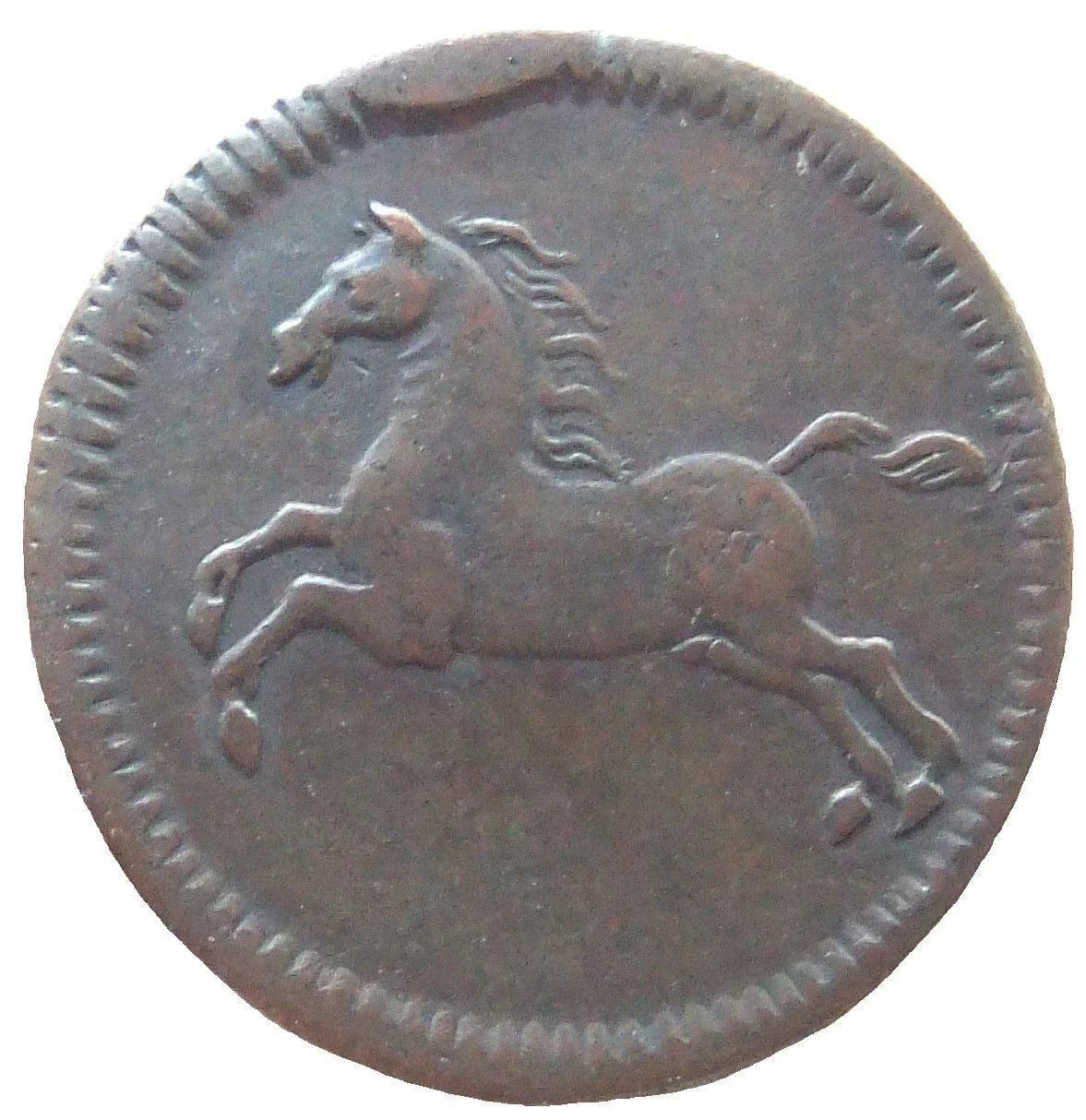
Description:
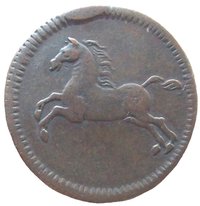
Equine.
Reverse
Edge
Mints
| Name | Mark |
|---|---|
| Celle | — |
Mintings
| Year | Mint Mark | Mintage | Quality | Collection |
|---|---|---|---|---|
| 1701 | — | — |
Historical background
In 1701, the Duchy of Brunswick-Lüneburg, specifically the sub-principality of Celle under Duke George William, operated within the complex monetary landscape of the Holy Roman Empire. The region was part of the northern German Thaler currency area, but its coinage was heavily influenced by the monetary policies of the nearby Hanseatic cities, particularly Hamburg and Lübeck, whose bank money (Mark Banco) set a standard for high-value trade. However, the actual circulating currency was a chaotic mix of domestic and foreign coins, including Thalers, Gulden, and smaller Groschen and Pfennige, often with varying intrinsic values and exchange rates.
This period was marked by significant monetary stress due to the ongoing War of the Spanish Succession (1701-1714). Duke George William, as a close ally of the Habsburg Emperor and a military provider, faced immense fiscal pressure to fund his troops. A common method to raise short-term revenue was Kipper- und Wipperzeit practices—the debasement of coinage by reducing the precious metal content while maintaining its face value. This led to inflation, a loss of public trust, and the hoarding of older, full-value coins, which further disrupted local commerce and caused grievances among the population.
Consequently, the currency situation in Celle in 1701 was one of instability and transition, caught between the demands of imperial warfare and the need for reliable daily commerce. The ducal government struggled to maintain a stable standard, the Lüneburg Celler Kurantthaler, while covertly or overtly allowing debasement to meet military expenses. This tension between sovereign fiscal necessity and economic stability was a defining feature of the era's monetary policy, setting the stage for later 18th-century reforms aimed at creating more uniform territorial currencies.
This period was marked by significant monetary stress due to the ongoing War of the Spanish Succession (1701-1714). Duke George William, as a close ally of the Habsburg Emperor and a military provider, faced immense fiscal pressure to fund his troops. A common method to raise short-term revenue was Kipper- und Wipperzeit practices—the debasement of coinage by reducing the precious metal content while maintaining its face value. This led to inflation, a loss of public trust, and the hoarding of older, full-value coins, which further disrupted local commerce and caused grievances among the population.
Consequently, the currency situation in Celle in 1701 was one of instability and transition, caught between the demands of imperial warfare and the need for reliable daily commerce. The ducal government struggled to maintain a stable standard, the Lüneburg Celler Kurantthaler, while covertly or overtly allowing debasement to meet military expenses. This tension between sovereign fiscal necessity and economic stability was a defining feature of the era's monetary policy, setting the stage for later 18th-century reforms aimed at creating more uniform territorial currencies.
✨ Legendary