

3 kreuzer – Austrian Empire
Add to wishlist
Austria
Context
Years: 1748–1762
Country: Austria
Issuer: Austrian Empire
Ruler: Francis I of Lorraine
Currency:
(1520—1754)
Demonetized: Yes
Total mintage: 831,000
Material
References
KM: #
Numista: #455552
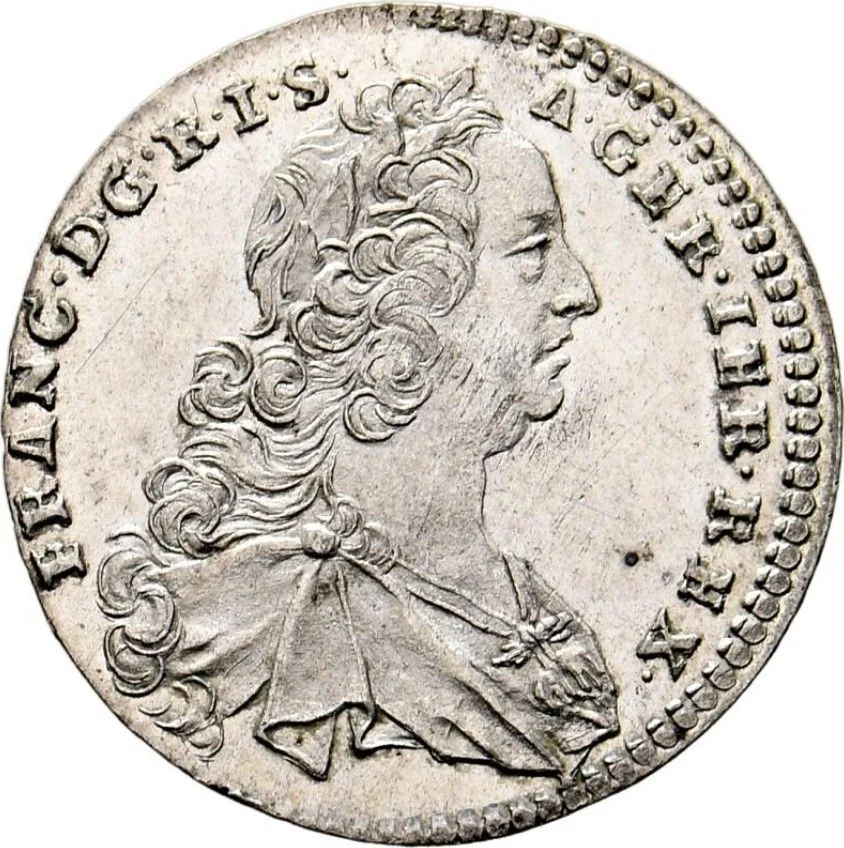
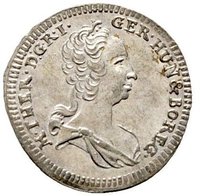
Obverse
Description:
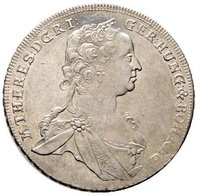
Laureate portrait with draped shoulder, facing right. Head divides legend.
Inscription:
FRANC . D . G . R . I . S . A . GER . IER . REX .
Script: Latin
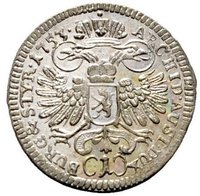
Reverse
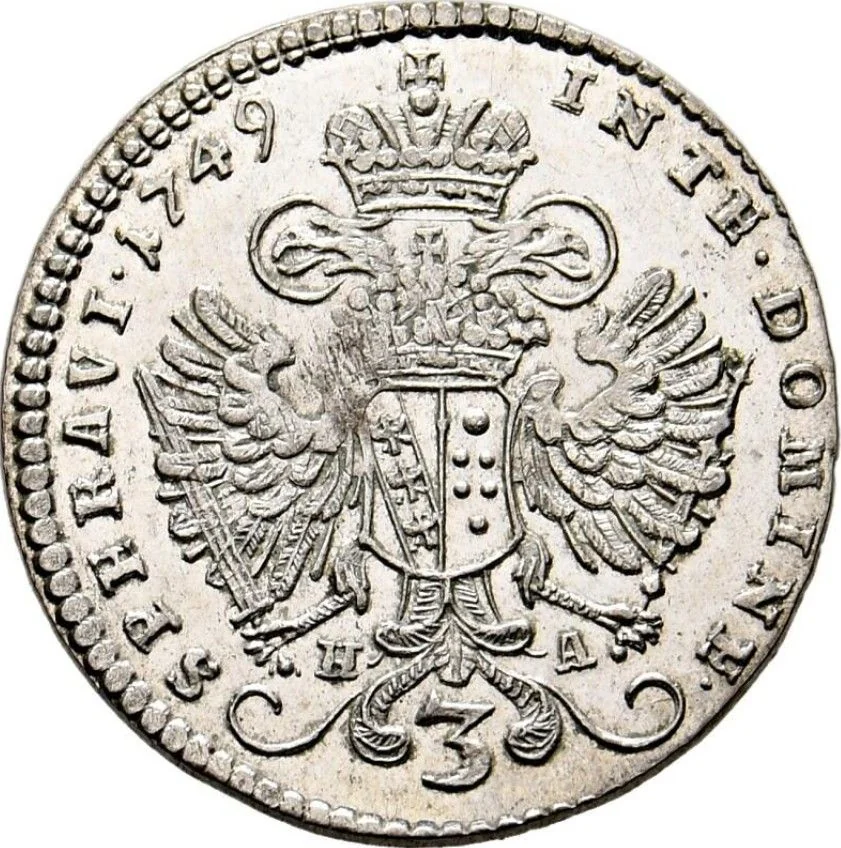
Description:
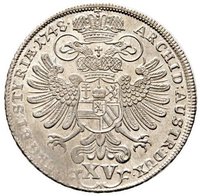
Imperial double-headed eagle with Lorraine and Toscana arms; crown divides legend above. No cartouche. Mint mark below talons.
Inscription:
IN TE DOMINE SPERAVI 1749
H A
3
H A
3
Script: Latin
Edge
Plain
Mints
| Name | Mark |
|---|---|
| Hall | HA |
Mintings
Historical background
In 1748, the Austrian Empire, under the reign of Empress Maria Theresa, was grappling with a severe and complex currency crisis rooted in the financial exhaustion of the War of the Austrian Succession (1740-1748). The immense cost of the near-continuous warfare had been funded largely through debasement—reducing the precious metal content in coins while maintaining their face value. This practice, particularly of the small-denomination Kreuzer coins used in daily life, led to a proliferation of underweight and adulterated currency, causing widespread confusion, loss of public trust, and rampant inflation. The monetary system was a chaotic patchwork of old and new issues, with the value of coins fluctuating wildly based on their perceived metal content rather than their official denomination.
The situation was exacerbated by regional fragmentation, as the Habsburg lands lacked a unified monetary system. Different provinces, such as Hungary and the Austrian Netherlands, operated with their own currencies and standards, complicating imperial finance and trade. Furthermore, the influx of counterfeit coins and the circulation of foreign currencies, especially Prussian coins introduced during the war, deepened the instability. This "currency confusion" (Münzwirren) disrupted commerce, eroded state revenues as taxes were paid in devalued coin, and placed a heavy burden on the common population, who bore the brunt of the inflationary spiral.
Recognizing that financial stability was essential for both recovery and future state power, 1748 marked a pivotal turning point. With the war concluded by the Treaty of Aix-la-Chapelle, Maria Theresa and her advisors, notably Count Friedrich Wilhelm von Haugwitz, initiated a comprehensive reform program. The following year would see the beginning of a drastic monetary restructuring, leading to the great recoinage of 1749/1750 that standardized the gulden and kreuzer, restored the silver content, and began to establish a more uniform and reliable currency system—a crucial foundation for the empire's subsequent administrative and military strengthening.
The situation was exacerbated by regional fragmentation, as the Habsburg lands lacked a unified monetary system. Different provinces, such as Hungary and the Austrian Netherlands, operated with their own currencies and standards, complicating imperial finance and trade. Furthermore, the influx of counterfeit coins and the circulation of foreign currencies, especially Prussian coins introduced during the war, deepened the instability. This "currency confusion" (Münzwirren) disrupted commerce, eroded state revenues as taxes were paid in devalued coin, and placed a heavy burden on the common population, who bore the brunt of the inflationary spiral.
Recognizing that financial stability was essential for both recovery and future state power, 1748 marked a pivotal turning point. With the war concluded by the Treaty of Aix-la-Chapelle, Maria Theresa and her advisors, notably Count Friedrich Wilhelm von Haugwitz, initiated a comprehensive reform program. The following year would see the beginning of a drastic monetary restructuring, leading to the great recoinage of 1749/1750 that standardized the gulden and kreuzer, restored the silver content, and began to establish a more uniform and reliable currency system—a crucial foundation for the empire's subsequent administrative and military strengthening.
✨ Legendary