

⅓ Thaler – Brunswick-Lüneburg-Celle
Germany
Context
Years: 1674–1676
Country: Germany 
Issuer: Brunswick-Lüneburg-Celle
Ruler: George William
Currency:
Demonetized: Yes
Material
References
KM: #Click to copy to clipboard291
Numista: #454605
Value
Bullion value: $22.84
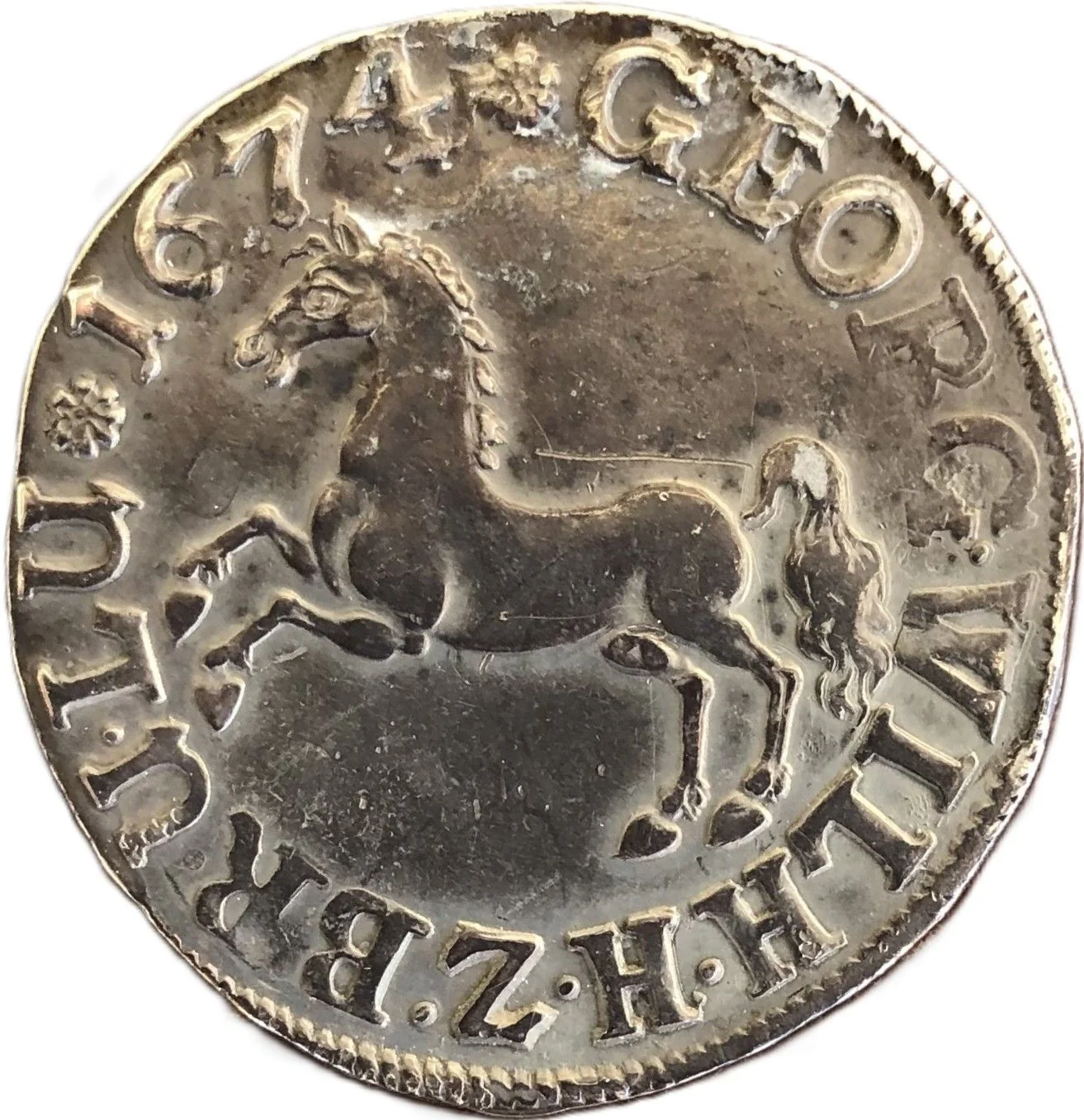
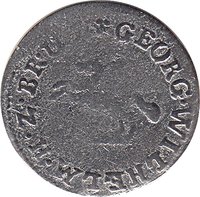
Obverse
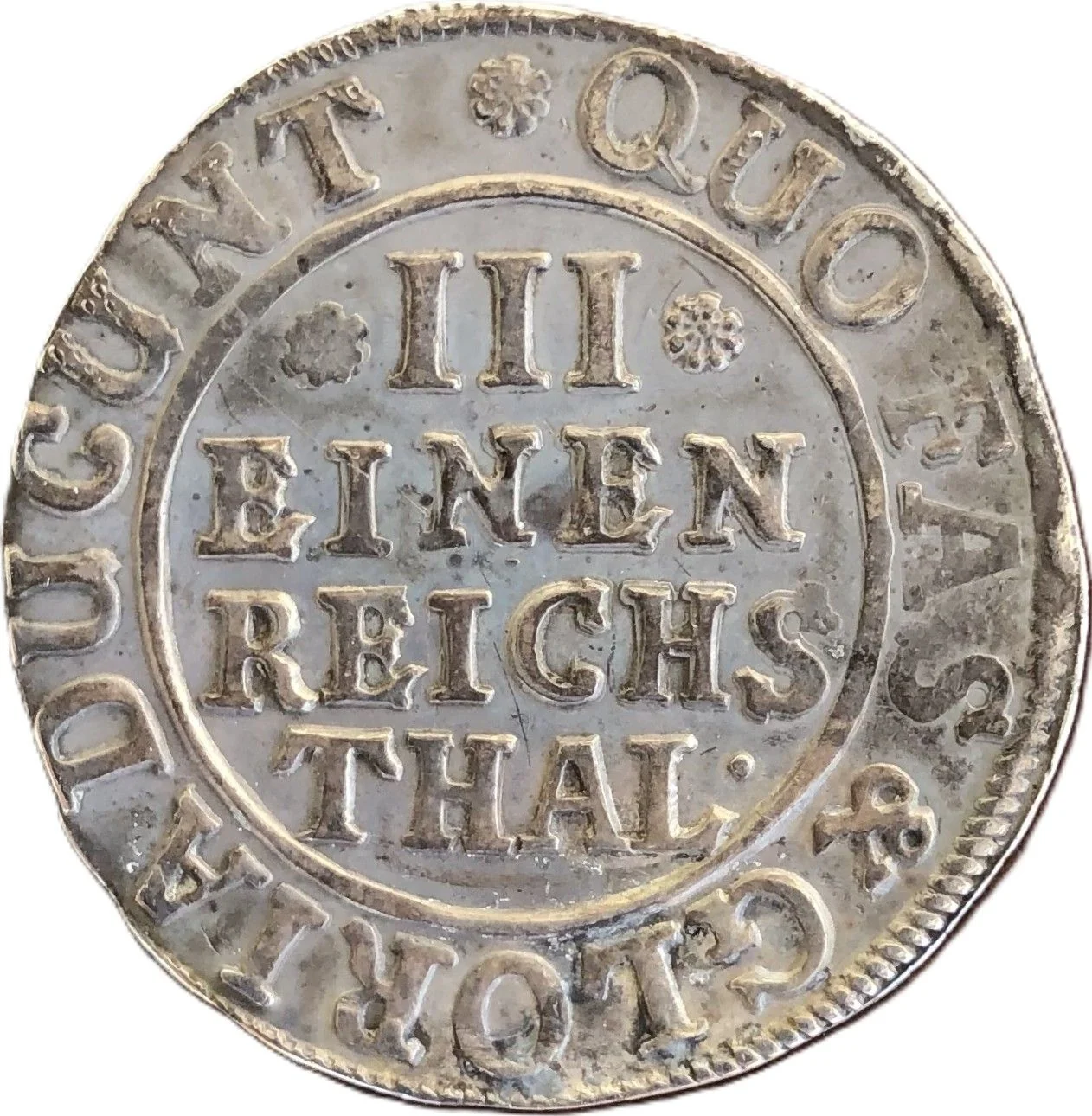
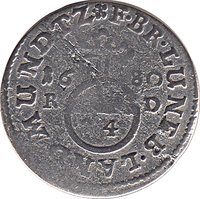
Reverse
Description:
Value encircled by legend.
Inscription:
❀III❀
EINEN
REICHS
THAL•
🞹 QUO FAS & GLORIA DUCUNT
EINEN
REICHS
THAL•
🞹 QUO FAS & GLORIA DUCUNT
Script: Latin
Edge
Mintings
| Year | Mint Mark | Mintage | Quality | Collection |
|---|---|---|---|---|
| 1674 | — | — | ||
| 1675 | — | — | ||
| 1676 | — | — |
Historical background
In 1674, the Duchy of Brunswick-Lüneburg, specifically the Principality of Celle under Duke George William, was entangled in the complex and debilitating monetary chaos common across the Holy Roman Empire. The region operated within a fragmented system where multiple authorities—the Emperor, the Imperial Circles, and individual princes—issued coinage, leading to a proliferation of varying standards and severe debasement. This period was part of the wider Kipper- und Wipperzeit crisis, where states debased coinage to fund the immense costs of the Thirty Years' War and subsequent conflicts, eroding trust in currency and disrupting trade.
Duke George William faced acute financial pressure in 1674 due to his military commitments. As a key ally of the Dutch Republic, he maintained a standing army to defend against French expansion during the Franco-Dutch War (1672-1678). The cost of sustaining these troops strained the principality's finances, creating a strong temptation to engage in currency manipulation. By reducing the precious metal content in coins minted under his authority, the Duke could generate short-term seigniorage profit to pay his soldiers, but this further devalued the currency in circulation.
Consequently, the local economy in Celle and its territories suffered from inflation, uncertainty in commercial transactions, and the circulation of vastly unequal coins from neighboring states. While George William was generally a more conservative ruler than some of his contemporaries, the systemic pressures of war finance and the empire's weak monetary governance meant that 1674 was a year of significant monetary instability. This environment hindered economic recovery and placed a burden on the population, who bore the cost through higher prices and the unpredictable value of their money.
Duke George William faced acute financial pressure in 1674 due to his military commitments. As a key ally of the Dutch Republic, he maintained a standing army to defend against French expansion during the Franco-Dutch War (1672-1678). The cost of sustaining these troops strained the principality's finances, creating a strong temptation to engage in currency manipulation. By reducing the precious metal content in coins minted under his authority, the Duke could generate short-term seigniorage profit to pay his soldiers, but this further devalued the currency in circulation.
Consequently, the local economy in Celle and its territories suffered from inflation, uncertainty in commercial transactions, and the circulation of vastly unequal coins from neighboring states. While George William was generally a more conservative ruler than some of his contemporaries, the systemic pressures of war finance and the empire's weak monetary governance meant that 1674 was a year of significant monetary instability. This environment hindered economic recovery and placed a burden on the population, who bore the cost through higher prices and the unpredictable value of their money.
✨ Legendary