

4 Mariengroschen – Brunswick-Lüneburg-Celle
Germany
Context
Years: 1666–1667
Country: Germany 
Issuer: Brunswick-Lüneburg-Celle
Ruler: George William
Currency:
Demonetized: Yes
Material
References
KM: #Click to copy to clipboard270
Numista: #353648
Value
Bullion value: $6.84
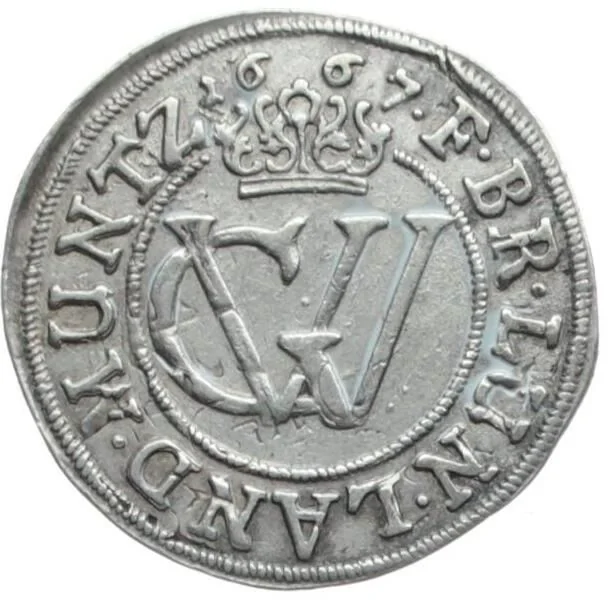
Obverse
Description:
GW monogram crowned, date in legend.
Inscription:
F. BR. LUN. LAND. MUNTZ
1667
1667
Script: Latin
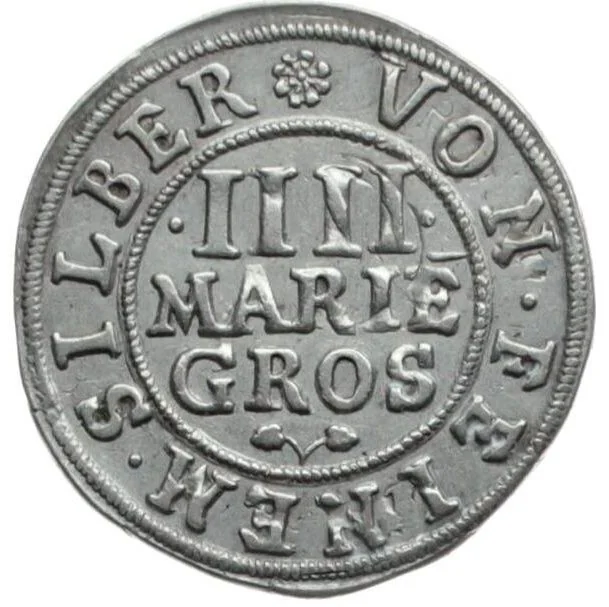
Reverse
Description:
Central inscription in three lines, surrounded by legend.
Inscription:
IIII
MARIE
GROS
VON. FEINEM. SILBER*
MARIE
GROS
VON. FEINEM. SILBER*
Script: Latin
Edge
Mints
| Name | Mark |
|---|---|
| Celle | — |
Mintings
| Year | Mint Mark | Mintage | Quality | Collection |
|---|---|---|---|---|
| 1666 | — | — | ||
| 1667 | — | — |
Historical background
In 1666, the Duchy of Brunswick-Lüneburg, specifically the Principality of Celle under Duke George William, was entangled in the complex and debilitating monetary chaos common across the Holy Roman Empire. The region operated within a fractured system where multiple states issued their own coinage, leading to a proliferation of currencies of wildly varying quality and value. A primary issue was the widespread debasement of coinage, where rulers reduced the precious metal content to generate short-term revenue, thereby fueling inflation and destroying public trust in the currency.
The situation in Celle was further aggravated by the circulation of large quantities of Kipper- und Wipper coins, the debased and lightweight money that had flooded Central Europe during the crisis of the 1620s. While the peak of that crisis had passed, its legacy of bad coinage persisted, circulating alongside older, full-value talers and a multitude of foreign coins from neighboring states. This created a chaotic marketplace where daily transactions required careful evaluation and haggling over the actual worth of each coin, severely hampering trade and economic stability.
Duke George William, like his contemporaries, recognized the need for reform. The year 1666 fell within a period where the Celle mint was actively engaged in attempts to restore monetary order, often through agreements within the Brunswick-Lüneburg family or regional monetary treaties. The goal was to standardize coinage, define exchange rates, and suppress the worst debased money, a slow and politically difficult process essential for securing the principality's fiscal health and facilitating commerce in the latter half of the 17th century.
The situation in Celle was further aggravated by the circulation of large quantities of Kipper- und Wipper coins, the debased and lightweight money that had flooded Central Europe during the crisis of the 1620s. While the peak of that crisis had passed, its legacy of bad coinage persisted, circulating alongside older, full-value talers and a multitude of foreign coins from neighboring states. This created a chaotic marketplace where daily transactions required careful evaluation and haggling over the actual worth of each coin, severely hampering trade and economic stability.
Duke George William, like his contemporaries, recognized the need for reform. The year 1666 fell within a period where the Celle mint was actively engaged in attempts to restore monetary order, often through agreements within the Brunswick-Lüneburg family or regional monetary treaties. The goal was to standardize coinage, define exchange rates, and suppress the worst debased money, a slow and politically difficult process essential for securing the principality's fiscal health and facilitating commerce in the latter half of the 17th century.
✨ Legendary