


Obverse
Description:
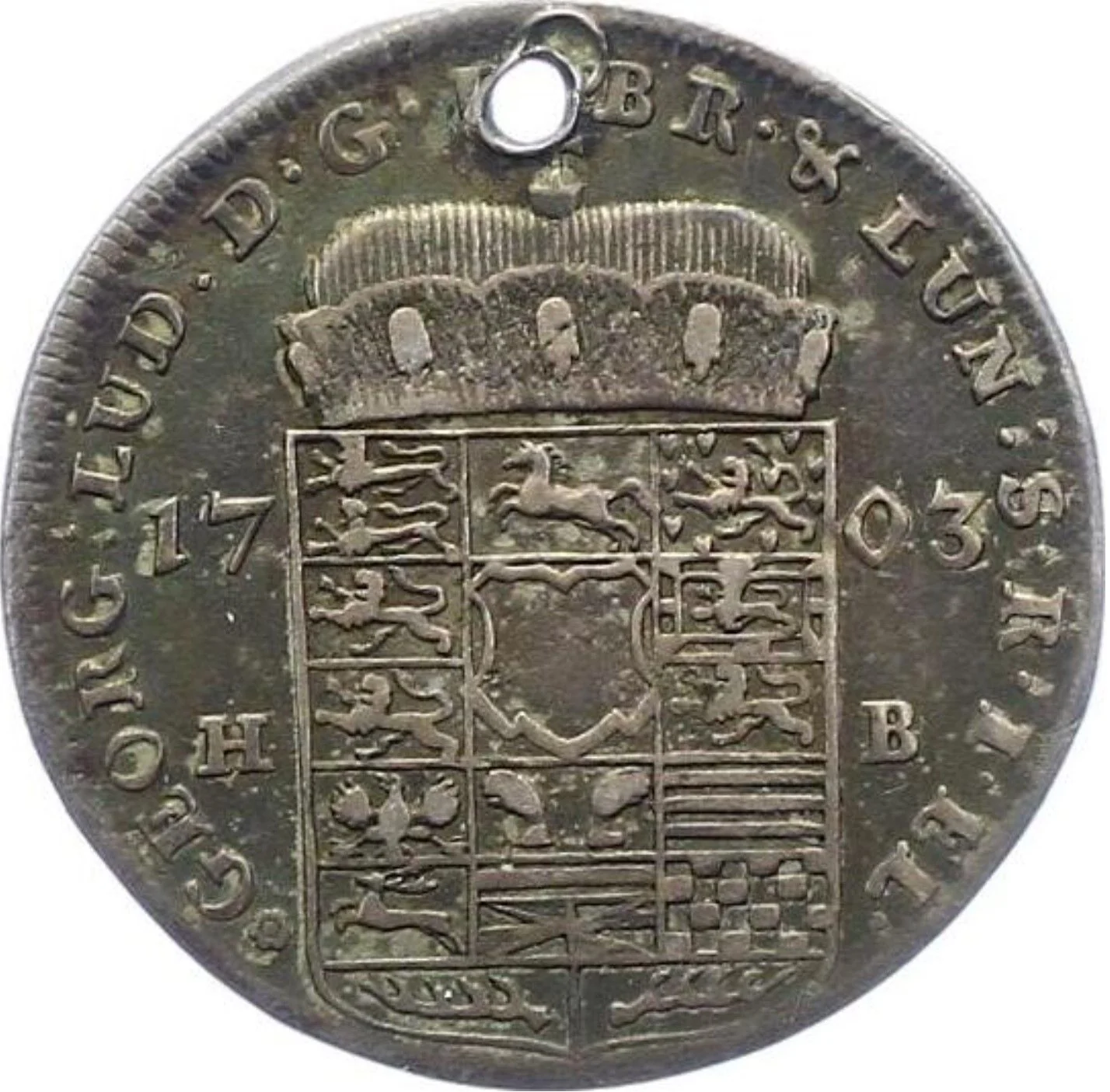
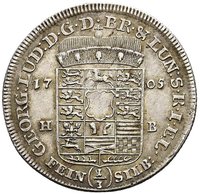
Elector George Louis' coat of arms splits the date.
Inscription:
✿GEORG: LUD: D · G · D · BR ·& LUN : S · R · I · EL ·
1703
HB
1703
HB
Script: Latin
Engraver: Heinrich Bonhorst
Reverse
Description:
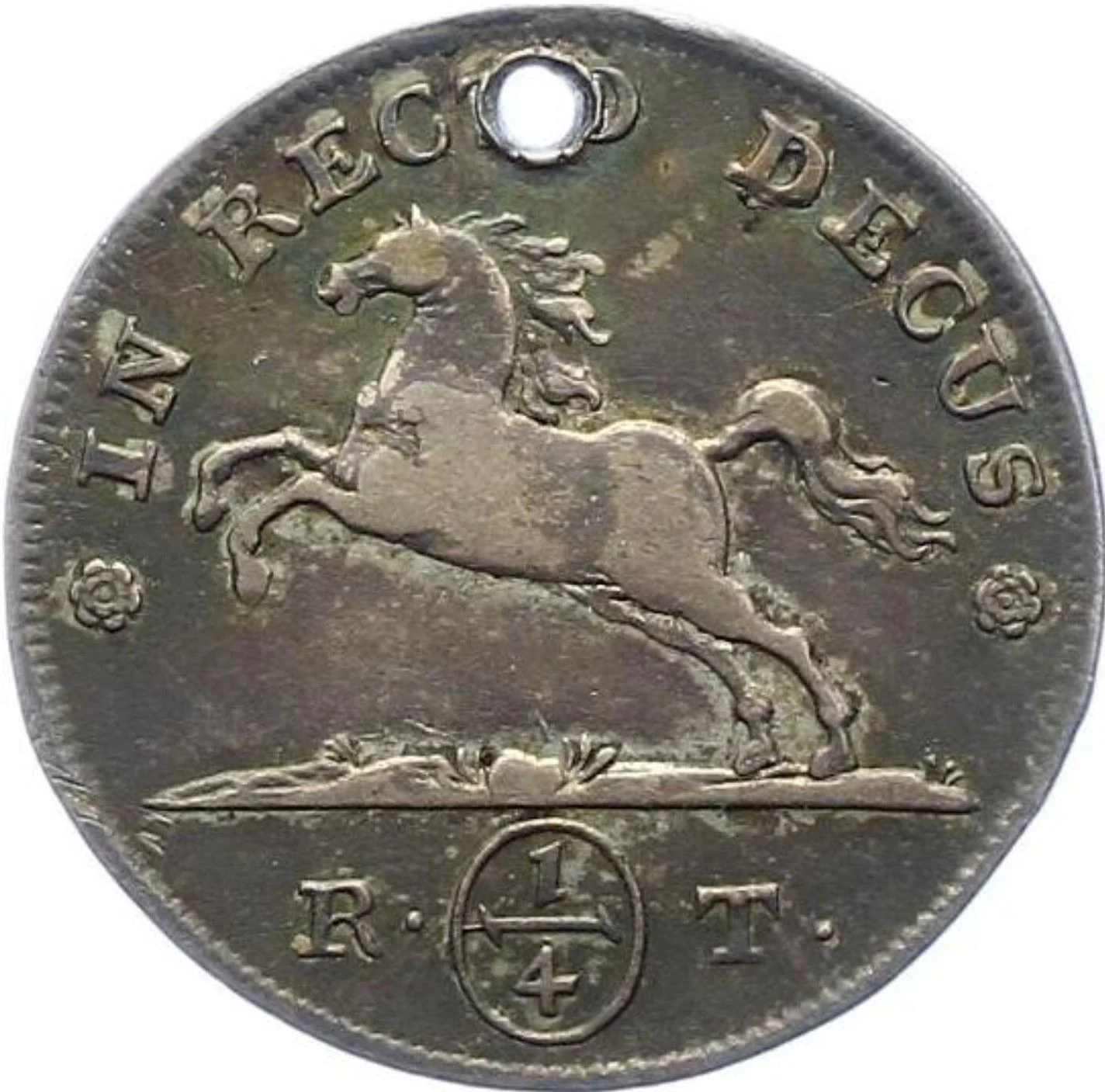
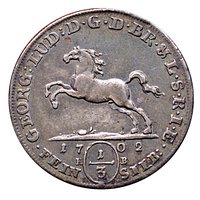
Horse leaping left, lower quarter.
Inscription:
❀ IN RECTO DECUS ❀
(1/4)
R. T.
(1/4)
R. T.
Script: Latin
Engraver: Heinrich Bonhorst
Edge
Mints
| Name | Mark |
|---|---|
| Clausthal | — |
Mintings
| Year | Mint Mark | Mintage | Quality | Collection |
|---|---|---|---|---|
| 1703 | — | — |
Historical background
In 1703, the currency situation in the Duchy of Brunswick-Lüneburg, specifically the Principality of Calenberg (with its capital in Hanover), was characterized by significant complexity and instability. The region operated within the fragmented monetary system of the Holy Roman Empire, where numerous states issued their own coinage. The primary accounting unit was the Reichsthaler, but in daily circulation, a plethora of lower-value coins from various German states and foreign territories circulated, including Gute Groschen, Mariengroschen, and Pfennige. This proliferation of coins of varying intrinsic metal content and value made trade cumbersome and prone to dispute.
The situation was exacerbated by the financial pressures of the War of the Spanish Succession (1701-1714). Elector George Louis (the future King George I of Great Britain), as a key ally of the Habsburg Emperor, required vast sums to maintain his army. This often led to the debasement of coinage—reducing the precious metal content in coins while maintaining their face value—as a means of generating short-term revenue. Consequently, the public's trust in the currency eroded, leading to inflation, hoarding of older, purer coins (Gresham's Law), and economic hardship for the population.
Furthermore, the Hanoverian government struggled to assert control. While attempts were made to regulate exchange rates and mandate the acceptance of official coinage, the sheer volume of foreign and debased coins in circulation undermined these efforts. The year 1703 thus represents a point of monetary tension, caught between the old imperial system and the pressing needs of state finance, laying groundwork for the more centralized monetary reforms that would be pursued later in the 18th century as the Electorate of Hanover sought greater economic stability.
The situation was exacerbated by the financial pressures of the War of the Spanish Succession (1701-1714). Elector George Louis (the future King George I of Great Britain), as a key ally of the Habsburg Emperor, required vast sums to maintain his army. This often led to the debasement of coinage—reducing the precious metal content in coins while maintaining their face value—as a means of generating short-term revenue. Consequently, the public's trust in the currency eroded, leading to inflation, hoarding of older, purer coins (Gresham's Law), and economic hardship for the population.
Furthermore, the Hanoverian government struggled to assert control. While attempts were made to regulate exchange rates and mandate the acceptance of official coinage, the sheer volume of foreign and debased coins in circulation undermined these efforts. The year 1703 thus represents a point of monetary tension, caught between the old imperial system and the pressing needs of state finance, laying groundwork for the more centralized monetary reforms that would be pursued later in the 18th century as the Electorate of Hanover sought greater economic stability.
✨ Legendary