

10 Grani – Malta
Malta
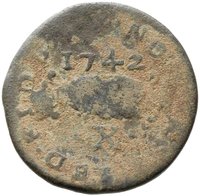
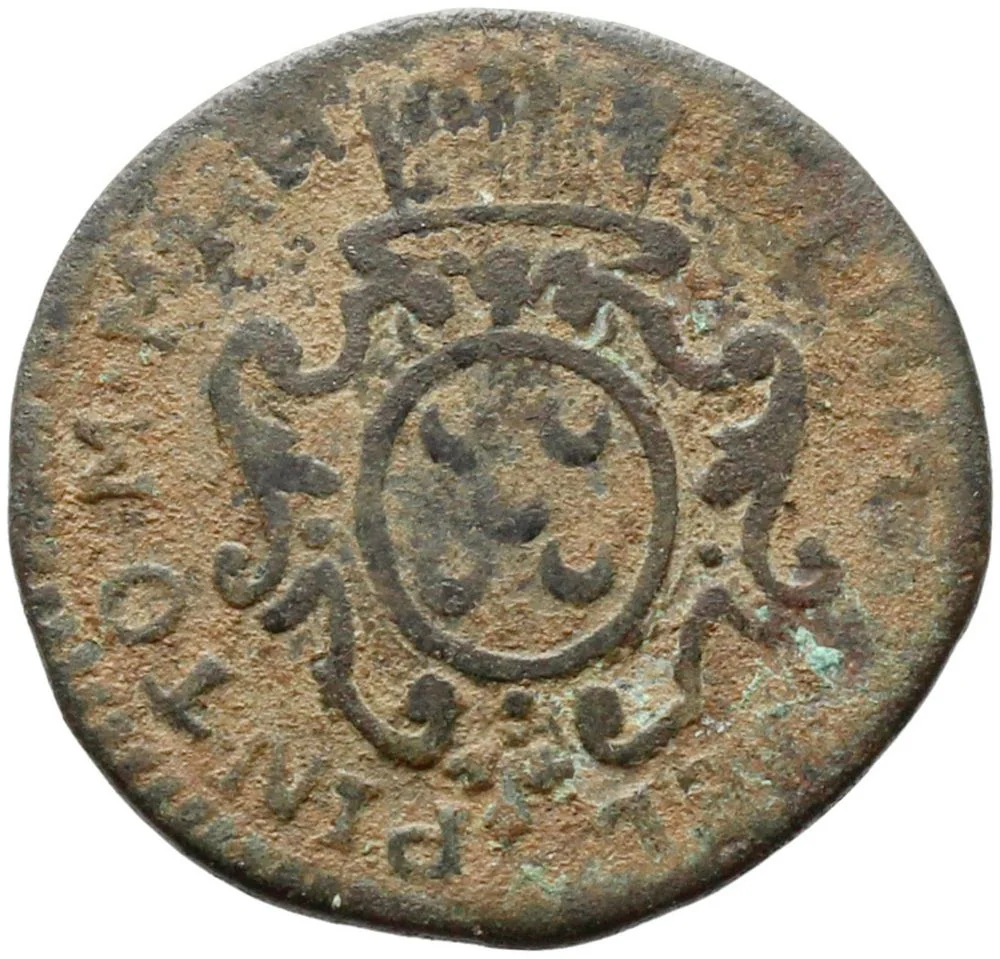
Obverse
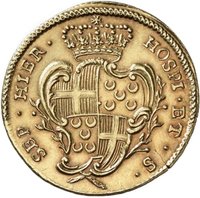
Description:
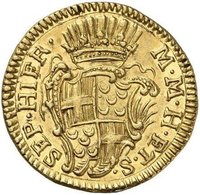
Arms in cartouche with magisterial berretto above.
Inscription:
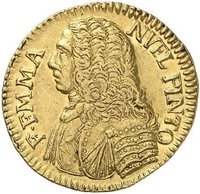
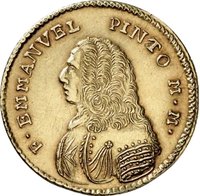
F · EMMANVEL PINTO · M · M · H · H
Script: Latin
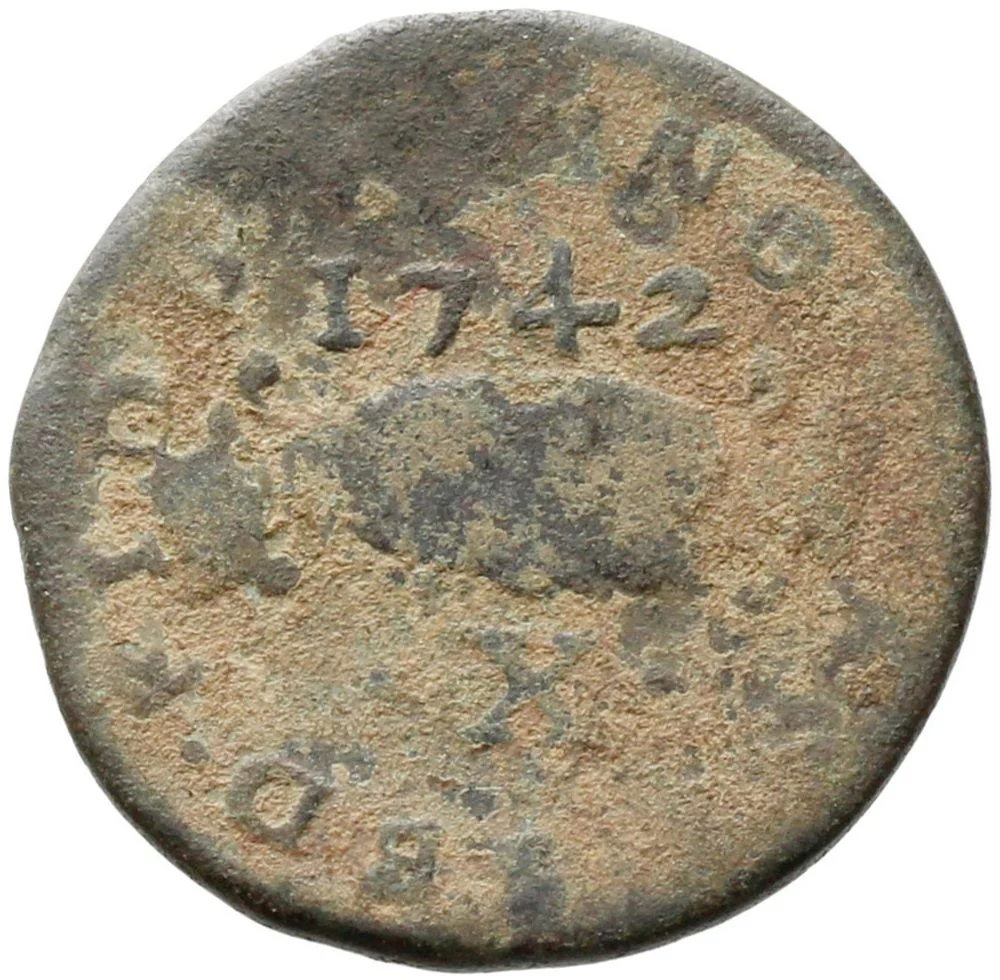
Reverse
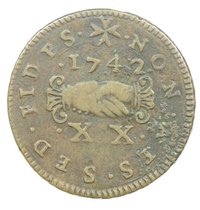
Description:
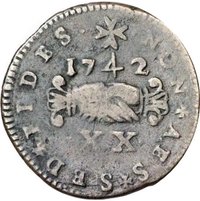
Clasped hands, with denomination below and inscription encircling.
Inscription:
☩ NON · AES · SED · FIDES ·
1742
· X ·
1742
· X ·
Script: Latin
Edge
Mintings
| Year | Mint Mark | Mintage | Quality | Collection |
|---|---|---|---|---|
| 1742 | — | — |
Historical background
In 1742, Malta’s currency situation was complex and challenging, reflecting its unique position as a small, strategically vital island under the rule of the Knights of St. John. The primary unit of account was the scudo, divided into 12 tari, each of 20 grani. However, the actual coins in circulation were a chaotic mix. Alongside limited local issues from the Knights' mint, a vast array of foreign silver and gold coins circulated freely, primarily Spanish pieces of eight (reales), Venetian sequins, and French écus. This created a constant problem of valuation, as the intrinsic metal value of these foreign coins often differed from their official tariffed rates, leading to confusion and instability in trade.
The Knights of St. John struggled to maintain monetary sovereignty. Their attempts to fix exchange rates by proclamation were frequently undermined by market forces and the sheer volume of foreign currency. A particular issue was the outflow of full-weight silver to pay for essential grain imports and other goods, which were not sufficiently offset by the island's income from corsairing and services to foreign navies. This often left the economy with a degraded mix of clipped and worn foreign coins, exacerbating shortages of sound money. The situation was worsened by the practice of "agio," where a premium was charged for payments in desired, high-quality coin.
Consequently, 1742 fell within a period of persistent monetary anxiety for Maltese merchants and authorities. The lack of a uniform, trusted circulating medium hindered commerce and complicated the public finances of the Order. While the Knights recognized the problem, comprehensive reform would not come until later in the century. Therefore, the background to 1742 is one of a fragmented system, reliant on unstable foreign coinage and characterized by a continuous struggle between official decrees and the realities of Mediterranean trade and bullion flows.
The Knights of St. John struggled to maintain monetary sovereignty. Their attempts to fix exchange rates by proclamation were frequently undermined by market forces and the sheer volume of foreign currency. A particular issue was the outflow of full-weight silver to pay for essential grain imports and other goods, which were not sufficiently offset by the island's income from corsairing and services to foreign navies. This often left the economy with a degraded mix of clipped and worn foreign coins, exacerbating shortages of sound money. The situation was worsened by the practice of "agio," where a premium was charged for payments in desired, high-quality coin.
Consequently, 1742 fell within a period of persistent monetary anxiety for Maltese merchants and authorities. The lack of a uniform, trusted circulating medium hindered commerce and complicated the public finances of the Order. While the Knights recognized the problem, comprehensive reform would not come until later in the century. Therefore, the background to 1742 is one of a fragmented system, reliant on unstable foreign coinage and characterized by a continuous struggle between official decrees and the realities of Mediterranean trade and bullion flows.
✨ Legendary