

1 escudo – Spain
Add to wishlist
Spain
Context
Years: 1772–1785
Issuer: Spain
Ruler: Charles III
Currency:
(1497—1833)
Demonetized: Yes
Total mintage: 707,608
Material
References
KM: #
Numista: #44671
Value
Bullion value: $470.63
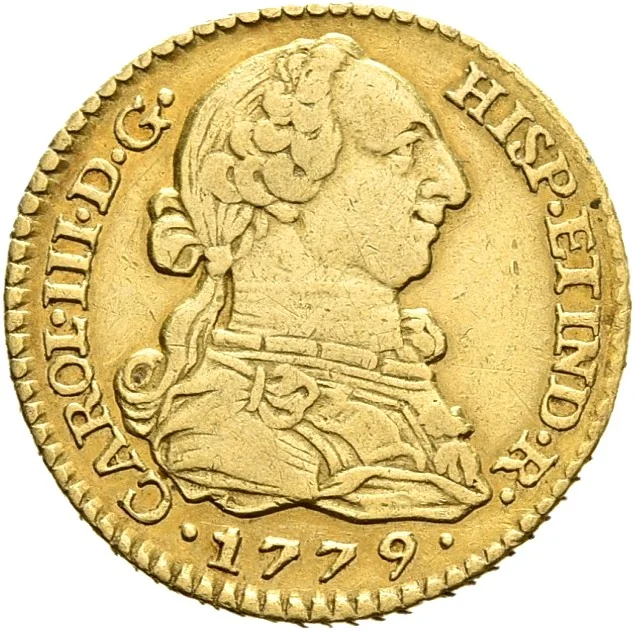
Obverse
Description:
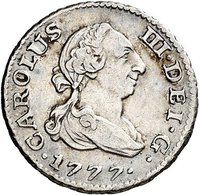
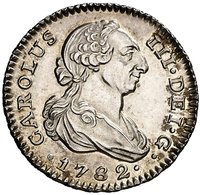
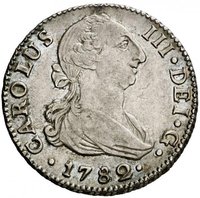
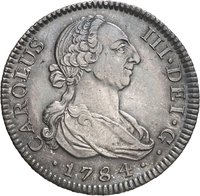
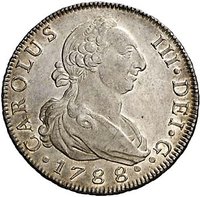
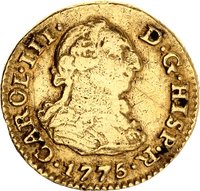
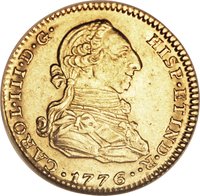
Armored bust of King Charles III facing right.
Inscription:
CAROL · III · D · G · HISP · ET IND · R ·
· 1781 ·
· 1781 ·
Script: Latin
Engraver: Tomás Francisco Prieto Martin
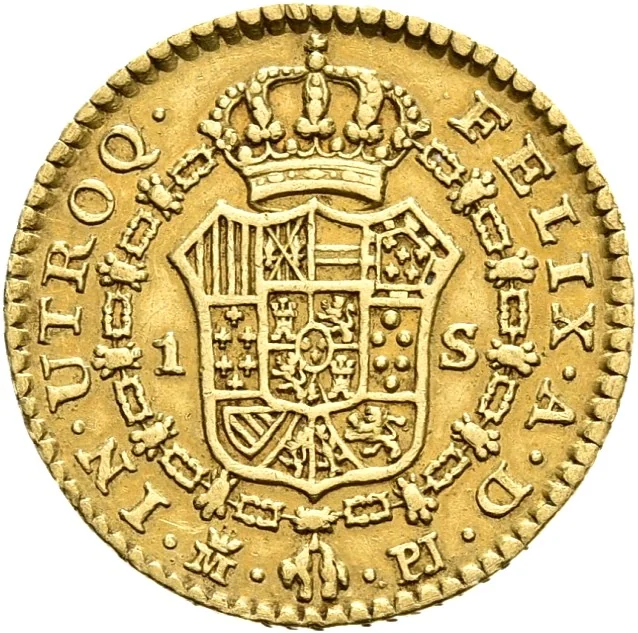
Reverse
Description:
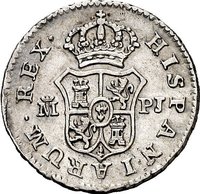
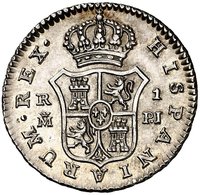
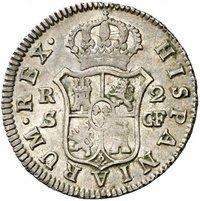
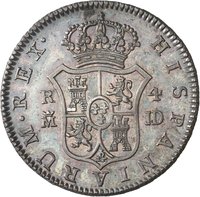
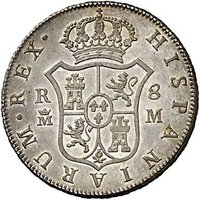
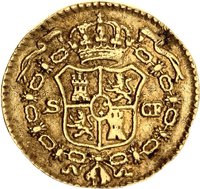
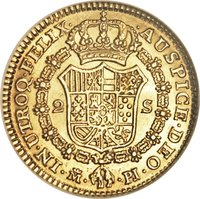
Crowned Spanish coat of arms with the Golden Fleece.
Inscription:
IN · UTROQ · · FELIX · A · D ·
1 S
·M· ·PJ
1 S
·M· ·PJ
Script: Latin
Engravers: Tomás Francisco Prieto Martin, Antonio de Saa
Edge
Categories
| Symbols> Coat of Arms |
Mints
| Name | Mark |
|---|---|
| Royal Mint of Madrid | (M) |
| Royal Mint of Seville | S |
Mintings
| Year | Mint Mark | Mintage | Quality | Collection |
|---|---|---|---|---|
| 1772 | MPJ | 3,060 | ||
| 1773 | SCF | — | ||
| 1774 | SCF | — | ||
| 1779 | MPJ | 117,980 | ||
| 1779 | SCF | — | ||
| 1780 | MPJ | 36,584 | ||
| 1780 | SCF | — | ||
| 1781 | MPJ | 219,232 | ||
| 1781 | SCF | — | ||
| 1782 | MJD | 23,664 | ||
| 1784 | MJD | 40,596 | ||
| 1785 | MDV | 266,492 |
Historical background
In 1772, Spain's currency situation was characterized by significant instability and complexity, rooted in a system of multiple, often debased, coinages. The primary unit was the silver real, with eight reales making a peso or "piece of eight." However, centuries of fiscal pressure, particularly from costly wars and colonial administration, had led successive monarchs to repeatedly reduce the silver content in coins, a practice known as debasement. This created a confusing hierarchy where older, purer coins (like the peso fuerte) circulated alongside newer, lighter ones, their values determined more by metal content than face value. Furthermore, the gold escudo and a vast quantity of low-value copper vellón coins used for everyday transactions added layers to this fractured monetary landscape.
The core problem was a severe shortage of precious metals in circulation within Spain itself, despite the immense wealth flowing from its American colonies. Much of the silver from Potosí and Mexico was immediately exported to pay for foreign goods and service international debts, leaving the domestic economy starved of sound currency. This shortage was acutely felt in everyday commerce, leading to reliance on bulky and inconvenient vellón coins. The government's attempts to manage this through arbitrary adjustments to the exchange rates between gold, silver, and copper often backfired, creating uncertainty, facilitating fraud, and distorting prices.
King Charles III, a reformist Bourbon monarch, recognized that monetary chaos stifled economic growth and state authority. While major comprehensive reform would come later with the 1772 Pragmática being a stepping stone, the period was one of intense scrutiny and planning. The government's goal was to establish a uniform, national coinage based on stable intrinsic value to facilitate trade, increase tax efficiency, and assert royal control over the economy. Thus, the currency situation in 1772 was a tense prelude to the more definitive reforms that would soon follow, as the Crown sought to replace a legacy of ad-hoc financial mismanagement with a rational, centralized monetary system.
The core problem was a severe shortage of precious metals in circulation within Spain itself, despite the immense wealth flowing from its American colonies. Much of the silver from Potosí and Mexico was immediately exported to pay for foreign goods and service international debts, leaving the domestic economy starved of sound currency. This shortage was acutely felt in everyday commerce, leading to reliance on bulky and inconvenient vellón coins. The government's attempts to manage this through arbitrary adjustments to the exchange rates between gold, silver, and copper often backfired, creating uncertainty, facilitating fraud, and distorting prices.
King Charles III, a reformist Bourbon monarch, recognized that monetary chaos stifled economic growth and state authority. While major comprehensive reform would come later with the 1772 Pragmática being a stepping stone, the period was one of intense scrutiny and planning. The government's goal was to establish a uniform, national coinage based on stable intrinsic value to facilitate trade, increase tax efficiency, and assert royal control over the economy. Thus, the currency situation in 1772 was a tense prelude to the more definitive reforms that would soon follow, as the Crown sought to replace a legacy of ad-hoc financial mismanagement with a rational, centralized monetary system.
Series: 1772 Spain circulation coins
💎 Extremely Rare