

8 Skilling – Norway
Norway
Context
Years: 1682–1689
Issuer: Norway 
Ruler: Christian V
Currency:
(1523—1746)
Subdivision: 8 Skilling = ½ Mark
Demonetized: Yes
Material
References
KM: #Click to copy to clipboard145
Numista: #445537
Value
Bullion value: $5.31
Obverse
Description:
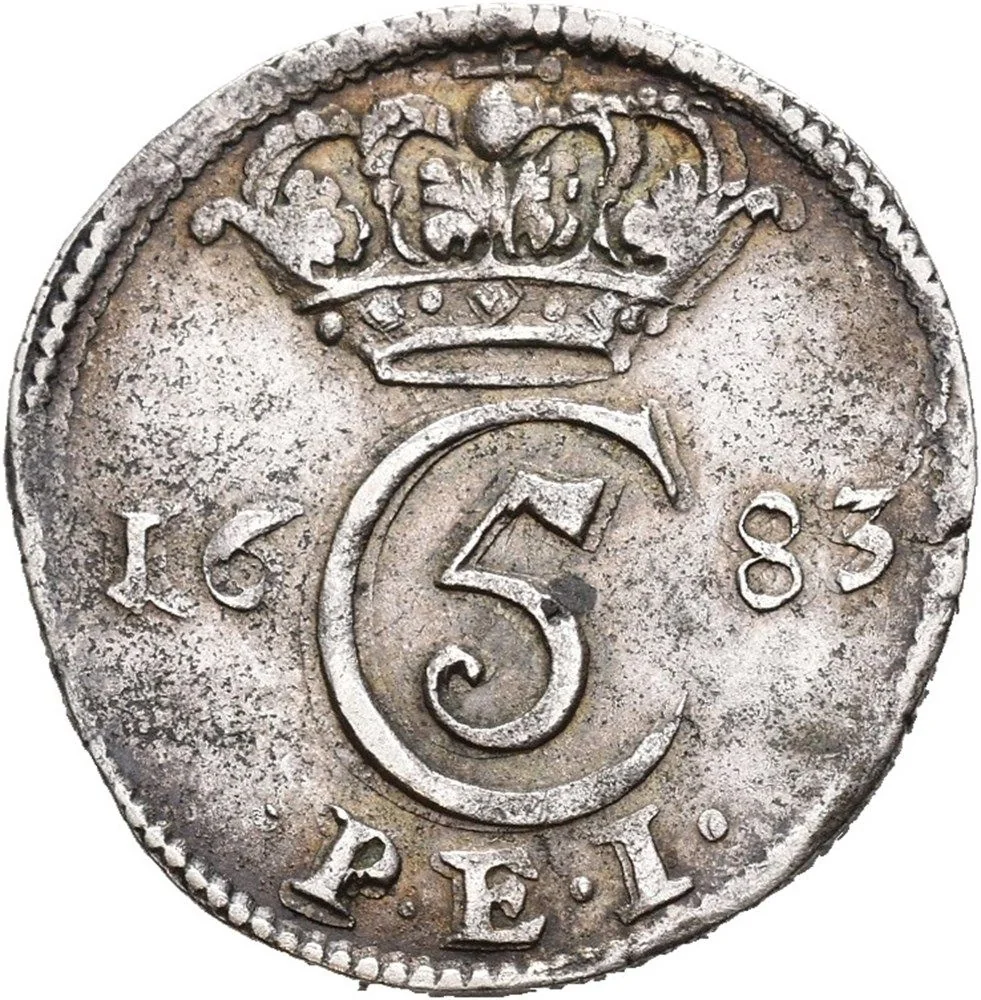
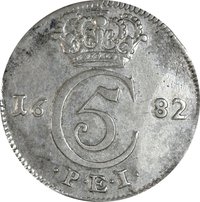
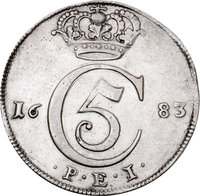
Christian V monogram crowns date, inscription below. Beaded rim ring.
Inscription:
16 83
C5
·P·E·I·
C5
·P·E·I·
Script: Latin
Reverse
Description:
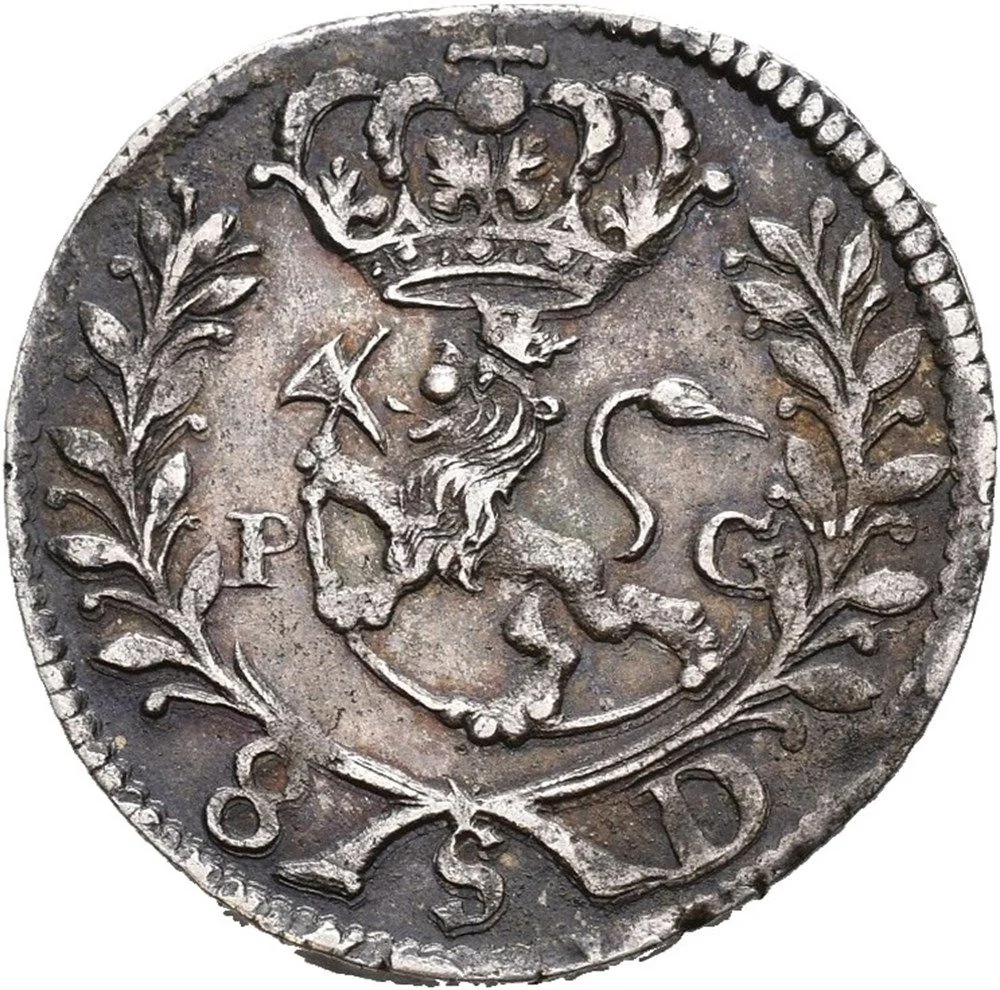
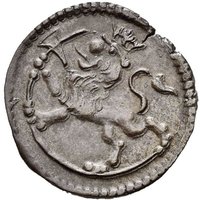
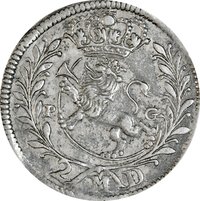
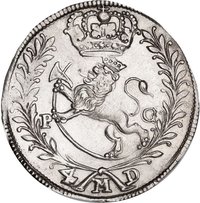
Norwegian lion with axe facing left in a laurel wreath, mintmaster initials flanking lion. Large crown above, value below, beaded rim.
Inscription:
P G
8 S D
8 S D
Script: Latin
Edge
Mints
| Name | Mark |
|---|---|
| Christiania | — |
Mintings
| Year | Mint Mark | Mintage | Quality | Collection |
|---|---|---|---|---|
| 1682 | — | — | ||
| 1683 | — | — | ||
| 1685 | — | — | ||
| 1689 | — | — |
Historical background
In 1682, Norway was part of the dual monarchy of Denmark-Norway, and its currency system was centrally controlled from Copenhagen. The primary circulating coin was the riksdaler (rix-dollar), a large silver coin that served as the monetary standard. However, the system was plagued by a chronic shortage of small change for everyday transactions, leading to widespread use of fragmented coins, private tokens, and even commodity money like butter and dried fish in local trade. This scarcity hindered commerce and created significant inconvenience for the common population.
The monetary landscape was further complicated by the state's fiscal policies. To finance costly wars, the Danish crown had repeatedly debased the coinage by reducing its silver content, a practice that eroded public trust and caused inflation. While a major monetary reform in 1625 had introduced the riksdaler to stabilize the system, the temptation to debase returned during financial crises. By 1682, the integrity of the coinage remained a fragile issue, with the official currency often circulating alongside older, clipped, and foreign coins of uncertain value, creating a chaotic and inefficient marketplace.
Against this backdrop, the year 1682 fell within the reign of King Christian V, whose government was actively working to impose greater central control and mercantilist order. A significant reform was on the horizon: the establishment of the Danish Kurantbank in Copenhagen in 1683, which would later influence Norwegian banking. The period was thus one of transition, caught between a legacy of monetary instability and the crown's efforts to create a more standardized and state-managed financial system for the entire dual monarchy.
The monetary landscape was further complicated by the state's fiscal policies. To finance costly wars, the Danish crown had repeatedly debased the coinage by reducing its silver content, a practice that eroded public trust and caused inflation. While a major monetary reform in 1625 had introduced the riksdaler to stabilize the system, the temptation to debase returned during financial crises. By 1682, the integrity of the coinage remained a fragile issue, with the official currency often circulating alongside older, clipped, and foreign coins of uncertain value, creating a chaotic and inefficient marketplace.
Against this backdrop, the year 1682 fell within the reign of King Christian V, whose government was actively working to impose greater central control and mercantilist order. A significant reform was on the horizon: the establishment of the Danish Kurantbank in Copenhagen in 1683, which would later influence Norwegian banking. The period was thus one of transition, caught between a legacy of monetary instability and the crown's efforts to create a more standardized and state-managed financial system for the entire dual monarchy.
✨ Legendary