

4 maravedis – Spain
Add to wishlist
Spain
Context
Material
Diameter: 18 mm
Weight: 3.3 g
Thickness: 1 mm
Shape: Irregular round
Composition: Copper
Magnetic: No
Technique: Hammered
References
KM: #
Numista: #44448
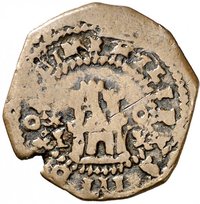
Obverse
Description:
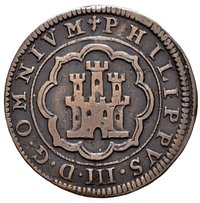
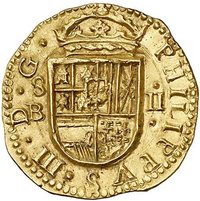
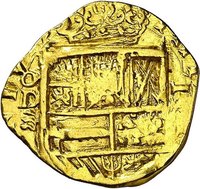
Castle in circle between mint mark and value IIII.
Inscription:
PHILIPPVS III D G
Script: Latin
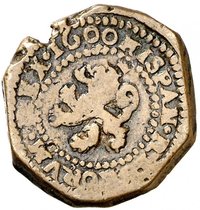
Reverse
Edge
Categories
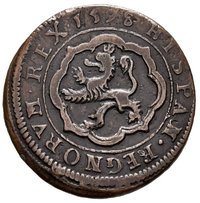
| Animal> Feline |
| Building> Castle or fortification |
Mints
| Name | Mark |
|---|---|
| Casa vieja de Segovia | — |
| Cuenca | — |
| Royal Mint of Burgos | — |
| Royal Mint of Madrid | — |
| Toledo | — |
| Valladolid | — |
Mintings
| Year | Mint Mark | Mintage | Quality | Collection |
|---|---|---|---|---|
| 1620 | MD | — | ||
| 1620 | T | — | ||
| — | — | — | ||
| 1602 | — | — | ||
| 1602 | B | — | ||
| 1602 | C | — | ||
| 1602 | T | — | ||
| 1603 | — | — | ||
| 1603 | B | — | ||
| 1603 | T | — | ||
| 1603 | C | — | ||
| 1604 | — | — | ||
| 1604 | B | — | ||
| 1604 | C | — | ||
| 1604 | T | — | ||
| 1605 | — | — | ||
| 1605 | B | — | ||
| 1605 | C | — | ||
| 1605 | T | — | ||
| 1606 | — | — | ||
| 1606 | B | — | ||
| 1606 | C | — | ||
| 1606 | T | — | ||
| 1607 | — | — | ||
| 1607 | B | — | ||
| 1607 | C | — | ||
| 1607 | T | — | ||
| 1608 | — | — | ||
| 1608 | B | — | ||
| 1608 | C | — | ||
| 1608 | T | — | ||
| 1609 | — | — | ||
| 1610 | — | — | ||
| 1618 | — | — | ||
| 1618 | B | — | ||
| 1618 | C | — | ||
| 1618 | MD | — | ||
| 1618 | T | — | ||
| 1619 | — | — | ||
| 1619 | B | — | ||
| 1619 | C | — | ||
| 1619 | MD | — | ||
| 1619 | T | — | ||
| 1620 | — | — | ||
| 1620 | C | — |
Historical background
In 1598, Spain’s currency system was under severe strain, a direct consequence of the immense fiscal demands of the Habsburg monarchy’s global empire. King Philip II, who died that very year, had waged decades of costly warfare against the Ottomans, Dutch rebels, and the English, financed heavily by American silver and loans from Genoese bankers. This cycle of borrowing against future bullion shipments created a crushing national debt, leading to multiple state bankruptcies (in 1557, 1575, and 1596) that shattered royal credit and disrupted the European banking system. The treasury was exhausted, and the influx of New World silver, while substantial, was increasingly siphoned off to service foreign debts before it could stabilize the domestic economy.
The monetary situation within Spain itself was characterized by severe inflation and a chaotic circulation of debased coinage. The massive influx of silver reales and escudos from Potosí and Mexico had contributed to the "Price Revolution," a Europe-wide phenomenon of rising costs that hit Spain particularly hard. More damagingly, to meet short-term obligations, the crown repeatedly authorized the issuance of heavily debased vellón coinage—copper coins with a small silver wash. These manipulations eroded public trust in currency, as the intrinsic metal value of coins fell far below their face value, leading to Gresham’s Law in practice: "bad" copper money drove "good" silver money out of circulation, as people hoarded silver or sent it abroad.
This unstable monetary environment crippled domestic industry and commerce. As high inflation priced Spanish goods out of international markets, and cheap imports flooded in, the economy became overly dependent on foreign silver to pay for foreign goods. The result was a paradoxical situation where the world’s foremost source of precious metal suffered from a chronic shortage of sound money in everyday transactions. Thus, in 1598, Spain stood at a critical juncture: inheriting a global empire but burdened with a broken financial system that would challenge its successors for the next century, undermining its political and military power despite its nominal wealth.
The monetary situation within Spain itself was characterized by severe inflation and a chaotic circulation of debased coinage. The massive influx of silver reales and escudos from Potosí and Mexico had contributed to the "Price Revolution," a Europe-wide phenomenon of rising costs that hit Spain particularly hard. More damagingly, to meet short-term obligations, the crown repeatedly authorized the issuance of heavily debased vellón coinage—copper coins with a small silver wash. These manipulations eroded public trust in currency, as the intrinsic metal value of coins fell far below their face value, leading to Gresham’s Law in practice: "bad" copper money drove "good" silver money out of circulation, as people hoarded silver or sent it abroad.
This unstable monetary environment crippled domestic industry and commerce. As high inflation priced Spanish goods out of international markets, and cheap imports flooded in, the economy became overly dependent on foreign silver to pay for foreign goods. The result was a paradoxical situation where the world’s foremost source of precious metal suffered from a chronic shortage of sound money in everyday transactions. Thus, in 1598, Spain stood at a critical juncture: inheriting a global empire but burdened with a broken financial system that would challenge its successors for the next century, undermining its political and military power despite its nominal wealth.
Series: 1598 Spain circulation coins

⭐ Somewhat Rare