

20 Scudi – Malta
Malta
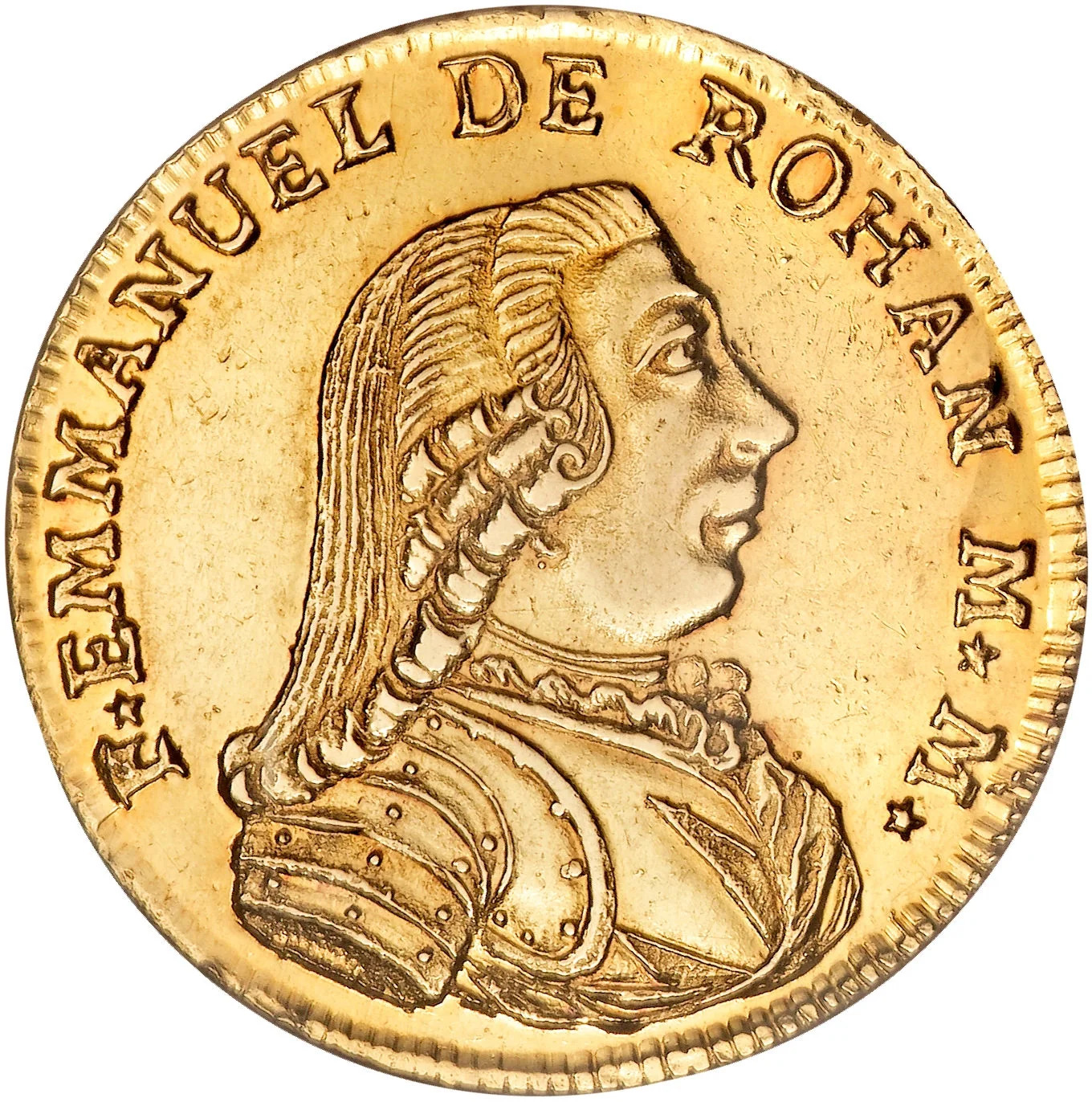
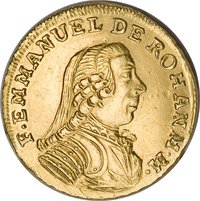
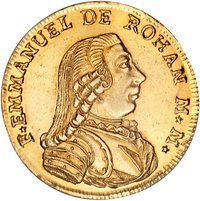
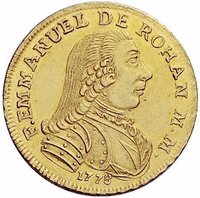
Obverse
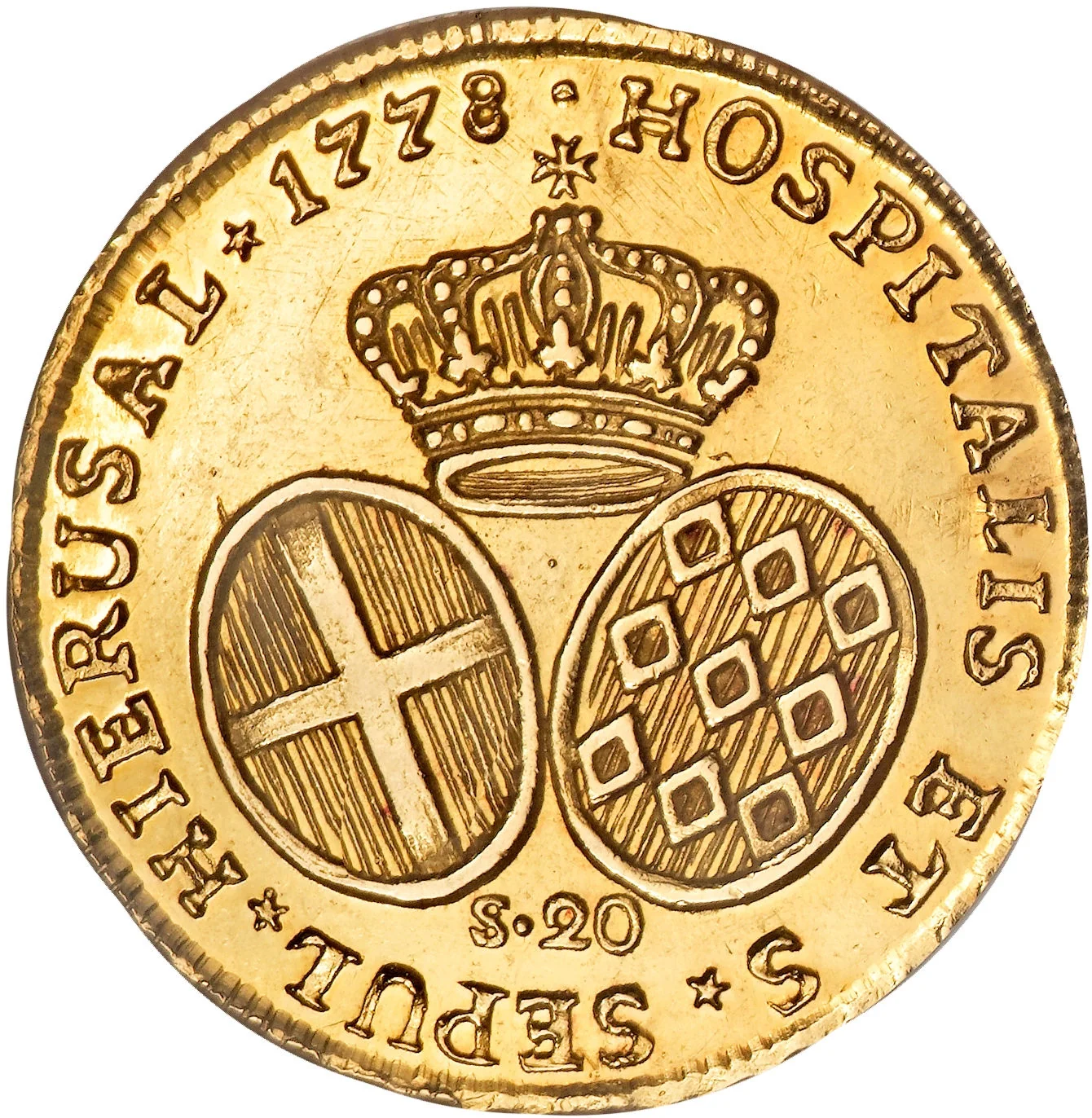
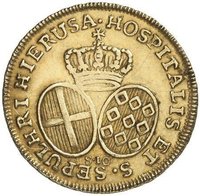
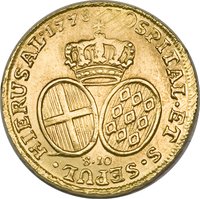
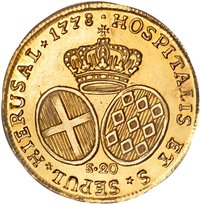
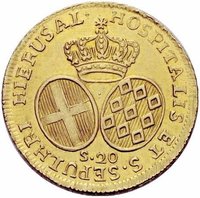
Reverse
Description:
Crowned double shields
Inscription:
HOSPITALIS ET S SEPUL * HIERUSAL * 1778
S·20
S·20
Script: Latin
Edge
Mintings
| Year | Mint Mark | Mintage | Quality | Collection |
|---|---|---|---|---|
| 1778 | — | — |
Historical background
In 1778, Malta's currency situation was complex and transitional, reflecting its unique position as a sovereign monastic state under the Knights of St. John, heavily influenced by Mediterranean trade. The official and most valued coinage was the Maltese scudo, subdivided into 12 tari, each of 20 grani with 12 piccioli to the grano. However, the real circulating medium was a chaotic mix of foreign coins, primarily Spanish dollars (pieces of eight) and their fractional parts, alongside Sicilian, Neapolitan, French, and Ottoman currencies. This proliferation created constant difficulties in commerce, as merchants and officials had to reference extensive published tables to calculate the fluctuating exchange rates between these foreign coins and the notional Maltese scudo.
This monetary confusion was exacerbated by two key factors. First, the Knights' own mint struggled with production, leading to chronic shortages of small change, which crippled everyday transactions for the populace. Second, the heavy reliance on worn and clipped foreign silver, particularly Spanish coins, meant the intrinsic silver value often fell below the assigned tariff value, leading to arbitrage and further instability. The government frequently issued proclamations to re-tariff specific coins, attempting to align their legal value with their metallic worth, but these were often reactive and temporary fixes.
The situation underscored the broader economic pressures on the Order. While the grand harbour thrived as a port of call, the local economy was strained, and the chaotic currency system hindered efficient taxation and governance. Efforts to reform the coinage were discussed, but comprehensive change would not come until the early 19th century. Thus, in 1778, Malta operated with a fragmented and inefficient monetary system, a bazaar of international coins held together by official decree and mercantile necessity, rather than a unified, sovereign currency.
This monetary confusion was exacerbated by two key factors. First, the Knights' own mint struggled with production, leading to chronic shortages of small change, which crippled everyday transactions for the populace. Second, the heavy reliance on worn and clipped foreign silver, particularly Spanish coins, meant the intrinsic silver value often fell below the assigned tariff value, leading to arbitrage and further instability. The government frequently issued proclamations to re-tariff specific coins, attempting to align their legal value with their metallic worth, but these were often reactive and temporary fixes.
The situation underscored the broader economic pressures on the Order. While the grand harbour thrived as a port of call, the local economy was strained, and the chaotic currency system hindered efficient taxation and governance. Efforts to reform the coinage were discussed, but comprehensive change would not come until the early 19th century. Thus, in 1778, Malta operated with a fragmented and inefficient monetary system, a bazaar of international coins held together by official decree and mercantile necessity, rather than a unified, sovereign currency.
✨ Legendary