

8 thalers – Brunswick-Lüneburg-Celle
Add to wishlist
Germany
Context
Year: 1664
Country: Germany
Issuer: Brunswick-Lüneburg-Celle
Ruler: Christian Louis
Currency:
Demonetized: Yes
Material
References
KM: #
Numista: #442645
Value
Bullion value: $589.27
Obverse
Description:
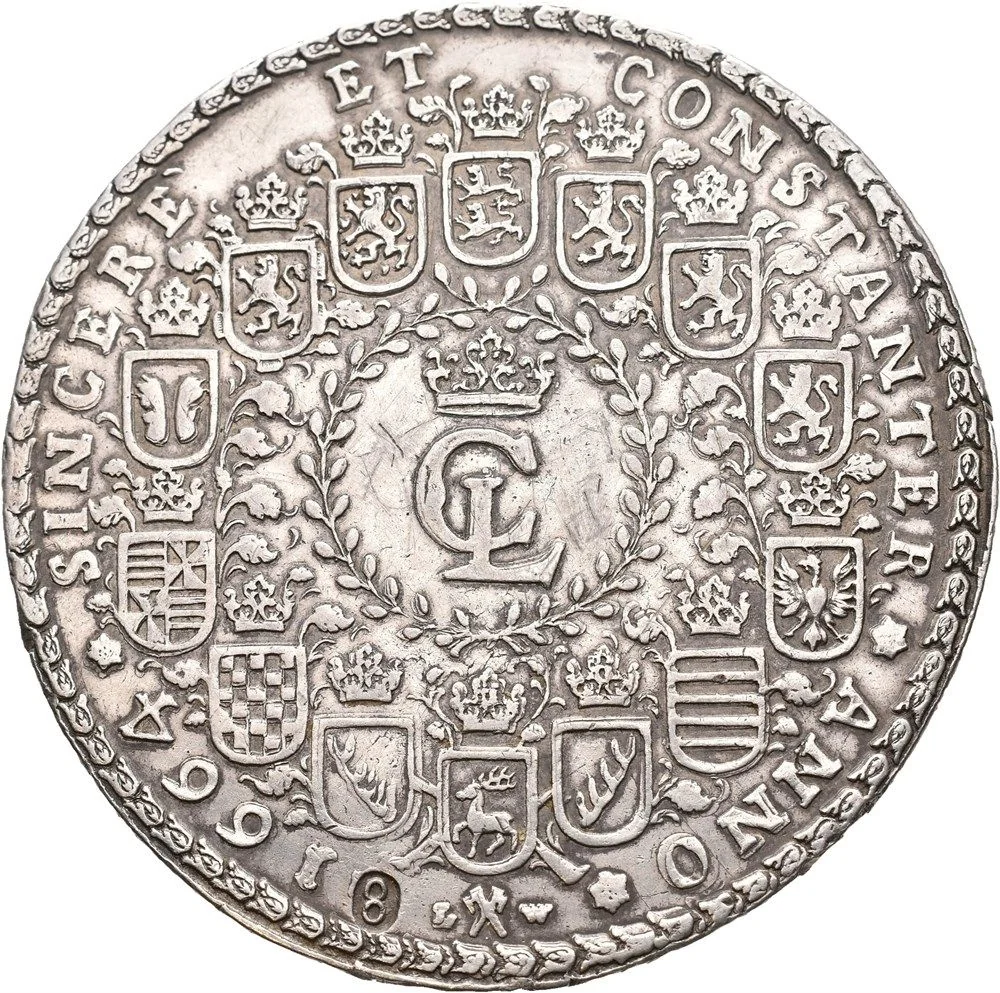
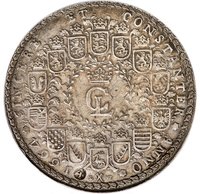
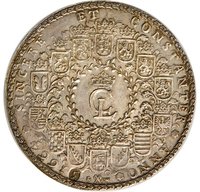
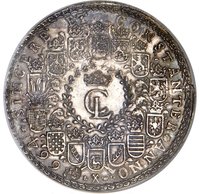
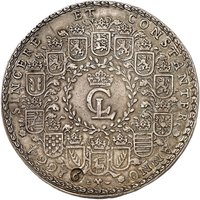
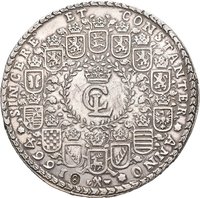
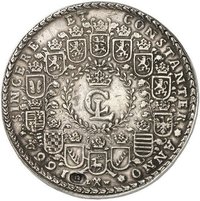
Crowned CL monogram within laurel branches, encircled by fourteen coats of arms and a value stamp.
Inscription:
SINCERE ET CONSTANTER ANNO 1664
CL
8
LW
CL
8
LW
Engraver: Lippold Wefer
Reverse
Description:
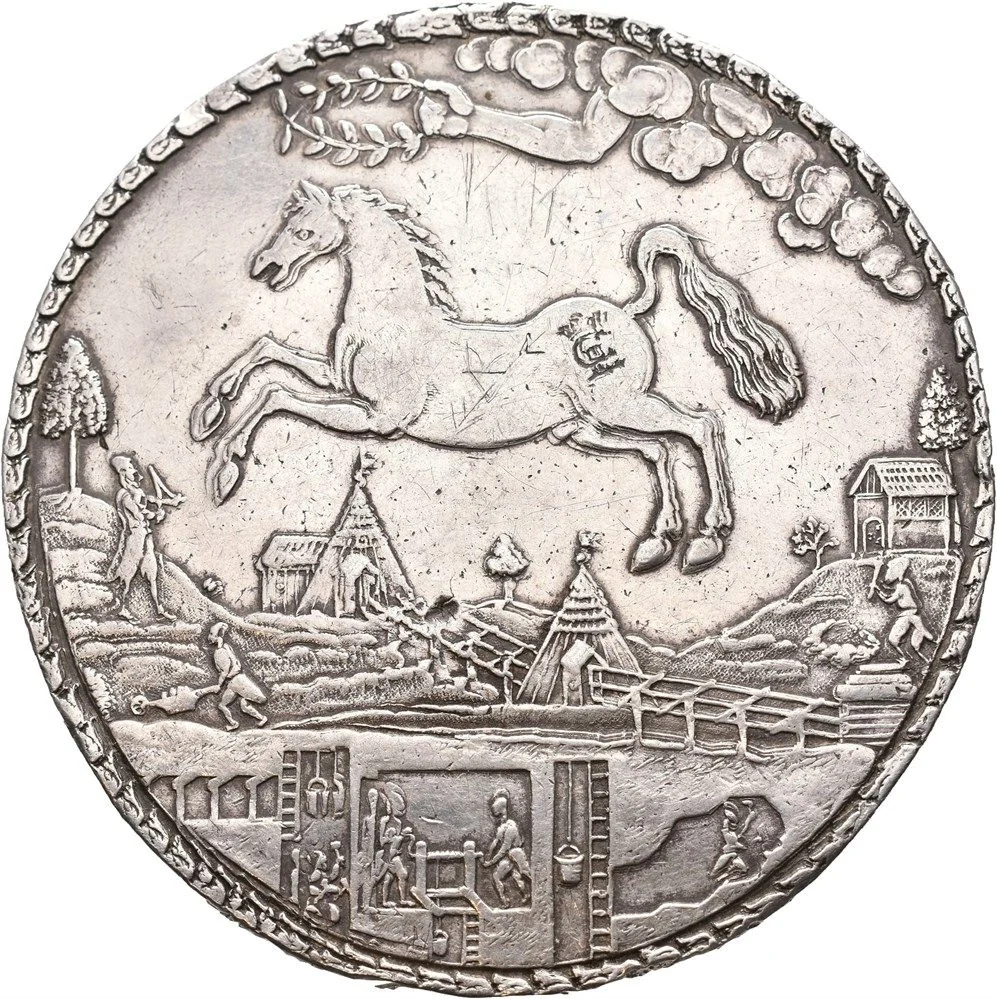
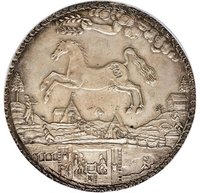
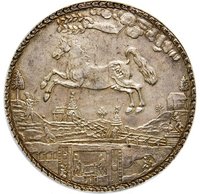
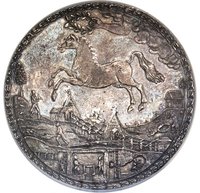
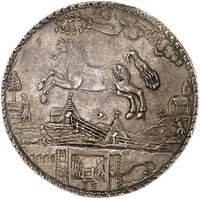
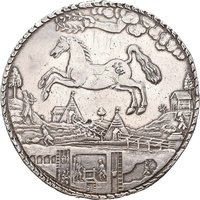
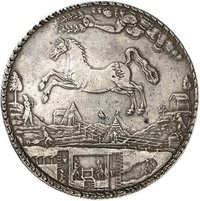
A cloud-wreathed horse overlooks a mining landscape with miners, two gullies, and a pit outline below.
Inscription:
CL
Engraver: Lippold Wefer
Edge
Mints
| Name | Mark |
|---|---|
| Clausthal | — |
Mintings
| Year | Mint Mark | Mintage | Quality | Collection |
|---|---|---|---|---|
| 1664 | — | — |
Historical background
In 1664, the Duchy of Brunswick-Lüneburg, specifically the Principality of Celle under Duke George William, was entangled in the complex and fragmented monetary landscape of the Holy Roman Empire. The region lacked a uniform currency, operating amidst a bewildering array of circulating coins from various German states, neighboring countries, and older issues. This proliferation of currencies, each with fluctuating intrinsic values based on metal content, created chronic problems for trade and administration, facilitating debasement and causing significant confusion in everyday transactions.
Duke George William sought to assert princely authority and economic stability through monetary regulation. His approach was typical of the period: attempting to fix exchange rates between the numerous circulating coins by official decree. In Celle, the primary large silver coin was the Thaler, but day-to-day commerce relied heavily on smaller denominations like Gute Groschen and Mariengroschen. The ducal government regularly published Münzpatente (coinage edicts) that stipulated the legal value of these coins in an effort to create order, though enforcement was challenging.
Despite these efforts, the monetary situation remained inherently unstable. The core issue was the conflict between the Duke's decrees and the market reality of coins being traded as bullion based on their actual silver content. Furthermore, the need to align with the monetary systems of neighboring territories, especially for regional trade, constrained Celle's autonomy. Thus, the currency situation in 1664 was characterized by a continuous struggle between princely ambition for control and the practical realities of a decentralized imperial economy, setting the stage for later, more comprehensive monetary reforms in the German states.
Duke George William sought to assert princely authority and economic stability through monetary regulation. His approach was typical of the period: attempting to fix exchange rates between the numerous circulating coins by official decree. In Celle, the primary large silver coin was the Thaler, but day-to-day commerce relied heavily on smaller denominations like Gute Groschen and Mariengroschen. The ducal government regularly published Münzpatente (coinage edicts) that stipulated the legal value of these coins in an effort to create order, though enforcement was challenging.
Despite these efforts, the monetary situation remained inherently unstable. The core issue was the conflict between the Duke's decrees and the market reality of coins being traded as bullion based on their actual silver content. Furthermore, the need to align with the monetary systems of neighboring territories, especially for regional trade, constrained Celle's autonomy. Thus, the currency situation in 1664 was characterized by a continuous struggle between princely ambition for control and the practical realities of a decentralized imperial economy, setting the stage for later, more comprehensive monetary reforms in the German states.
✨ Legendary