

2 Pence – Scotland
United Kingdom
Context
Years: 1663–1668
Country: United Kingdom 
Issuer: Scotland 
Ruler: Charles II
Currency:
(1136—1707)
Demonetized: Yes
Total mintage: 23,133,900
Material
References
KM: #Click to copy to clipboard100
Numista: #43965
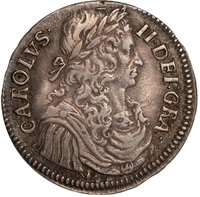
Obverse
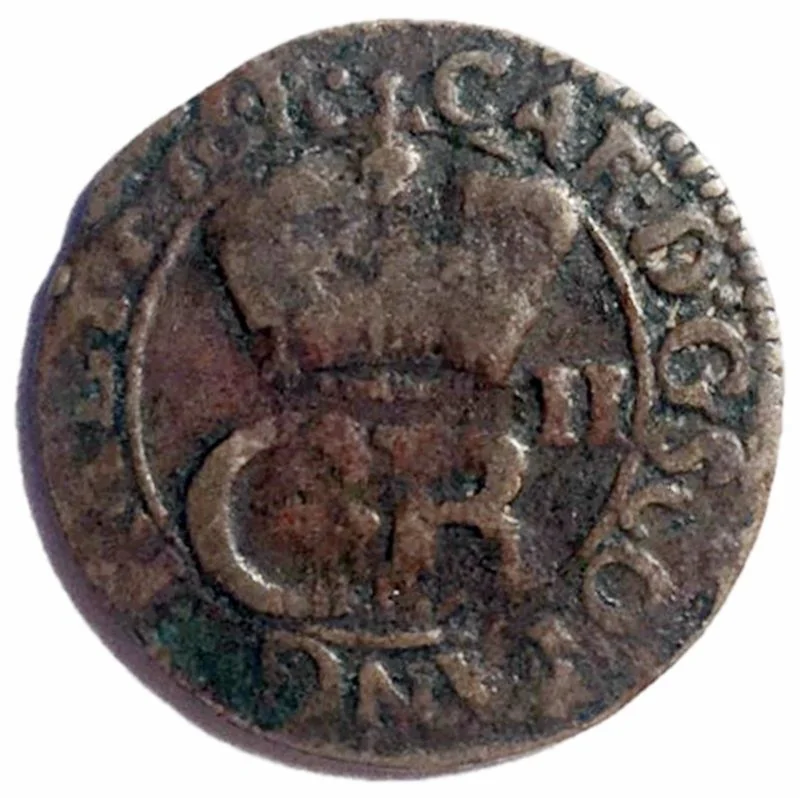
Description:
Charles II's coin.
Inscription:
CAR · D : G · SCOT · ANG · FRA · ET · HIB · R ·
Script: Latin
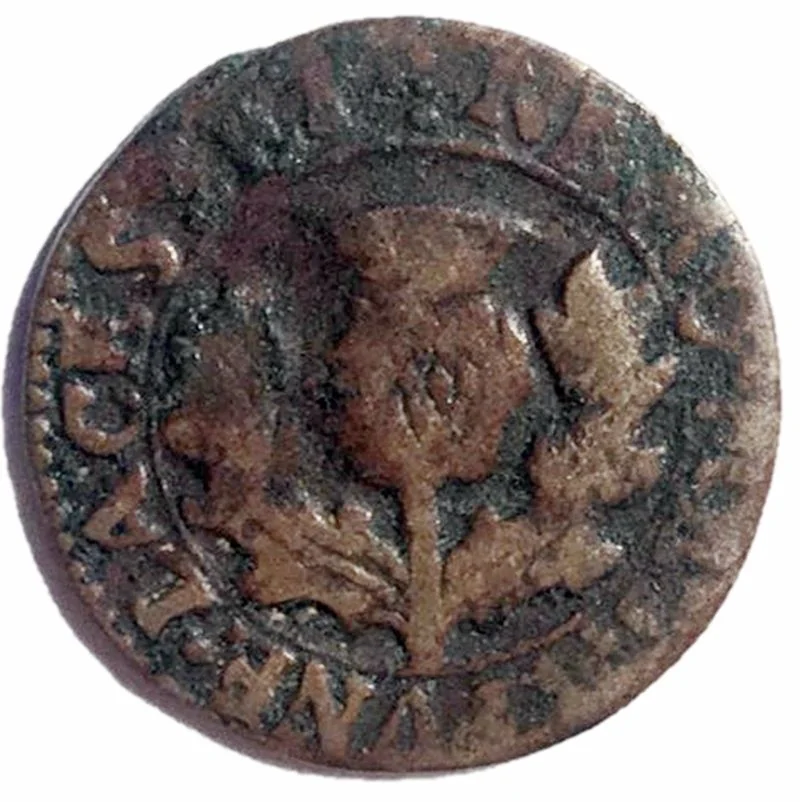
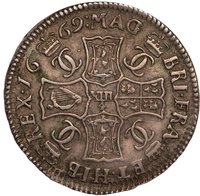
Reverse
Edge
Plain
Mints
| Name | Mark |
|---|---|
| Edinburgh | — |
Mintings
| Year | Mint Mark | Mintage | Quality | Collection |
|---|---|---|---|---|
| — | — | 23,133,900 |
Historical background
In 1663, Scotland’s currency was in a state of significant debasement and complexity, operating under a distinct monetary system from its powerful southern neighbour, England. The primary unit was the pound Scots (merk), which had been artificially pegged at a 12:1 ratio with the English pound sterling since the reign of James VI/I. However, the actual silver content in Scottish coinage was far lower, making the currency weak and facilitating rampant clipping and counterfeiting. The coinage in circulation was a chaotic mix of older Scottish issues, foreign coins (particularly French, Dutch, and Spanish), and English money, leading to chronic instability in trade and valuation.
This precarious situation prompted the Scottish Parliament to pass the Act of 1663 for a New Coinage, a landmark piece of legislation aimed at monetary reform. The Act authorised the minting of new, higher-quality silver coins, including the famous Scottish merk (13 shillings and 4 pence Scots) and half-merk, with the royal effigy of Charles II. Crucially, it sought to standardise the coinage and recall old, worn, and foreign money, attempting to establish a uniform and credible currency based on a fixed silver standard.
Despite these ambitious efforts, the reform of 1663 achieved only partial success. The recoinage was slow and expensive, and the underlying economic weakness of Scotland—characterised by a lack of substantial silver reserves and a persistent trade deficit—prevented a full restoration of confidence. Consequently, the pound Scots remained a largely accounting currency for domestic use, while much substantive trade, especially with England and abroad, continued to be conducted in more trusted sterling or specie. The 1663 reforms thus highlighted the limitations of monetary policy alone in solving Scotland’s deeper economic challenges, a problem that would persist until the full monetary union with England in 1707.
This precarious situation prompted the Scottish Parliament to pass the Act of 1663 for a New Coinage, a landmark piece of legislation aimed at monetary reform. The Act authorised the minting of new, higher-quality silver coins, including the famous Scottish merk (13 shillings and 4 pence Scots) and half-merk, with the royal effigy of Charles II. Crucially, it sought to standardise the coinage and recall old, worn, and foreign money, attempting to establish a uniform and credible currency based on a fixed silver standard.
Despite these ambitious efforts, the reform of 1663 achieved only partial success. The recoinage was slow and expensive, and the underlying economic weakness of Scotland—characterised by a lack of substantial silver reserves and a persistent trade deficit—prevented a full restoration of confidence. Consequently, the pound Scots remained a largely accounting currency for domestic use, while much substantive trade, especially with England and abroad, continued to be conducted in more trusted sterling or specie. The 1663 reforms thus highlighted the limitations of monetary policy alone in solving Scotland’s deeper economic challenges, a problem that would persist until the full monetary union with England in 1707.
⭐ Somewhat Rare