

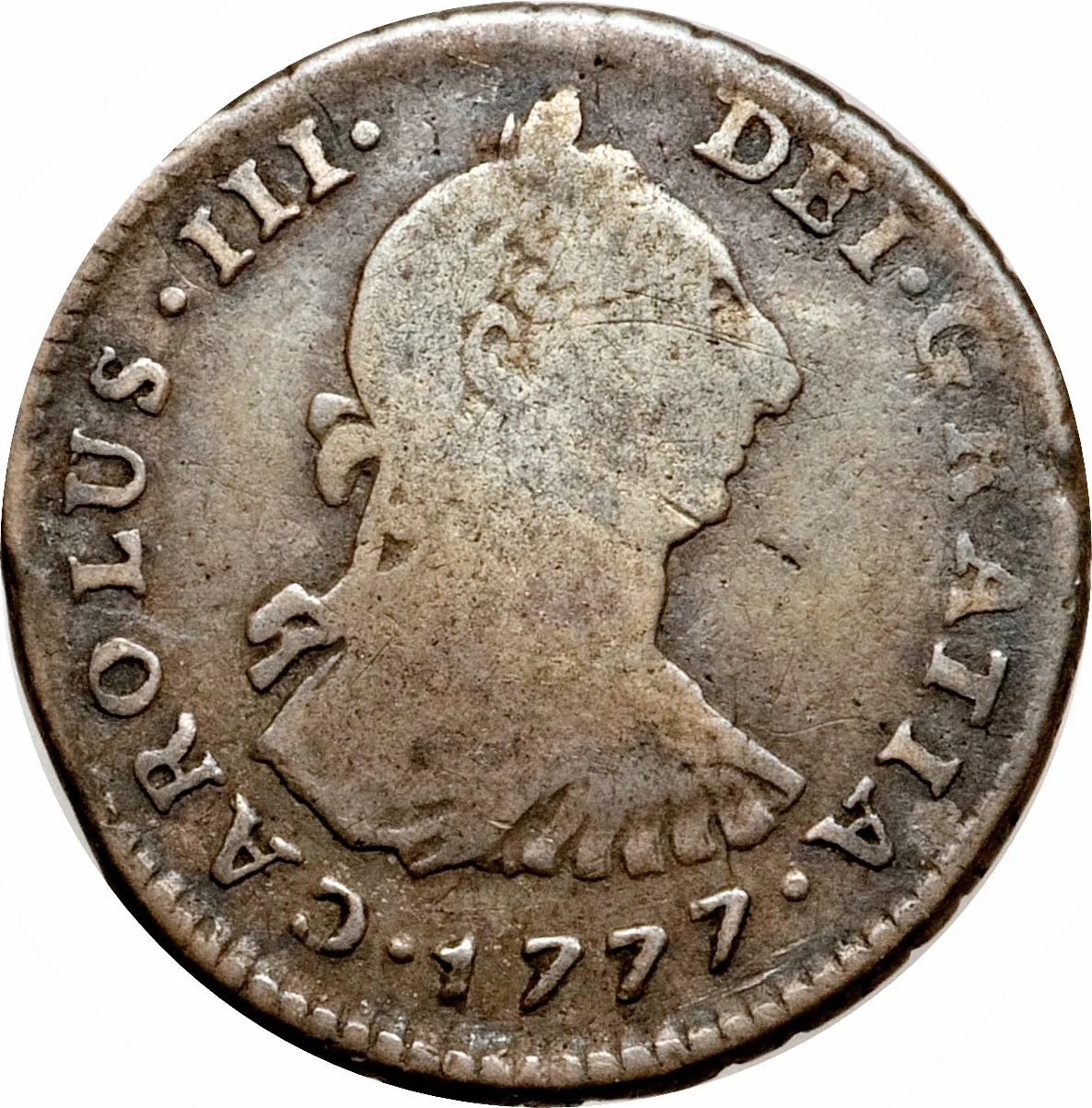

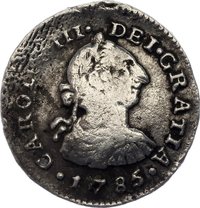
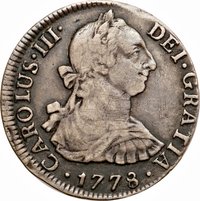
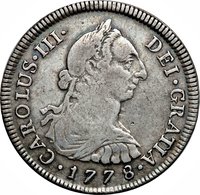
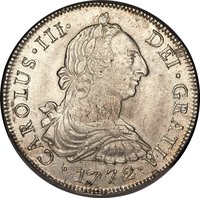
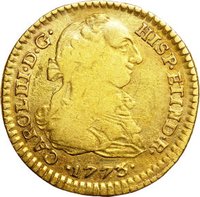
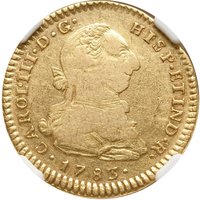
Obverse
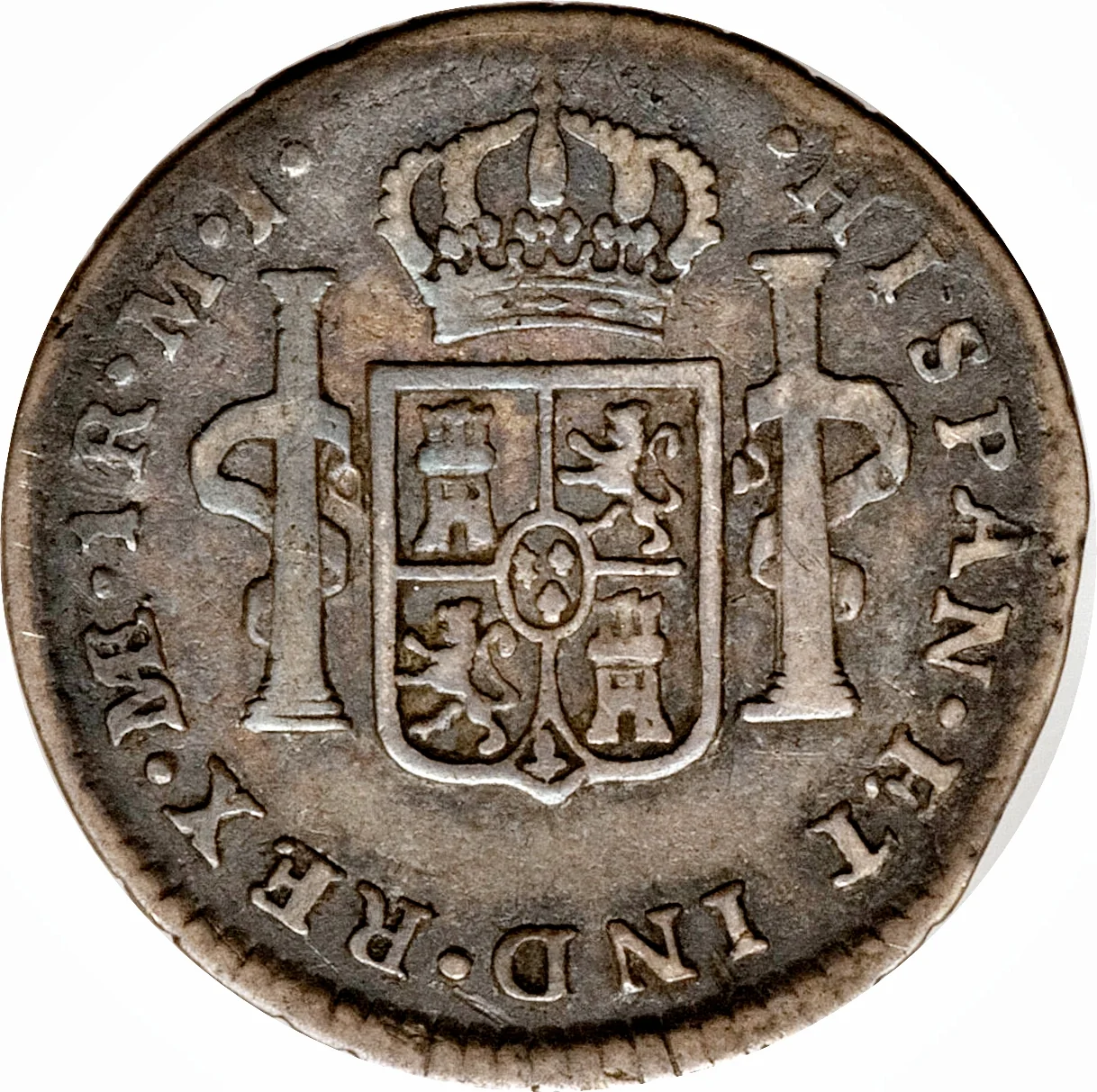
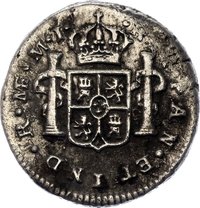
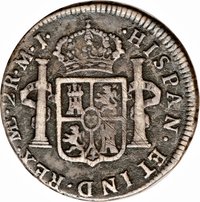
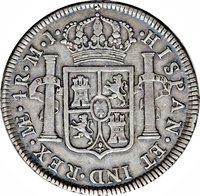
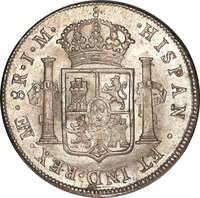
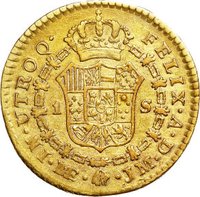
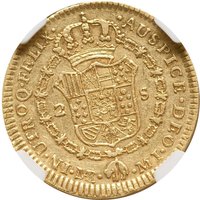
Reverse
Edge
Chained
Mintings
| Year | Mint Mark | Mintage | Quality | Collection |
|---|---|---|---|---|
| 1772 | LME | — | ||
| 1773 | LME | — | ||
| 1774 | LME | — | ||
| 1775 | LME | — | ||
| 1776 | LME | — | ||
| 1777 | LME | — | ||
| 1778 | LME | — | ||
| 1779 | LME | — | ||
| 1780 | LME | — | ||
| 1781 | LME | — | ||
| 1782 | LME | — | ||
| 1783 | LME | — | ||
| 1784 | LME | — | ||
| 1785 | LME | — | ||
| 1786 | LME | — | ||
| 1787 | LME | — | ||
| 1788 | LME | — | ||
| 1789 | LME | — |
Historical background
In 1772, the Viceroyalty of Peru operated under a complex and strained monetary system inherited from Spanish colonial rule. The official currency was based on silver, primarily minted at the famed Casa de Moneda in Potosí (in present-day Bolivia), which produced silver reales and the larger pesos (or "pieces of eight"). However, the economy suffered from a chronic shortage of circulating coinage, especially lower-denomination coins needed for daily transactions. This scarcity was exacerbated by Spain's mercantilist policies, which systematically extracted silver to finance the metropolis and its wars, while also restricting trade within the colonies, limiting the inflow of other forms of currency.
To alleviate the coin shortage, Peruvian merchants and authorities often resorted to using informal substitutes. These included moneda macuquina—crude, irregularly cut and hammered coins that remained in widespread circulation despite royal attempts to replace them with newer, machine-struck columnarios. Furthermore, due to a lack of small change, goods like cacao beans or even debased and counterfeit coins were used in local markets. The situation created a two-tiered system: regulated, high-value silver for large-scale and international trade, and a patchwork of less reliable mediums for the internal economy, leading to inefficiencies and frequent disputes over value.
This monetary instability occurred against a backdrop of significant Bourbon Reforms under King Charles III. These reforms aimed to centralize control and increase revenue, and in the realm of currency, they would soon lead to the introduction of new minting technology and standardized coinage. Therefore, 1772 represents a late colonial moment of persistent monetary scarcity and improvisation, just on the cusp of a concerted, but ultimately disruptive, royal effort to modernize and control the Peruvian currency system, which would later contribute to the economic grievances fueling movements for independence.
To alleviate the coin shortage, Peruvian merchants and authorities often resorted to using informal substitutes. These included moneda macuquina—crude, irregularly cut and hammered coins that remained in widespread circulation despite royal attempts to replace them with newer, machine-struck columnarios. Furthermore, due to a lack of small change, goods like cacao beans or even debased and counterfeit coins were used in local markets. The situation created a two-tiered system: regulated, high-value silver for large-scale and international trade, and a patchwork of less reliable mediums for the internal economy, leading to inefficiencies and frequent disputes over value.
This monetary instability occurred against a backdrop of significant Bourbon Reforms under King Charles III. These reforms aimed to centralize control and increase revenue, and in the realm of currency, they would soon lead to the introduction of new minting technology and standardized coinage. Therefore, 1772 represents a late colonial moment of persistent monetary scarcity and improvisation, just on the cusp of a concerted, but ultimately disruptive, royal effort to modernize and control the Peruvian currency system, which would later contribute to the economic grievances fueling movements for independence.
Series: 1772 Peru circulation coins
🌟 Limited