

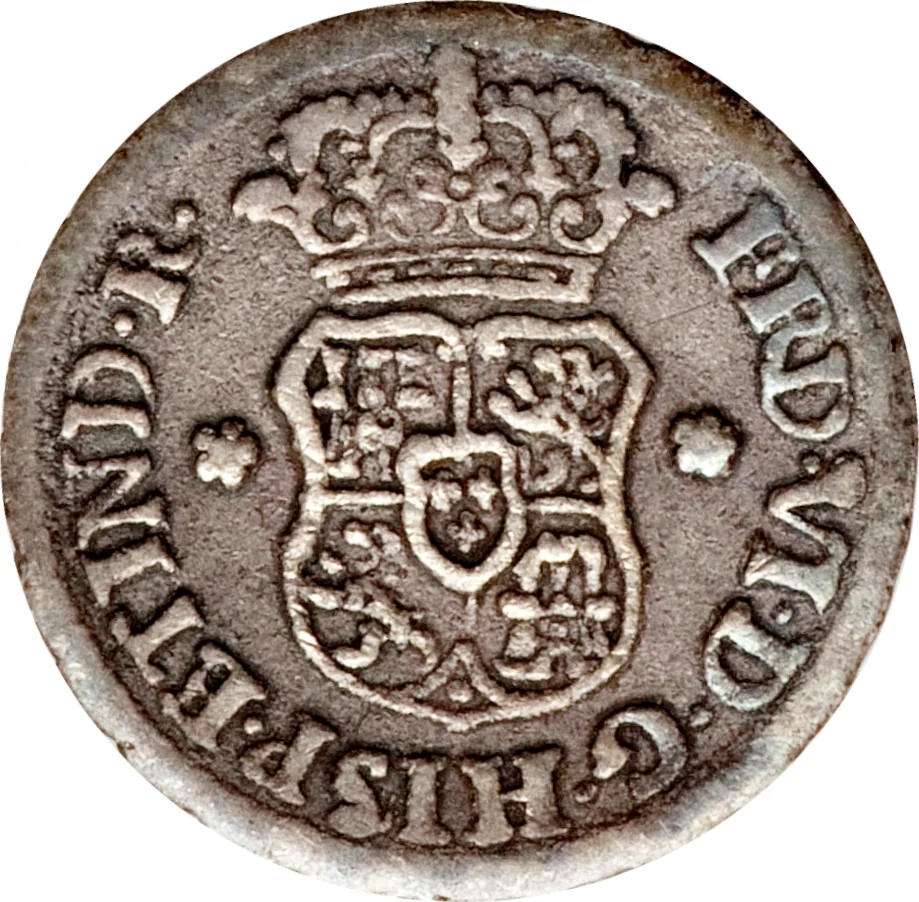
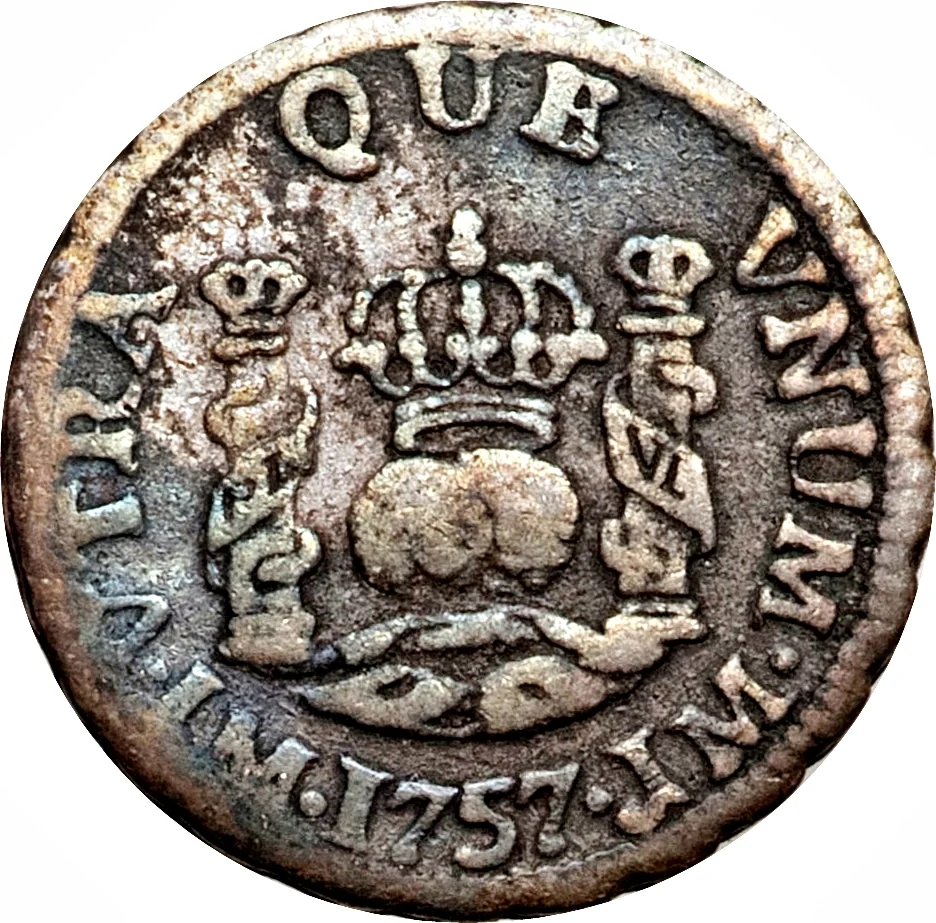
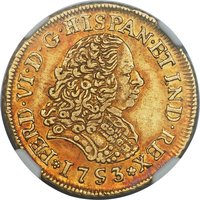
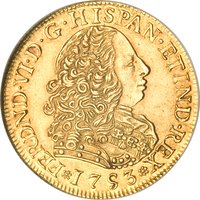
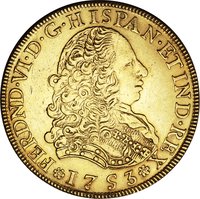
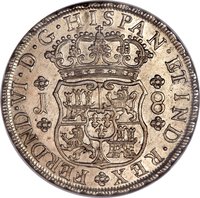
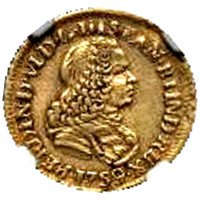
Obverse
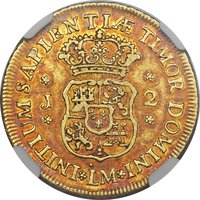
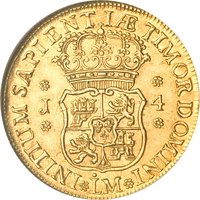
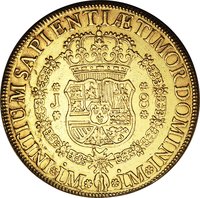
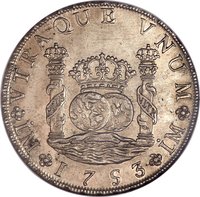
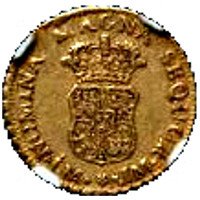
Reverse
Edge
Mintings
| Year | Mint Mark | Mintage | Quality | Collection |
|---|---|---|---|---|
| 1751 | LM | — | ||
| 1752 | LM | — | ||
| 1753 | LM | — | ||
| 1754 | LM | — | ||
| 1755 | LM | — | ||
| 1756 | LM | — | ||
| 1757 | LM | — | ||
| 1758 | LM | — | ||
| 1759 | LM | — | ||
| 1760 | LM | — |
Historical background
In 1751, the Viceroyalty of Peru operated under a complex and strained monetary system inherited from Spanish colonial policy. The official currency was based on silver, primarily minted at the famed Casa de Moneda in Potosí (in present-day Bolivia), which produced silver reales and the larger eight-real piece, known as the "piece of eight." However, the system was plagued by a chronic shortage of circulating specie, especially low-denomination coins for everyday transactions. This scarcity was exacerbated by Spain's mercantilist policies, which demanded that vast quantities of silver be shipped to Spain, draining the local economy of its most tangible product.
To alleviate the coin shortage, authorities frequently authorized the use of moneda macuquina—crudely cut and hammer-struck silver cobs—which remained in widespread circulation despite efforts to replace them with more uniform milled coinage. Furthermore, due to the lack of small change, alternative currencies like tlacos (lead or copper tokens issued by merchants or churches) and even cacao beans were used in local markets, creating a fragmented and unreliable medium of exchange. This environment fostered counterfeiting and debasement, undermining trust in the currency.
The monetary situation in 1751 existed against a backdrop of broader economic pressure. The Bourbon reforms were beginning to be implemented, aiming to centralize and modernize colonial administration, including the fiscal system. These efforts would later lead to the establishment of new mints in Lima and elsewhere, but in 1751, Peru's currency landscape remained one of scarcity, inconsistency, and improvisation, reflecting the challenges of administering a vast and mineral-rich viceroyalty from a distant metropole.
To alleviate the coin shortage, authorities frequently authorized the use of moneda macuquina—crudely cut and hammer-struck silver cobs—which remained in widespread circulation despite efforts to replace them with more uniform milled coinage. Furthermore, due to the lack of small change, alternative currencies like tlacos (lead or copper tokens issued by merchants or churches) and even cacao beans were used in local markets, creating a fragmented and unreliable medium of exchange. This environment fostered counterfeiting and debasement, undermining trust in the currency.
The monetary situation in 1751 existed against a backdrop of broader economic pressure. The Bourbon reforms were beginning to be implemented, aiming to centralize and modernize colonial administration, including the fiscal system. These efforts would later lead to the establishment of new mints in Lima and elsewhere, but in 1751, Peru's currency landscape remained one of scarcity, inconsistency, and improvisation, reflecting the challenges of administering a vast and mineral-rich viceroyalty from a distant metropole.
Series: 1751 Peru circulation coins
💎 Very Rare