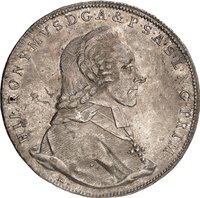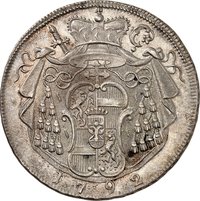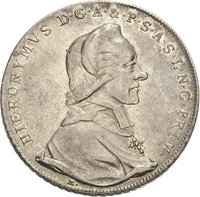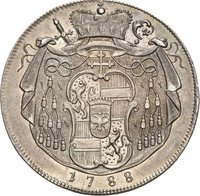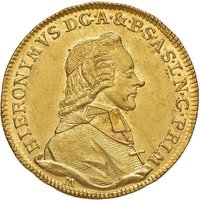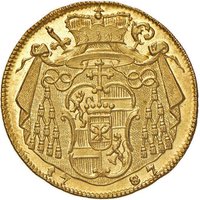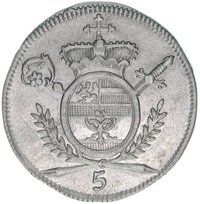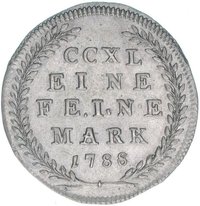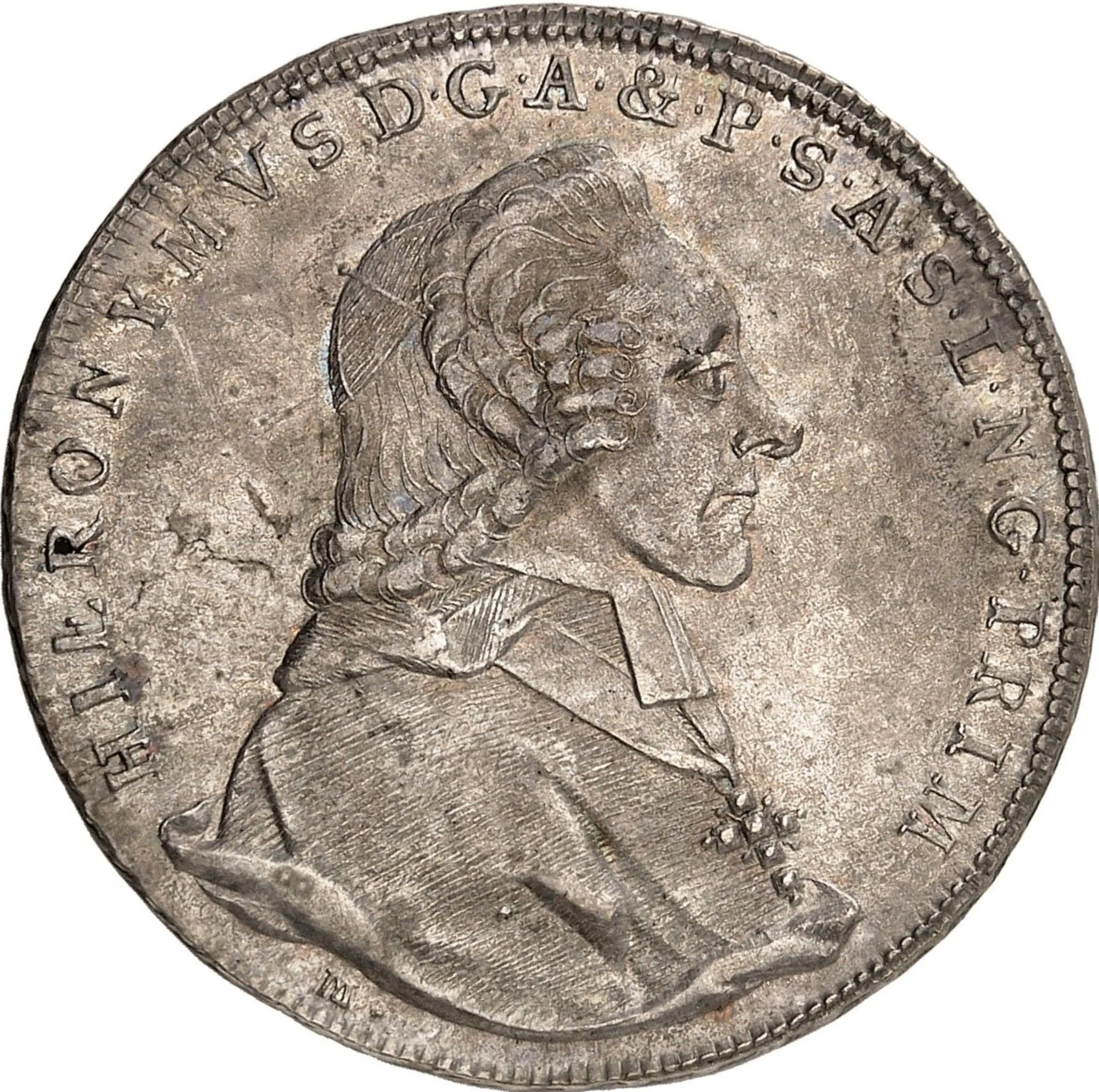
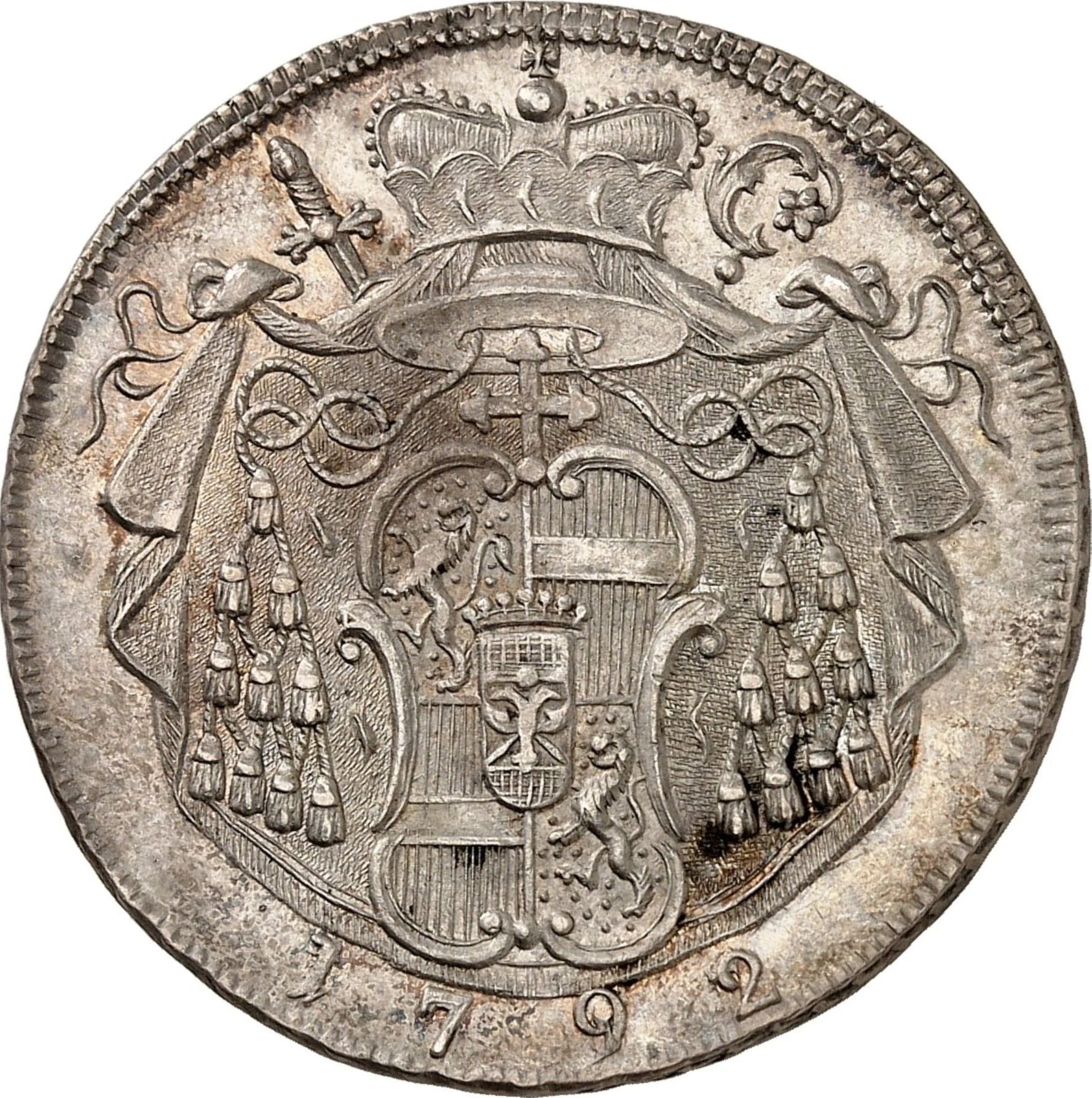
In 1787, the Bishopric of Salzburg, while still a nominally independent ecclesiastical principality within the Holy Roman Empire, was under the profound and direct influence of Habsburg Austria. Its monetary system was effectively integrated into the larger Austrian framework, governed by the imperial currency reforms enacted under Empress Maria Theresa. The primary circulating coin was the
Conventionsthaler (or Conventionstaler), established by the 1753 Bavarian-Austrian monetary convention, which set a standard of 10 Conventionsthaler to a
Cologne mark of fine silver. This system provided relative stability and facilitated trade with neighboring Austrian and southern German territories.
However, the bishopric's monetary sovereignty was severely constrained. While the Prince-Archbishop could mint some minor coinage, such as kreuzers and pfennigs, for local use, the production of major silver coins like the Conventionsthaler was controlled by the central Habsburg minting authorities. The coins circulating in Salzburg predominantly featured the portrait of the reigning Habsburg monarch,
Emperor Joseph II, not the Prince-Archbishop at the time,
Hieronymus von Colloredo. This was a clear visual manifestation of Vienna's overarching political and economic control.
The year 1787 fell within a period of significant transition and tension. Joseph II's radical policies of centralization and secularization were eroding the traditional powers of ecclesiastical states like Salzburg. Just three years later, in 1790, the bishopric would be compelled to join the
Austrian Kronthaler currency area, further tightening Vienna's grip. Thus, Salzburg's currency situation in 1787 was one of de facto Austrian administration, marking the final years of its independent monetary identity before its complete political absorption into the Habsburg lands in the early 19th century.