

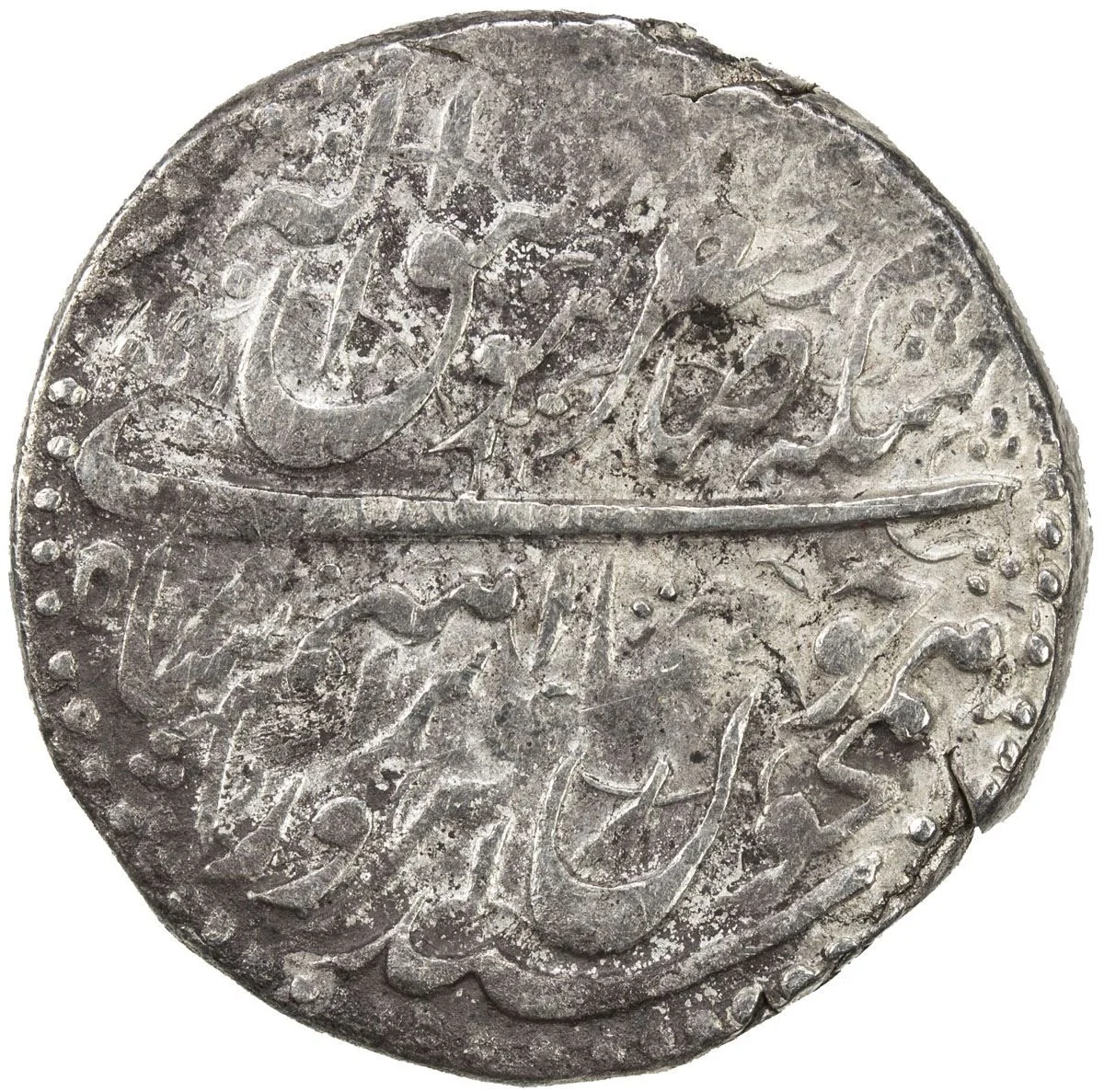
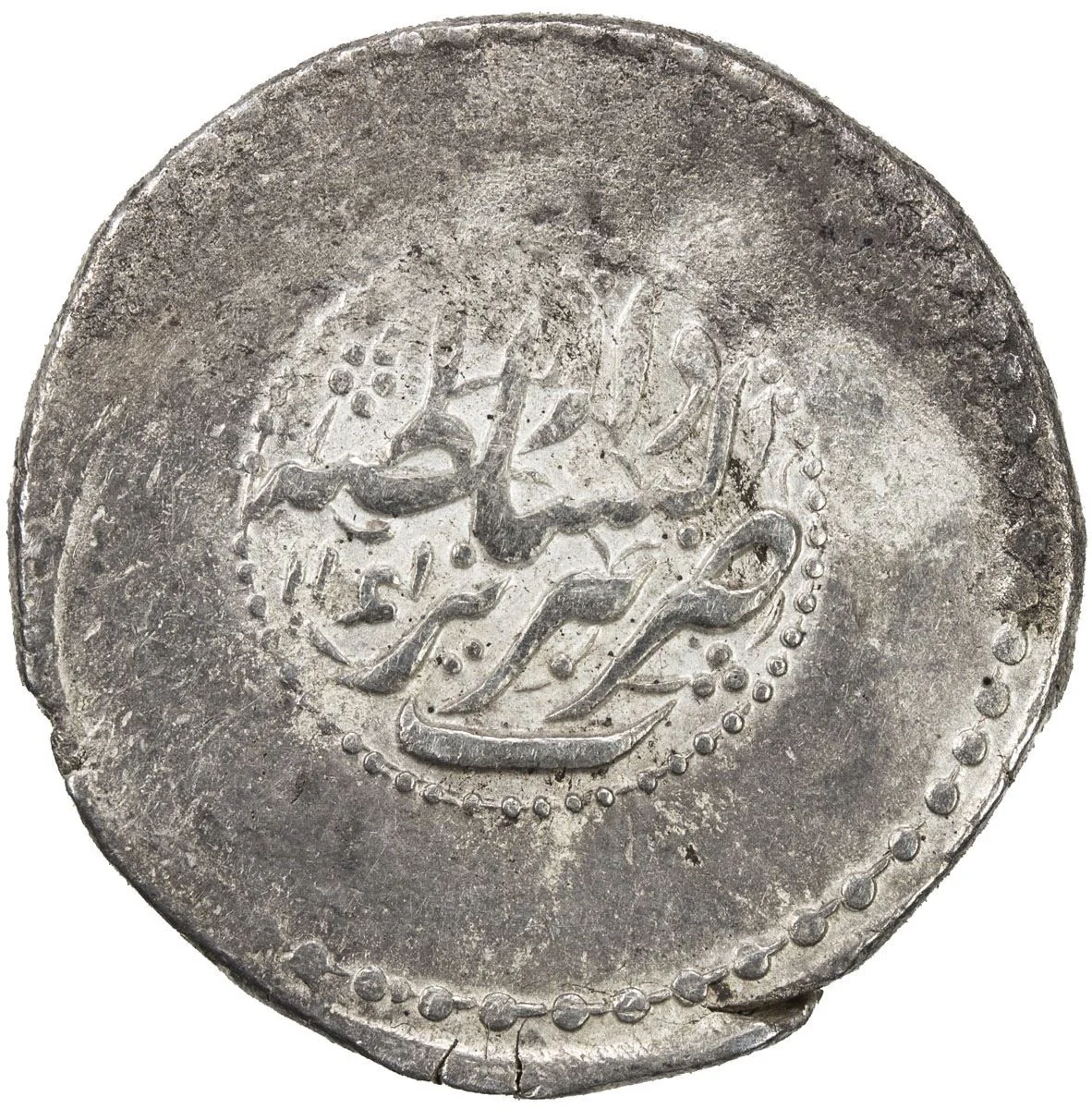
12 Shahi – Iran
Iran
Context

Material
Weight: 13.78 g
Silver weight: 13.78 g
Shape: Irregular round
Composition: Silver
Magnetic: No
Technique: Hammered
Alignment: Coin alignment
flip
References
KM: #Click to copy to clipboard414.5
Numista: #435534
Value
Bullion value: $39.85
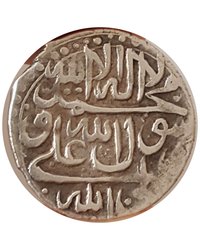
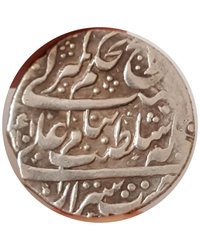
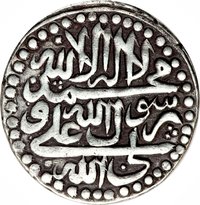
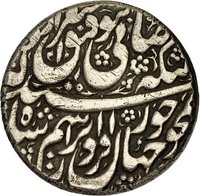
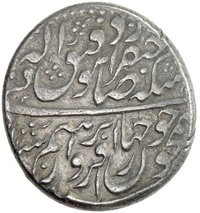
Obverse
Description:
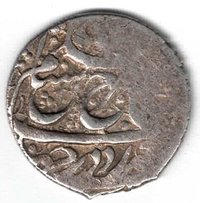
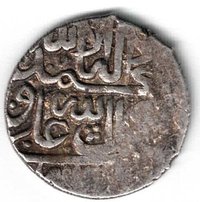
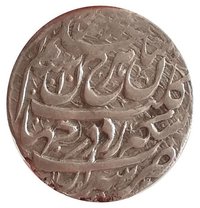
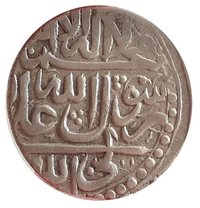
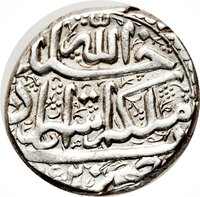
Inscribed.
Inscription:
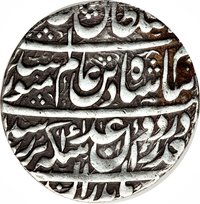
سکه صاحبقرانی زد بتوفیق اله
همچو خورشید جهان افروز ابراهیم شاه
همچو خورشید جهان افروز ابراهیم شاه
Script: Persian (nastaliq)
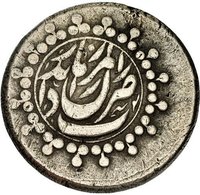
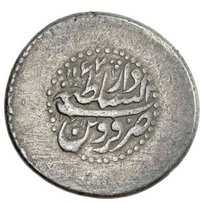
Reverse
Edge
Plain
Mints
| Name | Mark |
|---|---|
| Tebriz | تبرز |
Mintings
| Year | Mint Mark | Mintage | Quality | Collection |
|---|---|---|---|---|
| 1748 | — | — | ||
| 1749 | — | — |
Historical background
In 1748, Iran was under the rule of Nader Shah Afshar, a period marked by immense military conquest and profound economic strain. Nader Shah’s reign (1736-1747) had been funded by the colossal plunder from his invasions, most notably the 1739 sack of Delhi, which flooded the treasury with gold, jewels, and specie. However, by 1748, this wealth had been largely exhausted to fund his continuous, large-scale military campaigns. Following Nader Shah's assassination in 1747, the empire plunged into a violent succession crisis, with multiple claimants, including his nephew Ali Qoli (who became Adil Shah) and his own grandson Shahrokh, vying for control. The central authority essential for maintaining a stable monetary system had completely collapsed.
The currency situation was consequently one of severe debasement and regional fragmentation. To pay his vast army, Nader Shah had increasingly resorted to debasing the silver coinage, reducing the precious metal content of the principal silver abbasi and mahmudi coins. This practice accelerated after his death as rival factions minted their own coins to finance their forces, leading to a proliferation of currencies of varying and unreliable purity. The intrinsic value of coinage in circulation fell sharply, while the nominal prices of goods rose, creating significant inflation and market uncertainty. Long-distance trade, crucial for the economy, was severely disrupted by both the unstable currency and the widespread insecurity on the roads.
Therefore, in 1748, Iran lacked a unified, trusted currency. The monetary system was a reflection of the political chaos: decentralized, debased, and dysfunctional. Economic activity increasingly reverted to barter or relied on the hoarding of older, purer coins, while the population suffered under the weight of punitive taxation and rampant inflation. This financial disintegration was both a cause and a symptom of the decades of civil war and instability that would follow the collapse of the Afsharid dynasty, setting the stage for the rise of the Zands and later the Qajars.
The currency situation was consequently one of severe debasement and regional fragmentation. To pay his vast army, Nader Shah had increasingly resorted to debasing the silver coinage, reducing the precious metal content of the principal silver abbasi and mahmudi coins. This practice accelerated after his death as rival factions minted their own coins to finance their forces, leading to a proliferation of currencies of varying and unreliable purity. The intrinsic value of coinage in circulation fell sharply, while the nominal prices of goods rose, creating significant inflation and market uncertainty. Long-distance trade, crucial for the economy, was severely disrupted by both the unstable currency and the widespread insecurity on the roads.
Therefore, in 1748, Iran lacked a unified, trusted currency. The monetary system was a reflection of the political chaos: decentralized, debased, and dysfunctional. Economic activity increasingly reverted to barter or relied on the hoarding of older, purer coins, while the population suffered under the weight of punitive taxation and rampant inflation. This financial disintegration was both a cause and a symptom of the decades of civil war and instability that would follow the collapse of the Afsharid dynasty, setting the stage for the rise of the Zands and later the Qajars.
Series: 1748 Iran circulation coins
✨ Legendary