


Obverse
Description:
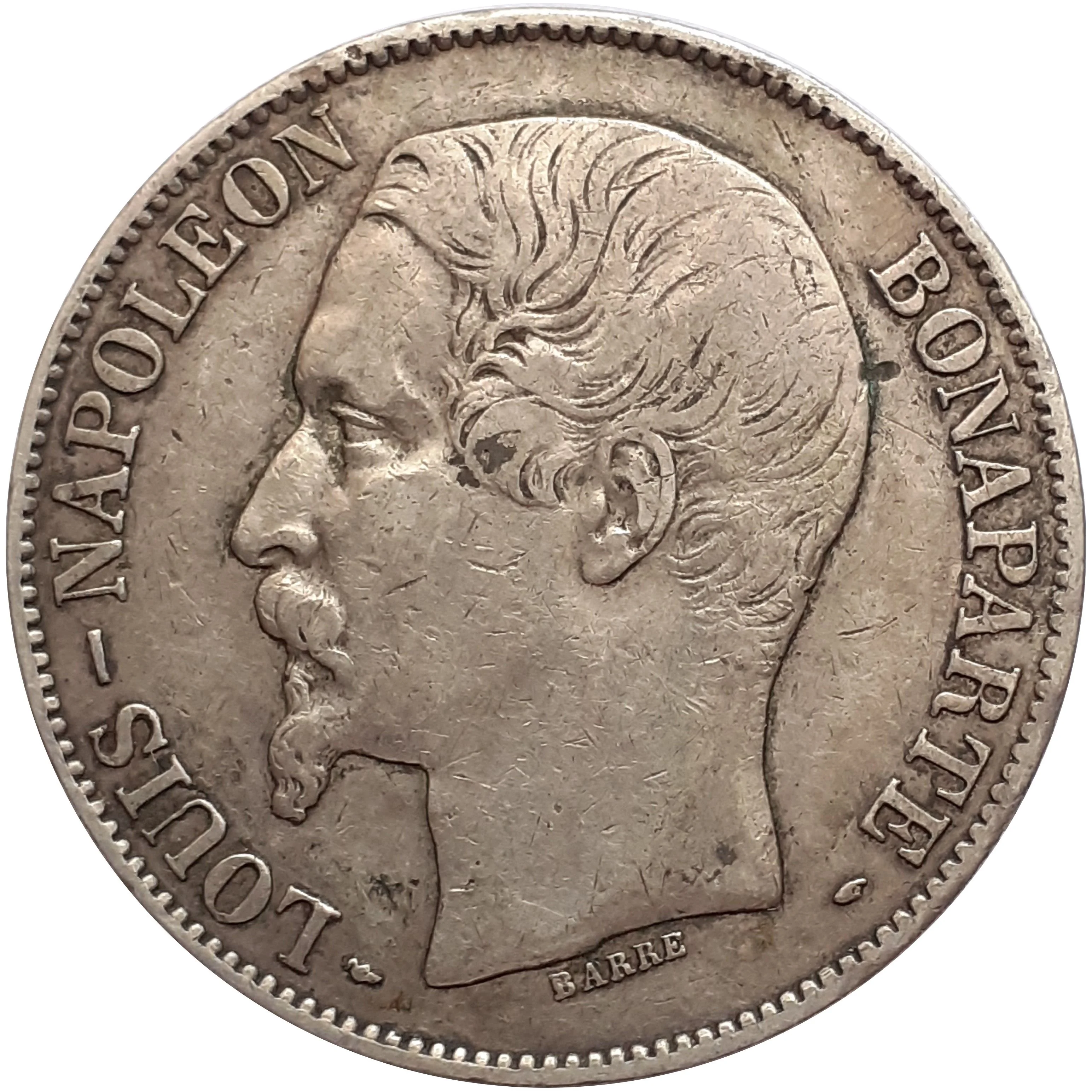
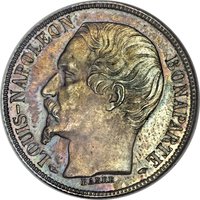
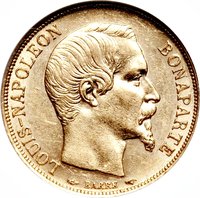
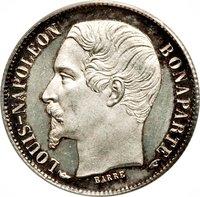
Louis-Napoléon Bonaparte, left-facing portrait.
Inscription:
LOUIS-NAPOLEON BONAPARTE
BARRE
BARRE
Translation:
LOUIS-NAPOLEON BONAPARTE
BARRE
BARRE
Script: Latin
Language: French
Engraver: Jacques-Jean Barre
Reverse
Description:
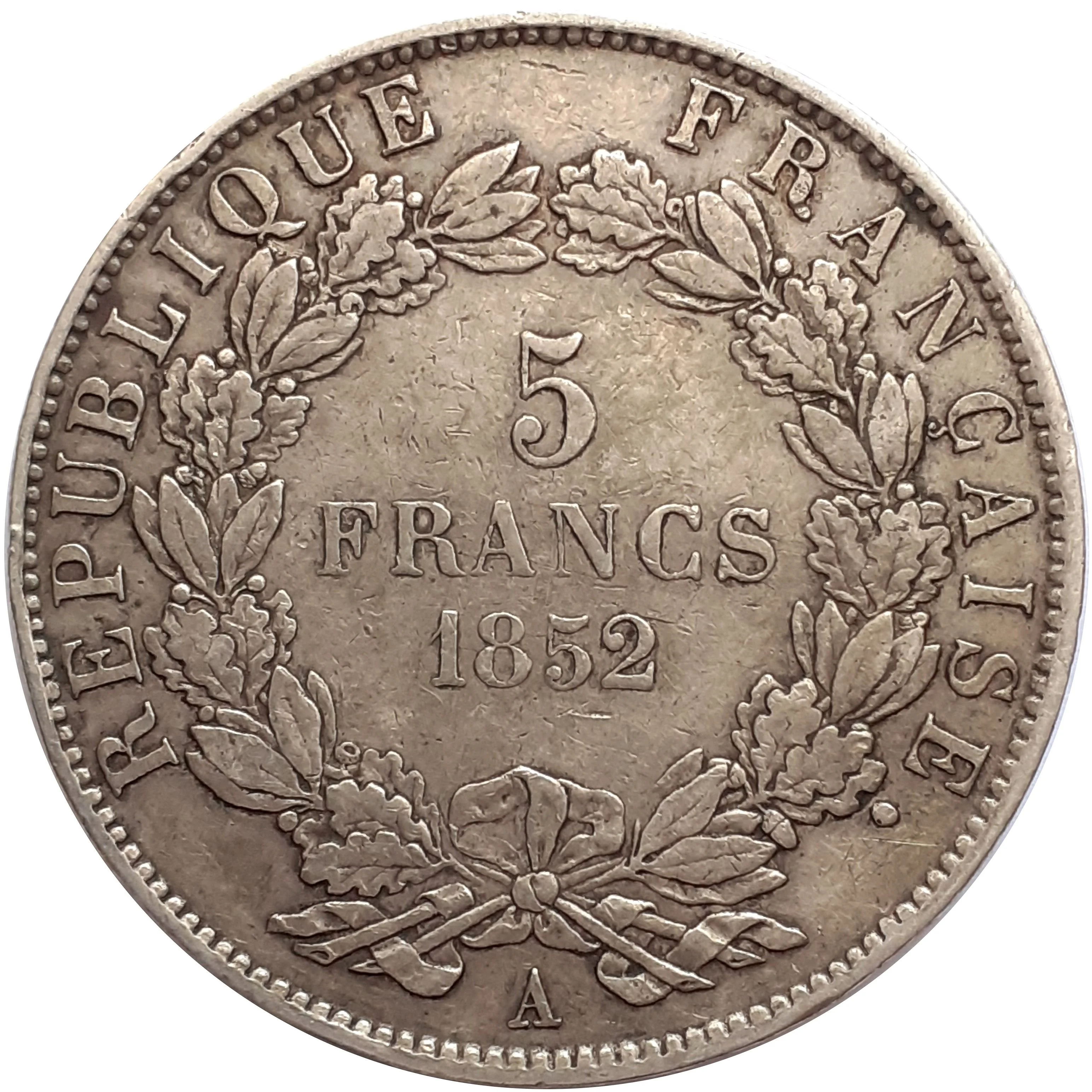
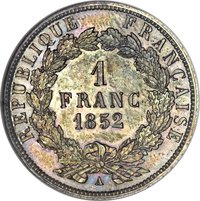
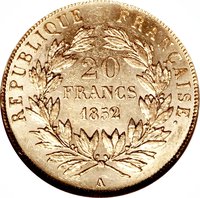
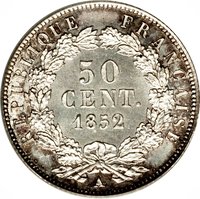
Wreath's core.
Inscription:
REPUBLIQUE FRANÇAISE.
5
FRANCS
1852
A
5
FRANCS
1852
A
Translation:
REPUBLIC OF FRANCE.
5
FRANCS
1852
5
FRANCS
1852
Script: Latin
Language: French
Engraver: Jacques-Jean Barre
Edge
Inscription in relief : "DIEU PROTEGE LA FRANCE"
Legend:
DIEU PROTEGE LA FRANCE ***
Translation:
GOD PROTECT FRANCE ***
Language: French
Mints
| Name | Mark |
|---|---|
| Monnaie de Paris | A |
| Strasbourg | BB |
Historical background
In 1852, France was under the authoritarian rule of Napoleon III, who had recently re-established the Empire. The nation's currency system was a direct legacy of his uncle, Napoleon Bonaparte, who had instituted the franc germinal in 1803. This system was bimetallic, meaning both gold and silver coins were legal tender at a fixed ratio of 15.5 to 1 (silver to gold). The franc was a stable and internationally respected currency, defined by a specific weight of precious metal, which facilitated trade and investment during a period of rapid industrialization.
However, this bimetallic standard was becoming increasingly strained by global economic shifts. Major discoveries of gold in California (1848) and Australia (1851) were beginning to flood the market, subtly altering the market value ratio between gold and silver compared to the fixed legal ratio. This created the risk of Gresham's Law, where "bad money drives out good"—if the fixed ratio undervalued one metal at the mint, people would hoard that metal and only circulate the other. While the full effects were not yet catastrophic, the system was losing its automatic equilibrium.
Consequently, France, along with other Latin Monetary Union nations it would soon help found (1865), was transitioning towards a gold standard in practice. Silver coins remained in circulation for smaller transactions, but large commercial and state operations increasingly functioned on a gold basis. This period thus represents the calm before a monetary storm, with the stable franc germinal still officially in place but under growing pressure from new global bullion supplies that would eventually force a formal re-evaluation of the international monetary order.
However, this bimetallic standard was becoming increasingly strained by global economic shifts. Major discoveries of gold in California (1848) and Australia (1851) were beginning to flood the market, subtly altering the market value ratio between gold and silver compared to the fixed legal ratio. This created the risk of Gresham's Law, where "bad money drives out good"—if the fixed ratio undervalued one metal at the mint, people would hoard that metal and only circulate the other. While the full effects were not yet catastrophic, the system was losing its automatic equilibrium.
Consequently, France, along with other Latin Monetary Union nations it would soon help found (1865), was transitioning towards a gold standard in practice. Silver coins remained in circulation for smaller transactions, but large commercial and state operations increasingly functioned on a gold basis. This period thus represents the calm before a monetary storm, with the stable franc germinal still officially in place but under growing pressure from new global bullion supplies that would eventually force a formal re-evaluation of the international monetary order.
Series: 1852 France circulation coins
🌱 Common