

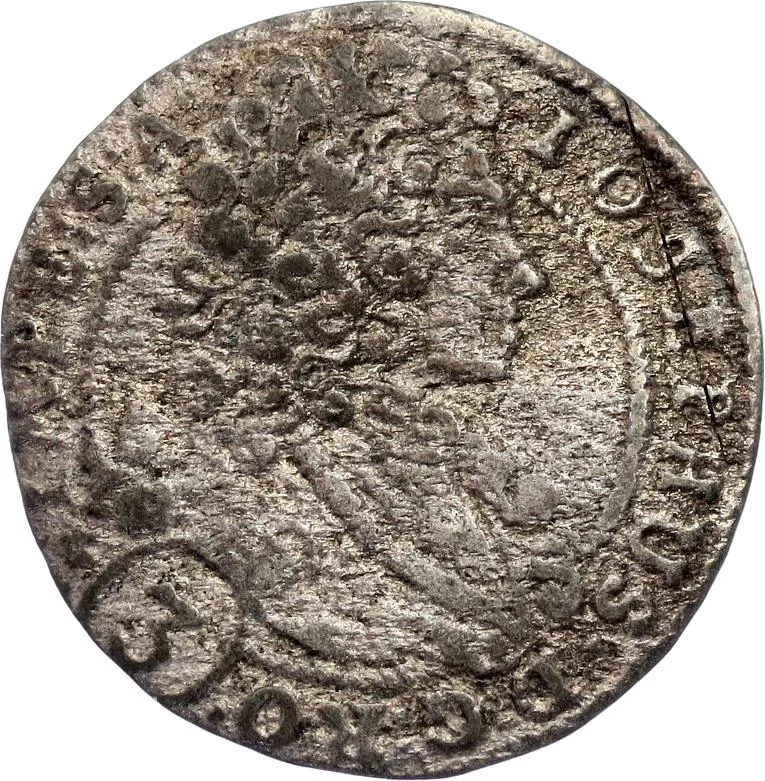
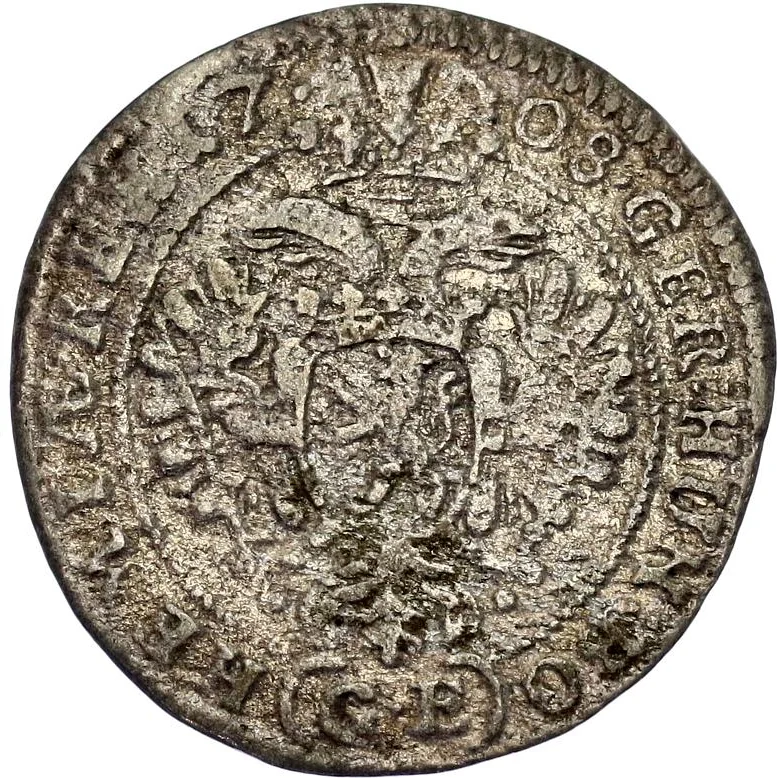
3 Kreuzers – Kingdom of Bohemia
Context
Years: 1705–1711
Country: Bohemia
Issuer: Kingdom of Bohemia
Ruler: Joseph I
Currency:
(1520—1754)
Demonetized: Yes
Material
References
KM: #Click to copy to clipboard629
Numista: #43093
Value
Bullion value: $4.46
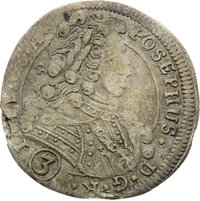
Obverse
Description:
Josef bust in long wig, titles in twisted circle, value framed below.
Inscription:
IOSEPHUS:D:G:RO:IMPE:S:A
3
3
Script: Latin
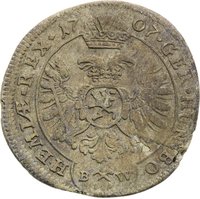
Reverse
Description:
Imperial eagle with crown, sword, scepter, and Bohemian arms. Crown divides date above; mint mark in framed legend below.
Inscription:
GER:HUN:BOHEMIÆ:REX 17 09
(G.E)
(G.E)
Script: Latin
Edge
Plain
Mints
| Name | Mark |
|---|---|
| Prague | — |
Mintings
| Year | Mint Mark | Mintage | Quality | Collection |
|---|---|---|---|---|
| 1705 | — | — | ||
| 1706 | — | — | ||
| 1707 | — | — | ||
| 1708 | — | — | ||
| 1709 | — | — | ||
| 1710 | — | — | ||
| 1710 | PM | — | ||
| 1711 | — | — | ||
| 1711 | PM | — |
Historical background
In 1705, the Kingdom of Bohemia, a crown land of the Habsburg Monarchy, was grappling with a severe and protracted currency crisis rooted in the Thirty Years' War. The primary circulating coin was the debased Kipper und Wipper silver groschen, which contained far less precious metal than its official face value. This period saw a proliferation of unstable, low-quality coinage from various mints, leading to rampant inflation, a collapse in public trust, and a complex system where older, better coins were hoarded or exported, leaving the poor to bear the brunt of the deteriorating currency.
The situation was exacerbated by the demands of the War of the Spanish Succession (1701-1714), which placed enormous fiscal strain on the Habsburg treasury. To finance the conflict, the state authorized further minting of lightweight coins, effectively engaging in a form of deficit financing that transferred wealth from the populace to the military. This practice created a vicious cycle: as new bad money flooded the market, prices for goods and services soared, particularly for basic necessities, causing widespread economic hardship and social discontent among Bohemia's subjects.
Attempts at reform were piecemeal and largely ineffective at this specific time. While a major monetary reform was on the horizon—culminating in the 1706 Wiener Münzvertrag (Vienna Coinage Treaty) which aimed to standardize coinage across the Habsburg lands—the year 1705 itself represented a low point in the crisis. The economy operated in a state of confusion, with the value of money in constant flux, hindering commerce and stability. Thus, the currency situation in 1705 Bohemia was characterized by inflationary chaos, war-driven fiscal policy, and a desperate need for the systemic imperial reform that would begin the following year.
The situation was exacerbated by the demands of the War of the Spanish Succession (1701-1714), which placed enormous fiscal strain on the Habsburg treasury. To finance the conflict, the state authorized further minting of lightweight coins, effectively engaging in a form of deficit financing that transferred wealth from the populace to the military. This practice created a vicious cycle: as new bad money flooded the market, prices for goods and services soared, particularly for basic necessities, causing widespread economic hardship and social discontent among Bohemia's subjects.
Attempts at reform were piecemeal and largely ineffective at this specific time. While a major monetary reform was on the horizon—culminating in the 1706 Wiener Münzvertrag (Vienna Coinage Treaty) which aimed to standardize coinage across the Habsburg lands—the year 1705 itself represented a low point in the crisis. The economy operated in a state of confusion, with the value of money in constant flux, hindering commerce and stability. Thus, the currency situation in 1705 Bohemia was characterized by inflationary chaos, war-driven fiscal policy, and a desperate need for the systemic imperial reform that would begin the following year.

⭐ Rare