

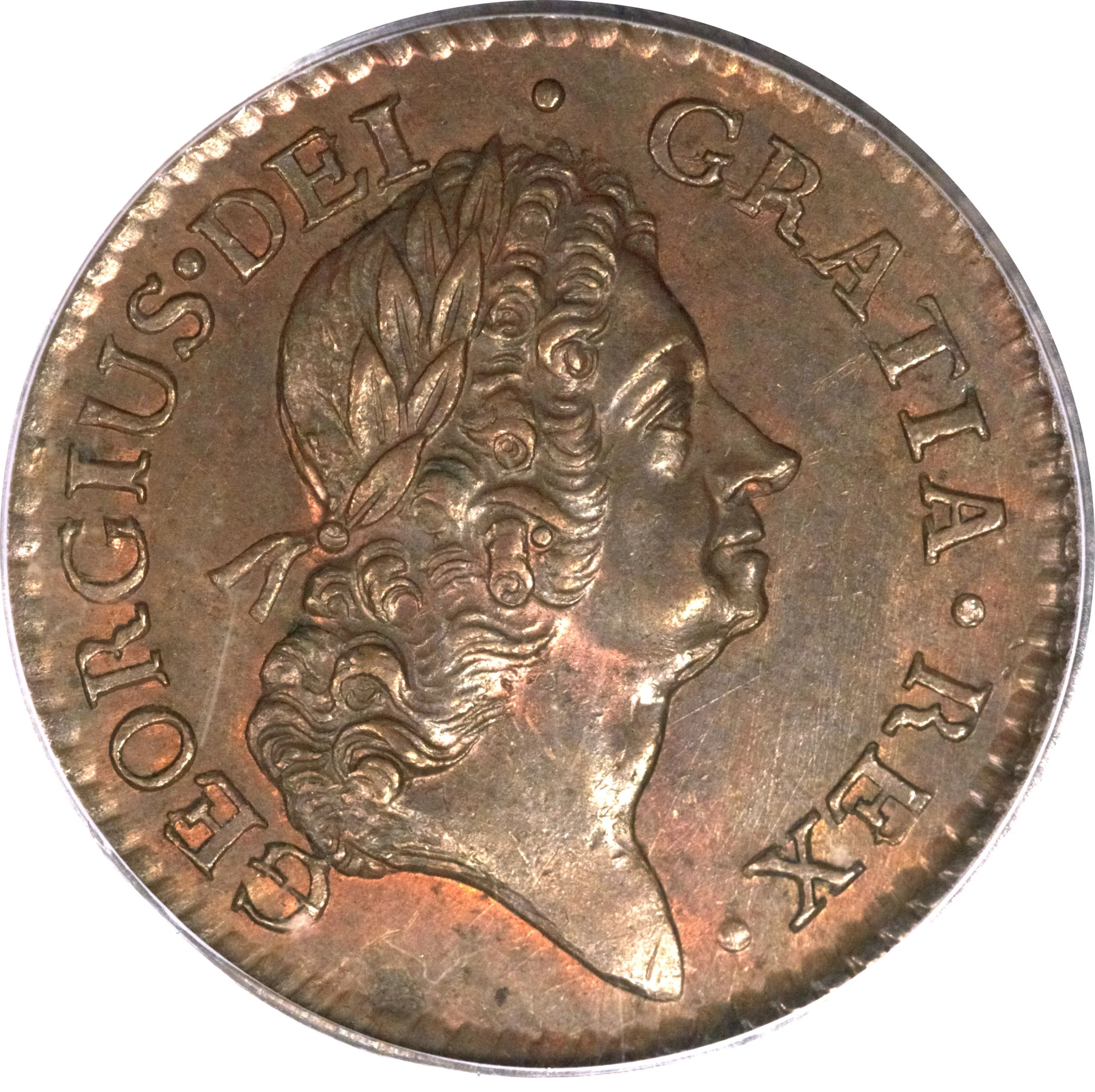
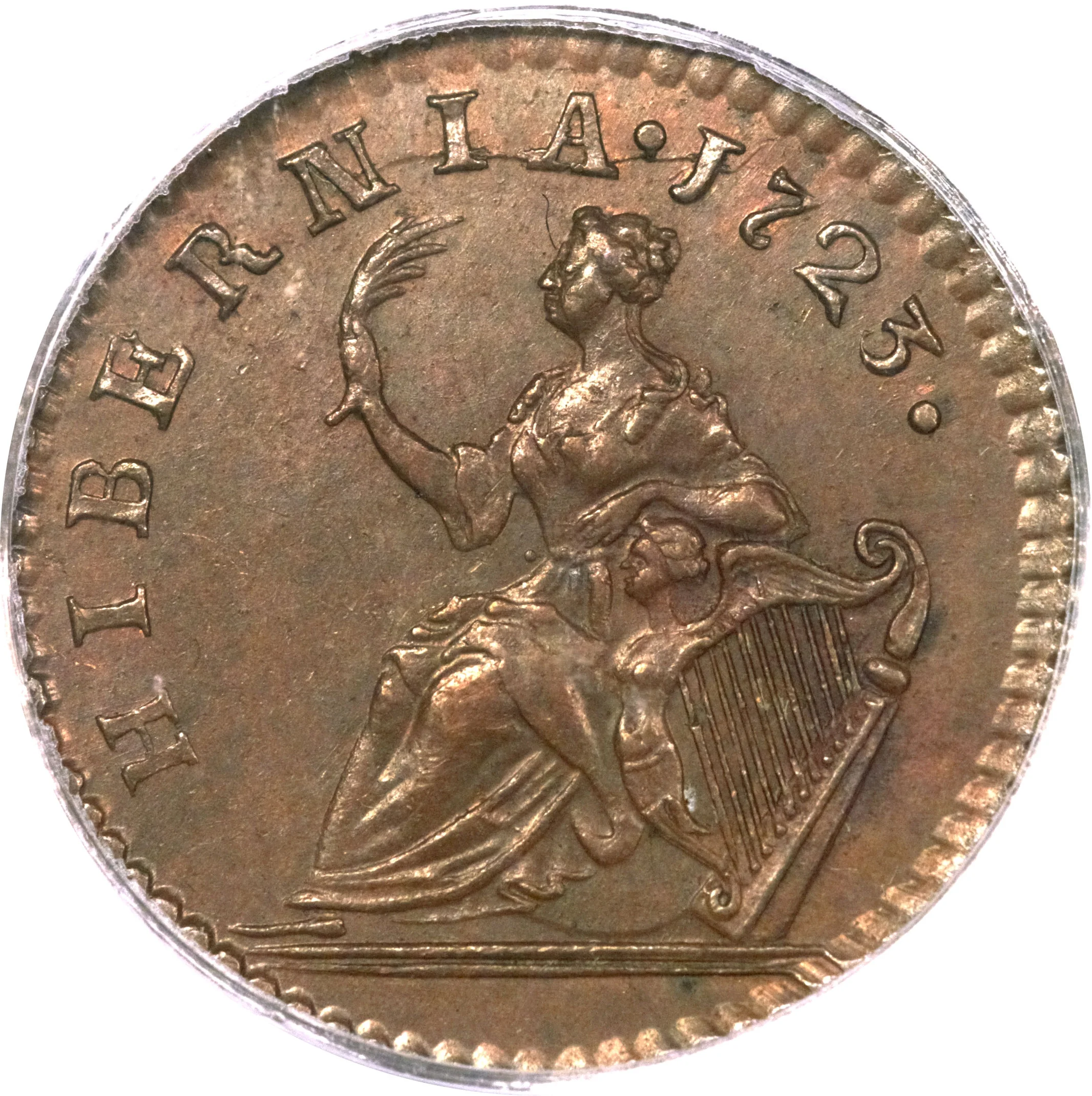
1 Farthing – Ireland
Ireland

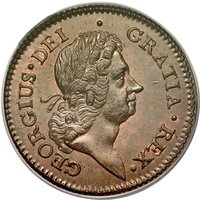
Obverse
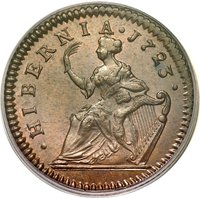
Reverse
Edge
Plain
Mintings
| Year | Mint Mark | Mintage | Quality | Collection |
|---|---|---|---|---|
| 1723 | — | — | ||
| 1723 | — | — | Proof | |
| 1724 | — | — |
Historical background
In 1723, Ireland operated under a complex and strained currency system, a direct consequence of the restrictive economic policies imposed by the Westminster Parliament following the Williamite War. The dominant medium of exchange was a mixture of foreign coin, particularly Spanish American silver pieces of eight and Portuguese gold moidores, alongside a chronically inadequate supply of officially minted Irish copper coinage. This reliance on foreign specie created significant vulnerability, as the value and supply of these coins were subject to external trade flows and the whims of international markets, leading to frequent shortages of small change that hampered daily commerce.
The situation was severely exacerbated by the "Wood's Halfpence" controversy, which erupted in 1722 and reached its peak in 1723. The British government had granted a patent to the English ironmaster William Wood to mint over £100,000 in new copper halfpence and farthings for Ireland. This was intended to address the coin shortage, but was perceived in Ireland as a grievous affront and a potentially ruinous scheme. Led by Dean Jonathan Swift’s famous "Drapier's Letters," Irish political and commercial classes united in opposition, arguing the coinage was debased, that the patent was secured through corruption, and, most fundamentally, that it represented an unconstitutional imposition by England, threatening to drain wealth from the kingdom.
Consequently, 1723 was a year of intense political crisis rather than monetary stability. The widespread boycott and public fury against Wood's coinage, fueled by Swift's powerful rhetoric, made the coins virtually unusable. The protest was overwhelmingly successful, forcing the British government to withdraw the patent in 1725. Thus, the currency background of 1723 is defined not by a functioning system, but by a successful popular defence against a perceived exploitative monetary imposition, highlighting Ireland’s subordinate constitutional position within the British Empire and the growing assertiveness of a proto-nationalist political consciousness.
The situation was severely exacerbated by the "Wood's Halfpence" controversy, which erupted in 1722 and reached its peak in 1723. The British government had granted a patent to the English ironmaster William Wood to mint over £100,000 in new copper halfpence and farthings for Ireland. This was intended to address the coin shortage, but was perceived in Ireland as a grievous affront and a potentially ruinous scheme. Led by Dean Jonathan Swift’s famous "Drapier's Letters," Irish political and commercial classes united in opposition, arguing the coinage was debased, that the patent was secured through corruption, and, most fundamentally, that it represented an unconstitutional imposition by England, threatening to drain wealth from the kingdom.
Consequently, 1723 was a year of intense political crisis rather than monetary stability. The widespread boycott and public fury against Wood's coinage, fueled by Swift's powerful rhetoric, made the coins virtually unusable. The protest was overwhelmingly successful, forcing the British government to withdraw the patent in 1725. Thus, the currency background of 1723 is defined not by a functioning system, but by a successful popular defence against a perceived exploitative monetary imposition, highlighting Ireland’s subordinate constitutional position within the British Empire and the growing assertiveness of a proto-nationalist political consciousness.
🌟 Limited