

2 Ducats – Denmark
Denmark
Context

Material
References
KM: #Click to copy to clipboard584
Numista: #427735
Value
Bullion value: $1141.43
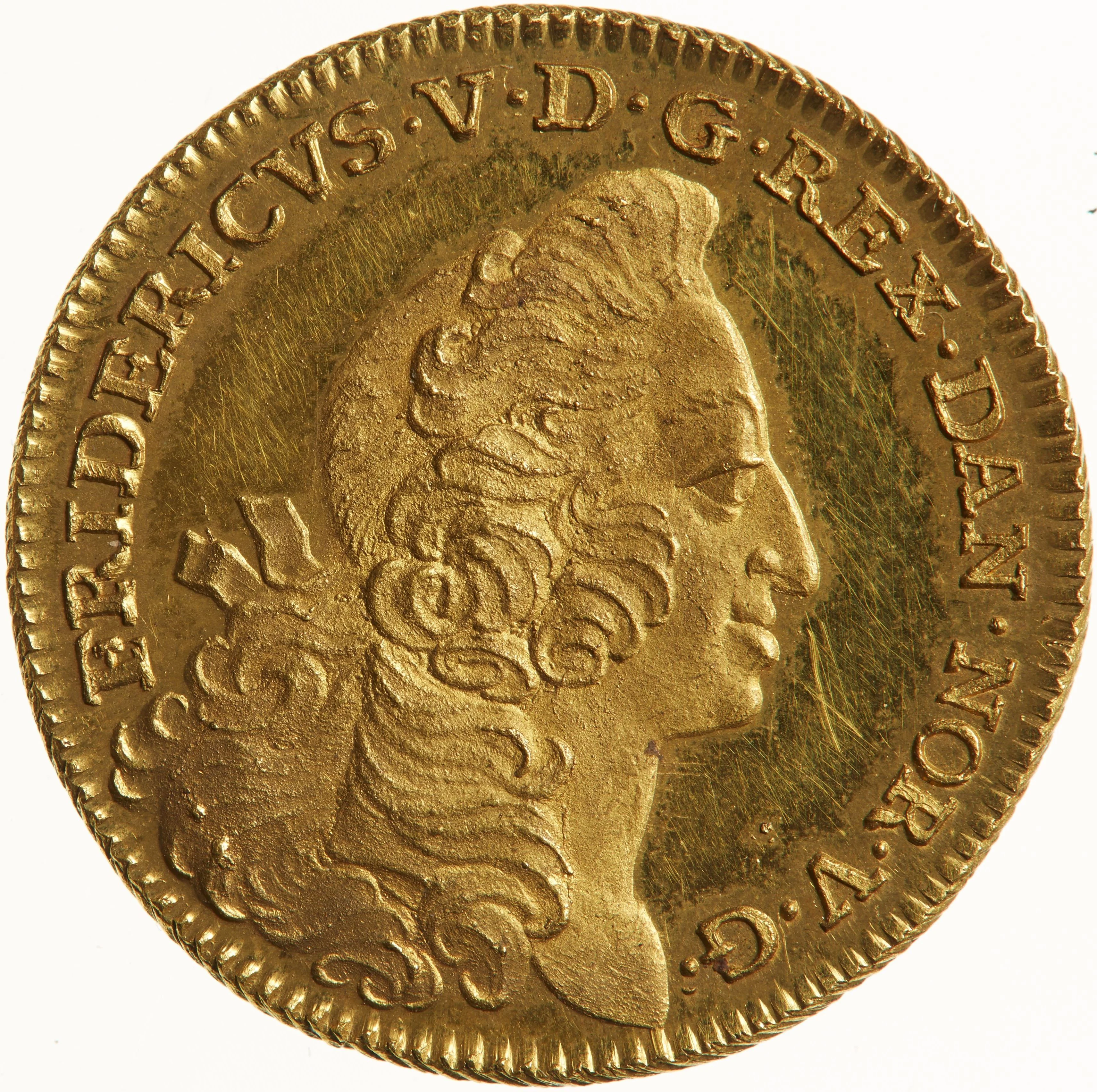
Obverse
Description:
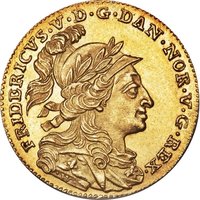
King Frederik V in profile with long hair.
Inscription:
FRIDERICVS • V • D • G • REX • DAN • NOR • V • G •
Script: Latin
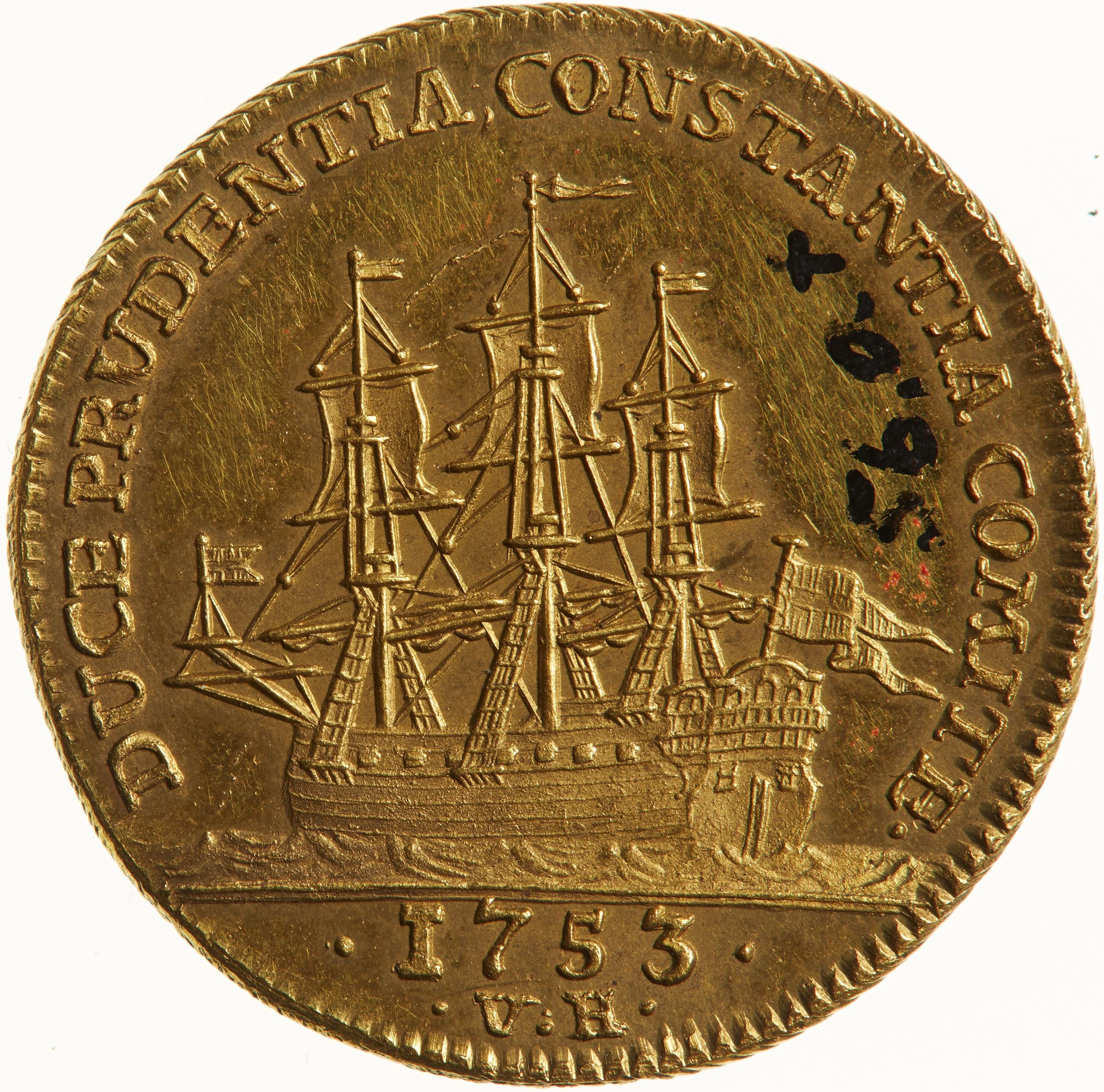
Reverse
Description:
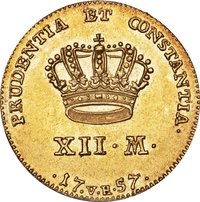
Sailing ship. Legend above, rim. Date and mintmark below in exergue.
Inscription:
DUCE PRUDENTIA, CONSTANTIA COMITE.
• 1754 •
• V • H •
• 1754 •
• V • H •
Script: Latin
Edge
Categories
| Transportation> Watercraft |
Mints
| Name | Mark |
|---|---|
| Royal Danish Mint | — |
Mintings
| Year | Mint Mark | Mintage | Quality | Collection |
|---|---|---|---|---|
| 1753 | — | — |
Historical background
In 1753, Denmark-Norway faced a significant monetary crisis rooted in decades of currency instability. The primary circulating coin, the skilling, had been repeatedly debased to fund state expenses, particularly under King Christian VI. This led to a severe loss of public confidence, as the intrinsic silver value of the coins fell far below their face value. The system was chaotic, with a confusing array of old and new coins of varying worth in simultaneous circulation, severely hampering trade and economic predictability.
The state's response was the landmark Currency Regulation of 1753, a comprehensive reform enacted under King Frederik V. This decree established a new, stable monetary system based on the rigsdaler as the primary silver coin, subdivided into 96 skilling rigsmønt. Crucially, the reform tied the currency to a fixed silver standard, ending the practice of arbitrary debasement. Old, debased coins were called in and reminted according to the new, higher standard, restoring trust in the state's coinage.
The 1753 reform was a cornerstone of Danish mercantilist policy and a notable success. By providing a uniform and reliable currency, it facilitated domestic commerce and strengthened the state's fiscal health. The system proved remarkably durable, remaining in place until the adoption of the decimal-based krone in 1873, and is remembered as a pivotal moment in Denmark's financial and economic modernization.
The state's response was the landmark Currency Regulation of 1753, a comprehensive reform enacted under King Frederik V. This decree established a new, stable monetary system based on the rigsdaler as the primary silver coin, subdivided into 96 skilling rigsmønt. Crucially, the reform tied the currency to a fixed silver standard, ending the practice of arbitrary debasement. Old, debased coins were called in and reminted according to the new, higher standard, restoring trust in the state's coinage.
The 1753 reform was a cornerstone of Danish mercantilist policy and a notable success. By providing a uniform and reliable currency, it facilitated domestic commerce and strengthened the state's fiscal health. The system proved remarkably durable, remaining in place until the adoption of the decimal-based krone in 1873, and is remembered as a pivotal moment in Denmark's financial and economic modernization.
✨ Legendary