

4 Reales – Spain
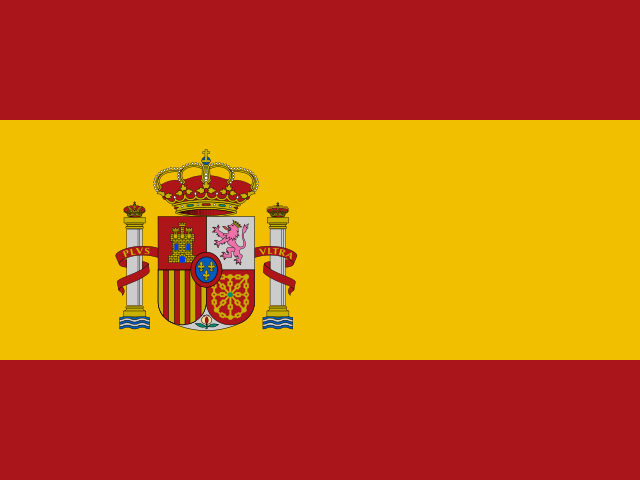
Spain
Context
Material
Diameter: 32 mm
Weight: 13 g
Silver weight: 12.10 g
Thickness: 2 mm
Shape: Round
Composition: 93.1% Silver
Magnetic: No
Technique: Roller milled
References
KM: #Click to copy to clipboardM200
Numista: #427000
Value
Bullion value: $33.96
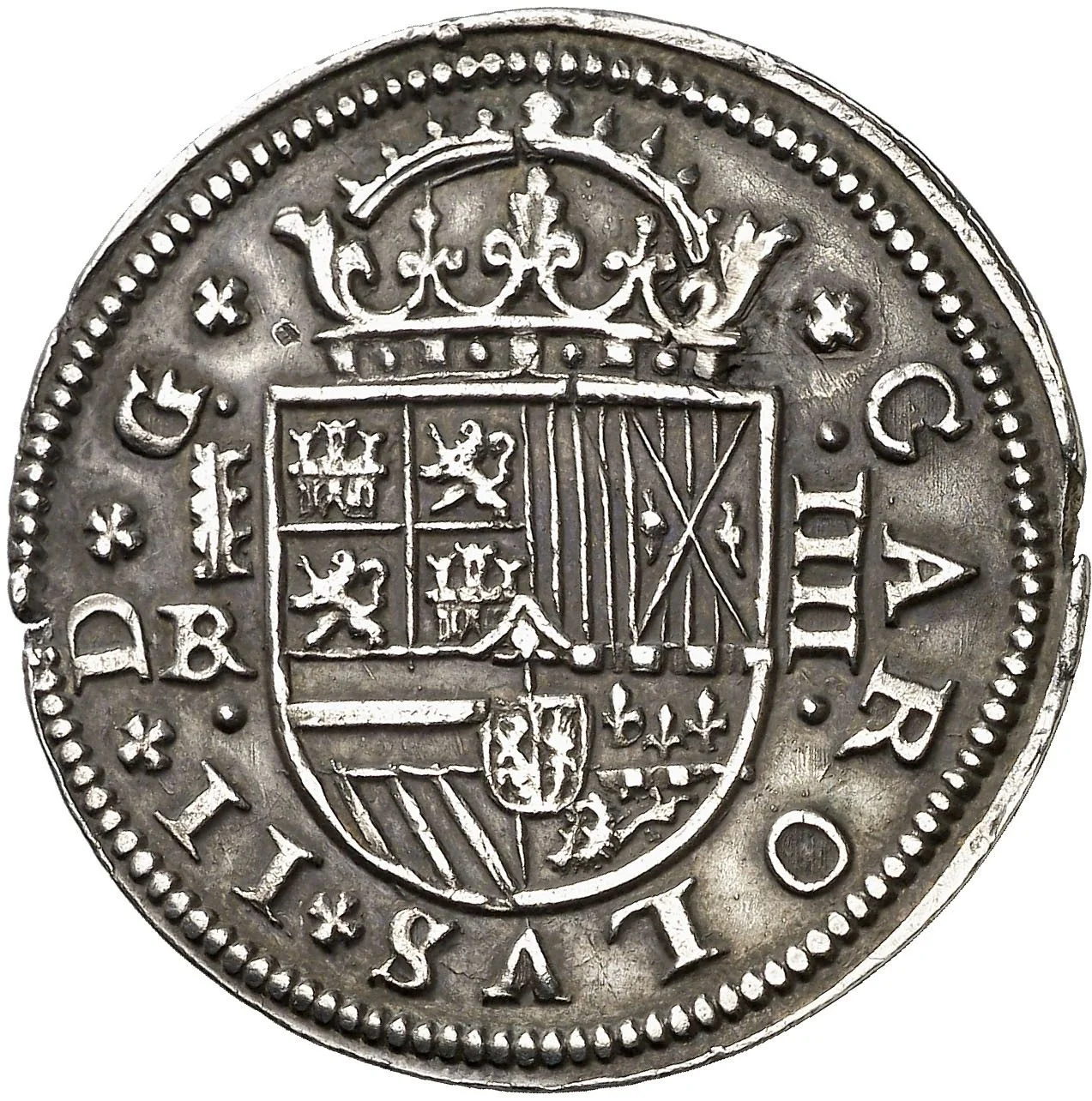
Obverse
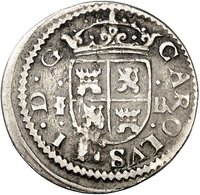
Description:
Spanish coat of arms, Portugal excluded.
Inscription:
✤ CAROLVS ✤ II ✤ D ✤ G ✤
· BR ·
· IIII ·
· BR ·
· IIII ·
Script: Latin
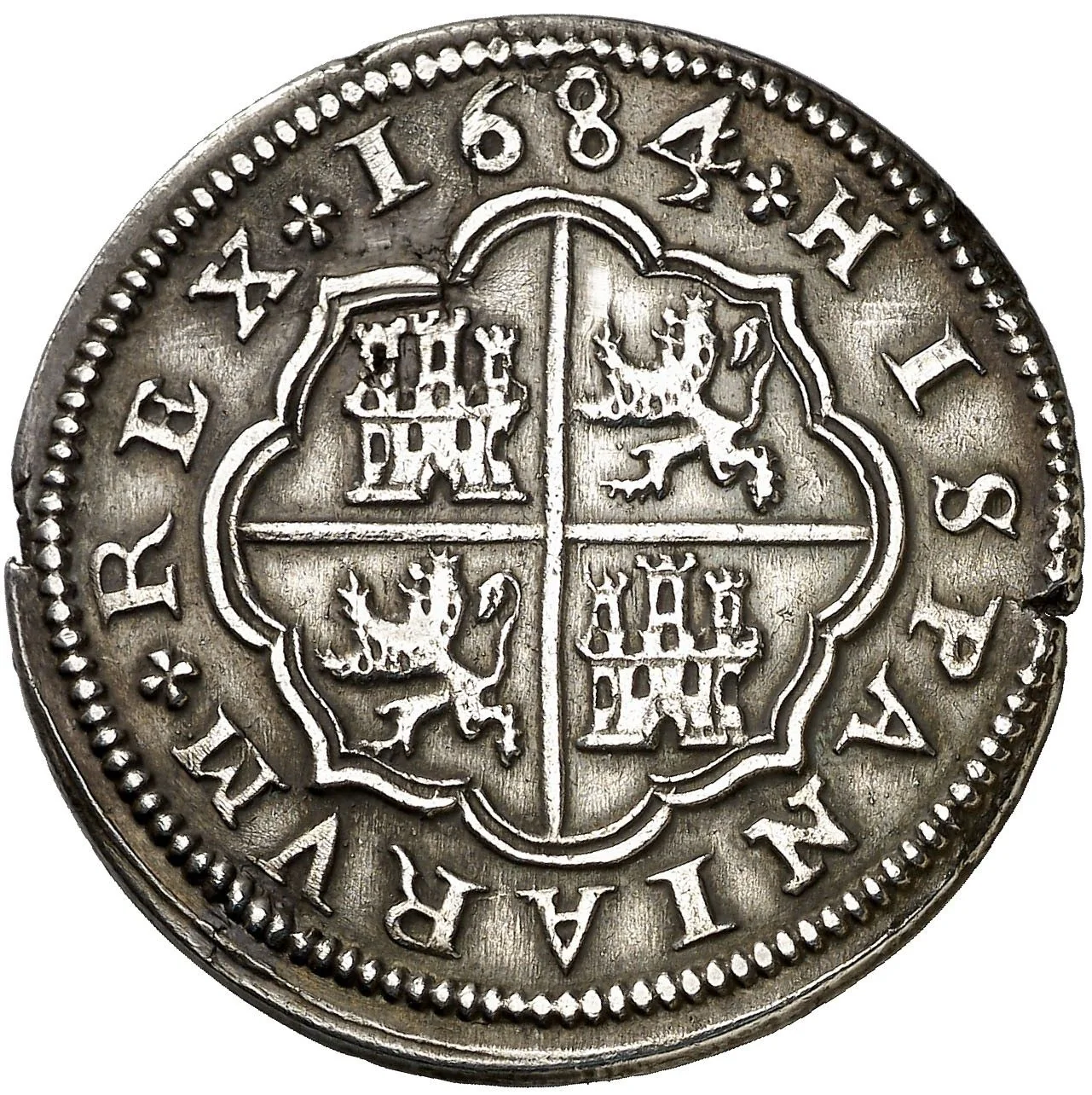
Reverse
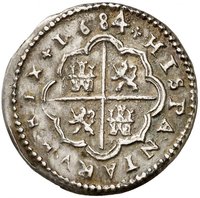
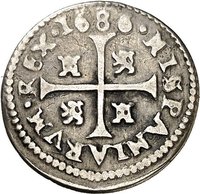
Description:
Castile and León's coat of arms in an octolobe.
Inscription:
✤ 1684 ✤ HISPANIARVM ✤ REX
Script: Latin
Edge
Categories
| Symbols> Coat of Arms |
Mints
| Name | Mark |
|---|---|
| Royal Mint of Segovia | — |
Mintings
| Year | Mint Mark | Mintage | Quality | Collection |
|---|---|---|---|---|
| 1684 | BR | — | ||
| 1685 | BR | — |
Historical background
In 1684, the Spanish monetary system was in a state of profound crisis, a legacy of the "Price Revolution" and decades of fiscal mismanagement. The primary circulating coin, the silver real, had been repeatedly debased by the crown to finance its endless military commitments in the Thirty Years' War and subsequent conflicts. This created a chaotic environment where the intrinsic silver content of newer coins was far lower than that of older coins of the same face value, leading to Gresham's Law in action: "good" full-weight coins were hoarded or exported, while "bad" lightweight coins flooded the market, eroding public trust and disrupting commerce.
The situation was exacerbated by the widespread circulation of vellón, a crude coinage of copper or billon (copper with a trace of silver). Originally intended as small change, successive governments had massively over-issued vellón to cover state debts, leading to severe inflation. Attempts at stabilization, like the drastic Monda of 1680—a forced re-coinage and reduction of vellón in circulation—provided only temporary relief. By 1684, inflationary pressures were returning, and the economy suffered from a chronic shortage of trustworthy fractional currency, hampering everyday transactions.
Monarchically, Spain was under the rule of the ineffectual Charles II, whose failing health symbolized the nation's own decline. The government's finances were crippled by debt, and its American silver fleets, while still arriving, were increasingly mortgaged to Genoese and Dutch bankers before they even reached Seville. Consequently, 1684 represents a point of entrenched stagnation within the broader Habsburg decline, where monetary disorder was both a symptom and a cause of Spain's diminishing economic power, leaving the kingdom ill-prepared for the challenges of the coming century.
The situation was exacerbated by the widespread circulation of vellón, a crude coinage of copper or billon (copper with a trace of silver). Originally intended as small change, successive governments had massively over-issued vellón to cover state debts, leading to severe inflation. Attempts at stabilization, like the drastic Monda of 1680—a forced re-coinage and reduction of vellón in circulation—provided only temporary relief. By 1684, inflationary pressures were returning, and the economy suffered from a chronic shortage of trustworthy fractional currency, hampering everyday transactions.
Monarchically, Spain was under the rule of the ineffectual Charles II, whose failing health symbolized the nation's own decline. The government's finances were crippled by debt, and its American silver fleets, while still arriving, were increasingly mortgaged to Genoese and Dutch bankers before they even reached Seville. Consequently, 1684 represents a point of entrenched stagnation within the broader Habsburg decline, where monetary disorder was both a symptom and a cause of Spain's diminishing economic power, leaving the kingdom ill-prepared for the challenges of the coming century.
✨ Legendary