

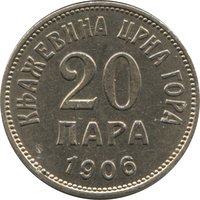
2 pare – Montenegro
Add to wishlist
Montenegro
Context
Years: 1906–1908
Issuer: Montenegro
Ruler: Nicholas I
Currency:
(1906—1918)
Demonetized: Yes
Total mintage: 850,125
Material
References
KM: #
Numista: #11811
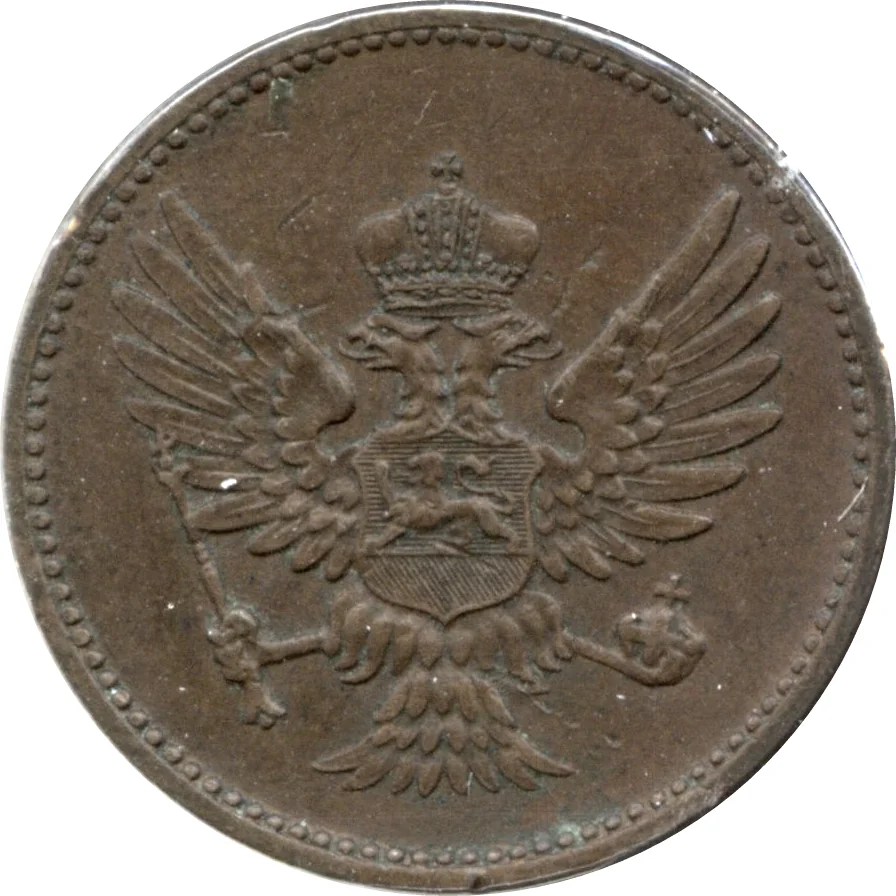
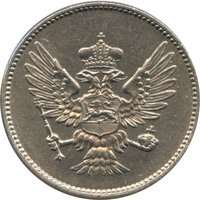
Obverse
Description:
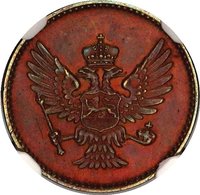
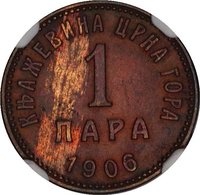
Double-headed eagle coat of arms.
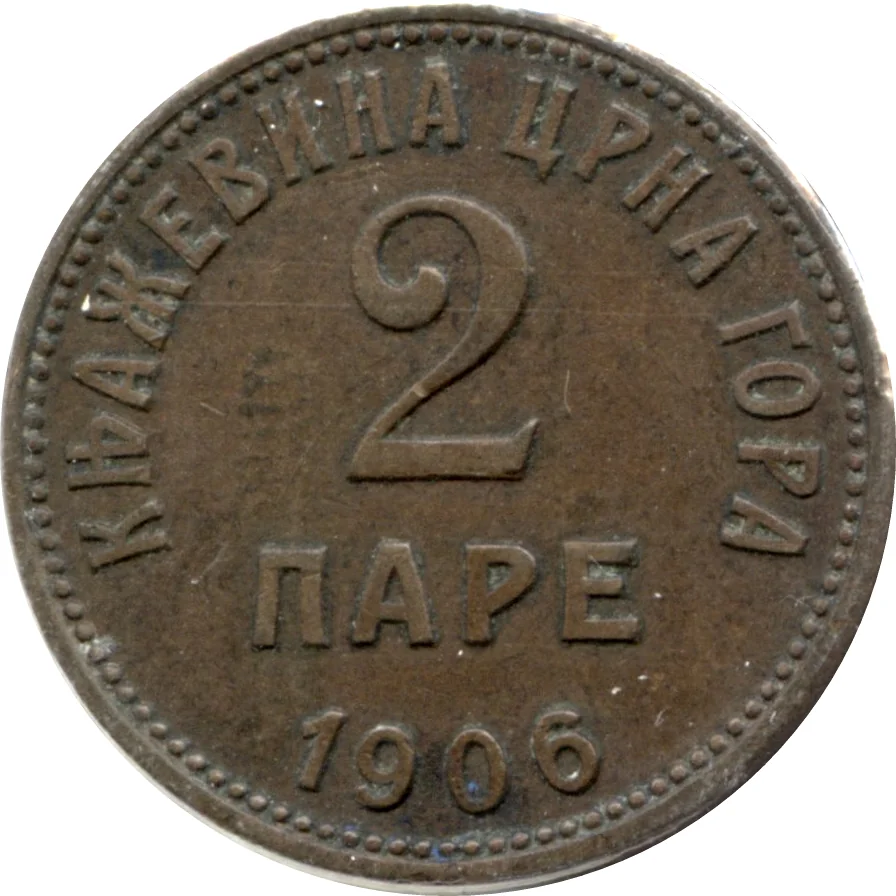
Reverse
Edge
Plain
Categories
| Animal> Bird |
| Symbol> Crown |
| Symbols> Coat of Arms |
| Symbol> Double-headed eagle |
| Object> Globus cruciger |
Mintings
| Year | Mint Mark | Mintage | Quality | Collection |
|---|---|---|---|---|
| 1906 | — | 600,125 | ||
| 1908 | — | 250,000 |
Historical background
In 1906, Montenegro existed as a sovereign principality (soon to be a kingdom, proclaimed in 1910) with a complex and informal currency system. The state did not mint its own coins or issue its own paper money. Instead, its economy operated on a de facto standard based on foreign silver and gold coins, a situation common in smaller Balkan states of the period. The primary circulating currency was the Austro-Hungarian krone (crown), a reflection of the Habsburg Monarchy's overwhelming economic and political influence in the region. Alongside these, older Ottoman coins like the lira and para, as well as other European currencies like the French franc and Italian lira, also circulated, creating a somewhat chaotic monetary environment.
This reliance on foreign coinage presented significant challenges for governance and economic development. Prince Nikola I's government had limited control over monetary policy, could not collect seigniorage (profit from minting coins), and faced difficulties in stabilizing state finances. The value of transactions often depended on the fluctuating exchange rates between the various metallic coins in use, complicating trade and taxation. Recognizing these issues, there were ongoing discussions about adopting a formal, unified national currency, with the Austro-Hungarian krone being the most likely candidate for official adoption due to its dominance in everyday use.
Therefore, the currency situation in 1906 was one of transition and deliberation. It was characterized by a practical dependency on the Austro-Hungarian monetary zone, while the state actively contemplated formalizing this arrangement to gain greater economic stability. This period set the stage for Montenegro's eventual, though brief, official adoption of the Austro-Hungarian krone as its national currency in 1909, a move that legally cemented the existing monetary reality and further tied the principality's economy to Vienna.
This reliance on foreign coinage presented significant challenges for governance and economic development. Prince Nikola I's government had limited control over monetary policy, could not collect seigniorage (profit from minting coins), and faced difficulties in stabilizing state finances. The value of transactions often depended on the fluctuating exchange rates between the various metallic coins in use, complicating trade and taxation. Recognizing these issues, there were ongoing discussions about adopting a formal, unified national currency, with the Austro-Hungarian krone being the most likely candidate for official adoption due to its dominance in everyday use.
Therefore, the currency situation in 1906 was one of transition and deliberation. It was characterized by a practical dependency on the Austro-Hungarian monetary zone, while the state actively contemplated formalizing this arrangement to gain greater economic stability. This period set the stage for Montenegro's eventual, though brief, official adoption of the Austro-Hungarian krone as its national currency in 1909, a move that legally cemented the existing monetary reality and further tied the principality's economy to Vienna.
🌱 Fairly Common