

¼ gulden – Netherlands West Indies
Add to wishlist
Netherlands
Context
Years: 1794–1795
Country: Netherlands
Issuer: Netherlands West Indies
Period:
(1675—1795)
Currency:
(1675—1795)
Demonetized: Yes
Total mintage: 1
Material
References
KM: #
Numista: #42459
Value
Bullion value: $6.08
Obverse
Description:
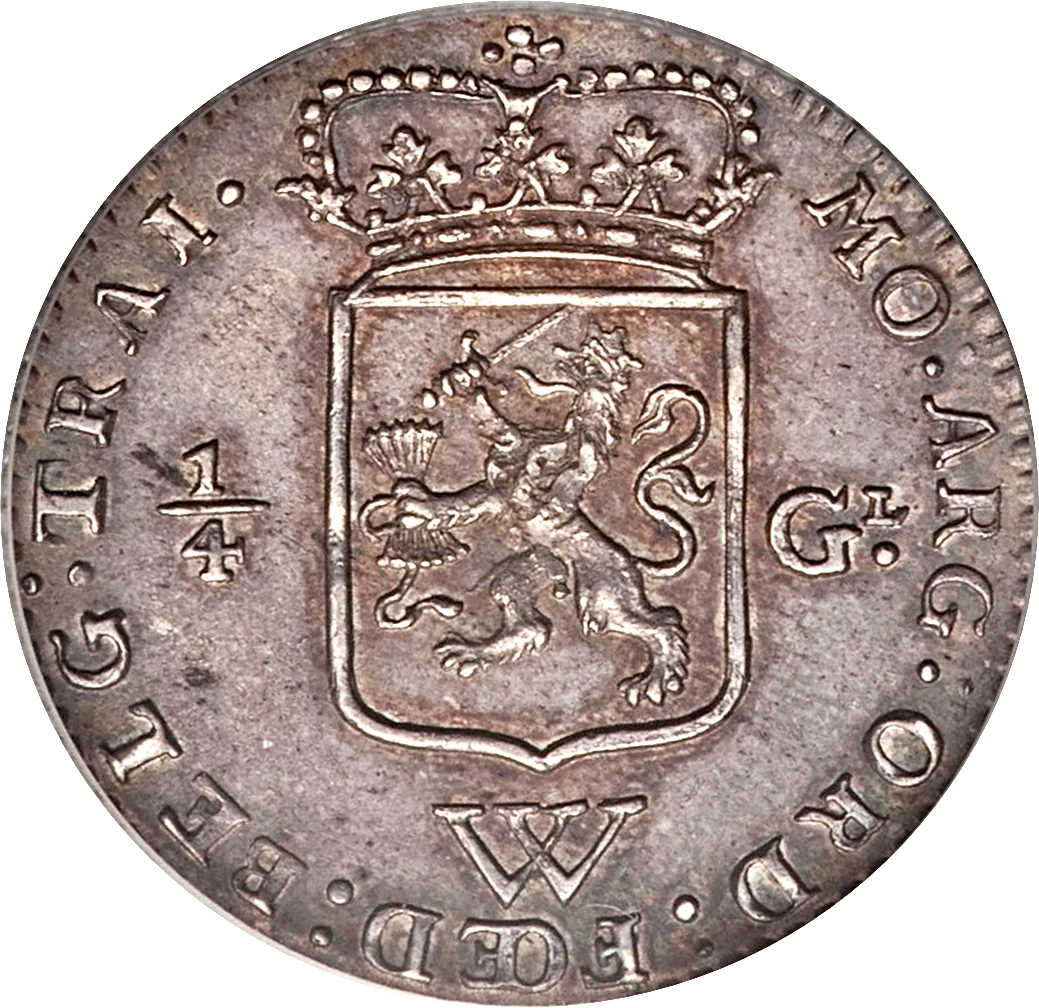
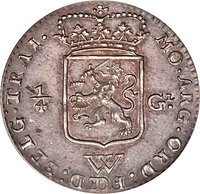
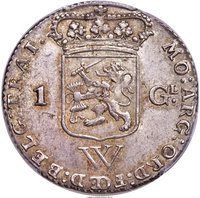
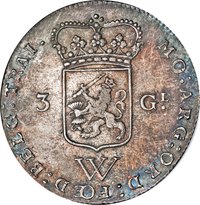
Generality arms of the Dutch Republic above value, with "W" for West Indies below. Latin text surrounds.
Inscription:
MO : ARG : ORD : FŒD : BELG : TRAI.
1/4 GL.
W
1/4 GL.
W
Script: Latin
Reverse
Description:
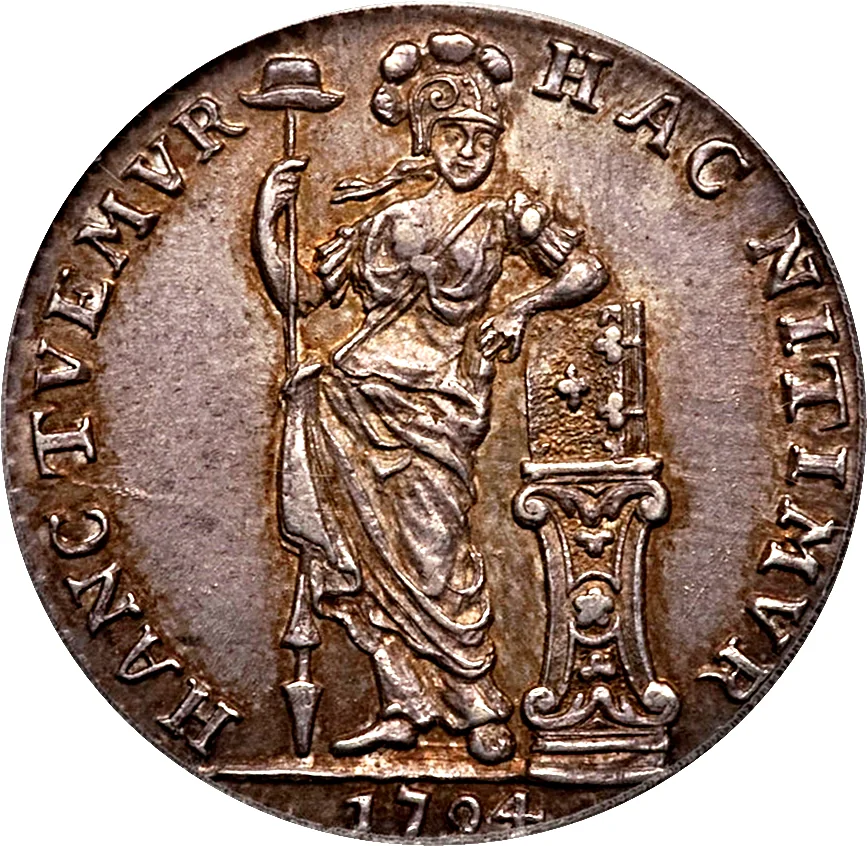
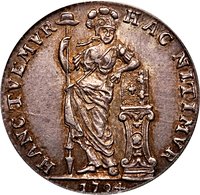
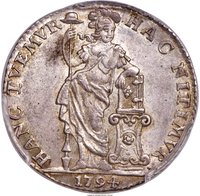
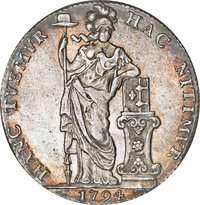
Dutch Virgin holding a spear with a Liberty Cap, her left hand on a Bible atop a decorated pillar. Latin text surrounds. Date below.
Inscription:
HAC NITIMVR HANC TVEMVR
1794
1794
Script: Latin
Edge
Cabled
Mints
| Name | Mark |
|---|---|
| Royal Dutch Mint | — |
Mintings
| Year | Mint Mark | Mintage | Quality | Collection |
|---|---|---|---|---|
| 1794 | — | — | ||
| 1795 | — | 1 |
Historical background
In 1794, the currency situation in the Netherlands West Indies (primarily the colonies of Curaçao, Suriname, and the Dutch Antilles) was defined by monetary chaos and acute scarcity. The official currency was the Dutch guilder, but the supply of minted coins from the mother country had long been insufficient for the colonies' needs, especially amidst the turmoil of the Fourth Anglo-Dutch War (1780-1784) and the recent French invasion of the Dutch Republic in early 1795. This chronic shortage led to a heavy reliance on a bewildering variety of foreign coins in daily circulation, including Spanish American pieces of eight (reales), Portuguese joes (Johannes), and other Latin American and European specie, all traded at fluctuating and locally negotiated rates.
The instability was exacerbated by the political and economic crisis in Europe. With the Dutch Republic under threat from revolutionary France, trade and monetary shipments to the colonies were severely disrupted. To fill the void, colonial authorities and merchants increasingly turned to the issuance of paper money, including biljetten (notes) and creditbrieven (credit letters). However, confidence in this paper was often low, leading to depreciation and a complex system where its value was discounted against preferred silver coins. In Suriname, the plantation economy's reliance on credit and the use of "plantation money" further complicated the monetary landscape.
Consequently, by the end of 1794, the currency system was a fragile patchwork of undervalued official coin, dominant foreign specie, and depreciating local paper. This environment hindered commerce, facilitated arbitrage, and reflected the colonies' precarious position as they were on the brink of being cut off from their metropole. The impending establishment of the French-backed Batavian Republic in 1795 would soon formalize this separation, plunging the Netherlands West Indies into a deeper period of economic isolation and monetary improvisation.
The instability was exacerbated by the political and economic crisis in Europe. With the Dutch Republic under threat from revolutionary France, trade and monetary shipments to the colonies were severely disrupted. To fill the void, colonial authorities and merchants increasingly turned to the issuance of paper money, including biljetten (notes) and creditbrieven (credit letters). However, confidence in this paper was often low, leading to depreciation and a complex system where its value was discounted against preferred silver coins. In Suriname, the plantation economy's reliance on credit and the use of "plantation money" further complicated the monetary landscape.
Consequently, by the end of 1794, the currency system was a fragile patchwork of undervalued official coin, dominant foreign specie, and depreciating local paper. This environment hindered commerce, facilitated arbitrage, and reflected the colonies' precarious position as they were on the brink of being cut off from their metropole. The impending establishment of the French-backed Batavian Republic in 1795 would soon formalize this separation, plunging the Netherlands West Indies into a deeper period of economic isolation and monetary improvisation.
💎 Extremely Rare