

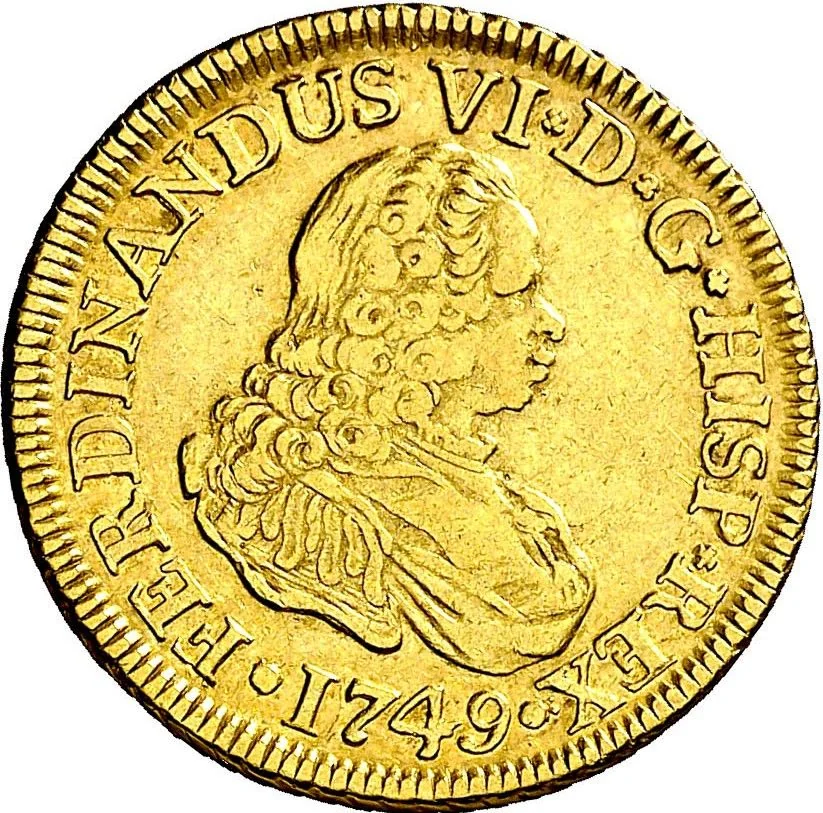
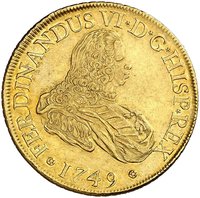
Obverse
Description:
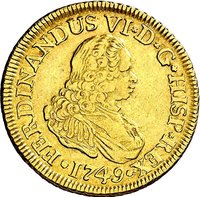
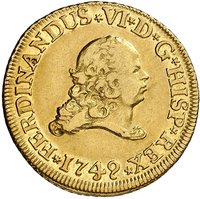
Armored bust of Ferdinand VI, right-facing.
Inscription:
FERDINANDUS * VI * D * G * HISP * REX
1749
1749
Script: Latin
Engraver: Tomás Francisco Prieto Martin
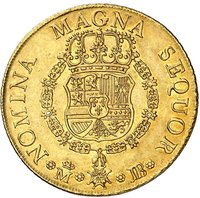
Reverse
Description:
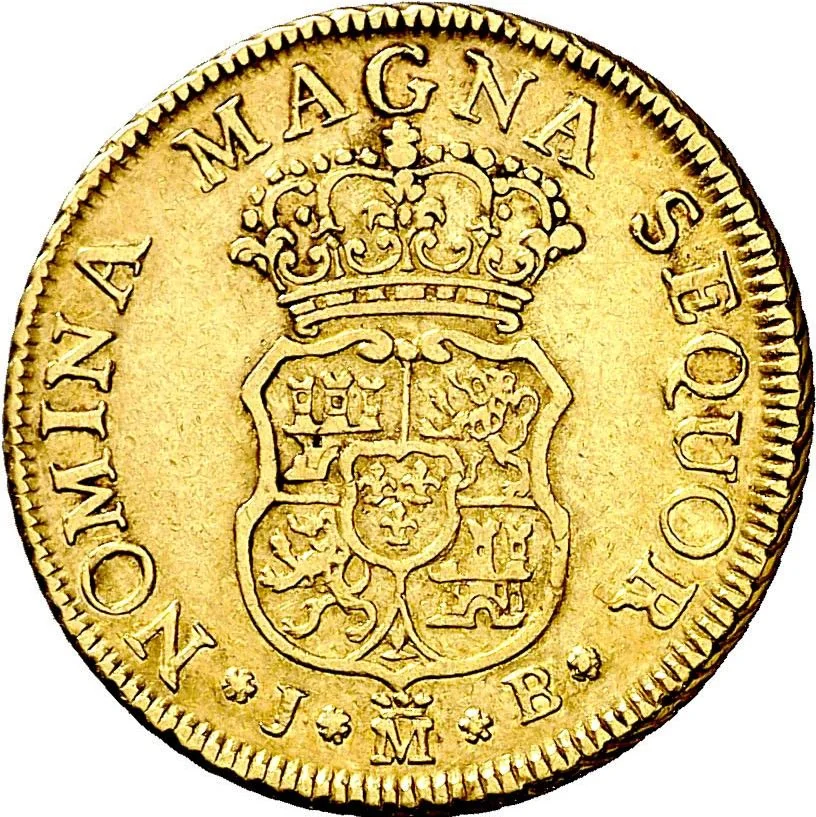
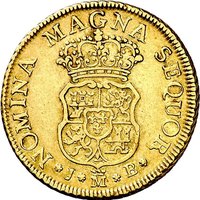
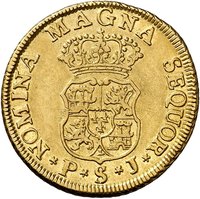
Royal arms of Spain.
Inscription:
NOMINA MAGNA SEQUOR
* J * M * B *
* J * M * B *
Script: Latin
Engraver: Tomás Francisco Prieto Martin
Edge
Categories
| Symbols> Coat of Arms |
Mints
| Name | Mark |
|---|---|
| Royal Mint of Madrid | (M) |
Mintings
| Year | Mint Mark | Mintage | Quality | Collection |
|---|---|---|---|---|
| 1749 | MJB | — |
Historical background
In 1749, Spain's currency situation was a complex and troubled legacy of the early Bourbon monarchy, particularly the reign of Philip V (1700-1746). The War of the Spanish Succession and subsequent conflicts had drained the treasury, leading to repeated debasements of the coinage. The most notorious was the 1680-1728 vellón (copper coinage) crisis, where the crown drastically increased the face value of copper coins to fund its wars, causing severe inflation, economic distortion, and a loss of confidence in the monetary system. By 1749, the state was grappling with the aftermath: a chaotic circulation of coins of varying intrinsic values and widespread counterfeiting, which stifled commerce and state finances.
The reigning monarch, Ferdinand VI (1746-1759), and his capable ministers, notably the Marquis of Ensenada, recognized that monetary stability was foundational for economic recovery and tax reform. The year 1749 fell within a period of deliberate investigation and planning aimed at comprehensive reform. Ensenada was actively compiling detailed economic data through the famous Catastro survey, which included assessing the monetary chaos. The goal was to move toward a unified, stable currency based on reliable silver and gold standards, akin to those of other European powers, to facilitate trade and strengthen the crown's fiscal authority.
Therefore, the currency situation in 1749 was one of transition from crisis to reform. It was a year not of a major new monetary decree, but of preparation. The government was laying the groundwork for the significant recoinage that would be enacted later in Ferdinand's reign, most notably the 1750 proclamation for Castile, which began the process of withdrawing debased coinage and establishing a new, stable system. Thus, 1749 represents a pivotal moment of assessment and planning, as the Spanish crown sought to untangle a century of monetary disorder and restore confidence in the royal currency.
The reigning monarch, Ferdinand VI (1746-1759), and his capable ministers, notably the Marquis of Ensenada, recognized that monetary stability was foundational for economic recovery and tax reform. The year 1749 fell within a period of deliberate investigation and planning aimed at comprehensive reform. Ensenada was actively compiling detailed economic data through the famous Catastro survey, which included assessing the monetary chaos. The goal was to move toward a unified, stable currency based on reliable silver and gold standards, akin to those of other European powers, to facilitate trade and strengthen the crown's fiscal authority.
Therefore, the currency situation in 1749 was one of transition from crisis to reform. It was a year not of a major new monetary decree, but of preparation. The government was laying the groundwork for the significant recoinage that would be enacted later in Ferdinand's reign, most notably the 1750 proclamation for Castile, which began the process of withdrawing debased coinage and establishing a new, stable system. Thus, 1749 represents a pivotal moment of assessment and planning, as the Spanish crown sought to untangle a century of monetary disorder and restore confidence in the royal currency.
Series: 1749 Spain circulation coins
✨ Legendary