

1 Thaler – Brunswick-Lüneburg-Calenberg-Hannover
Germany

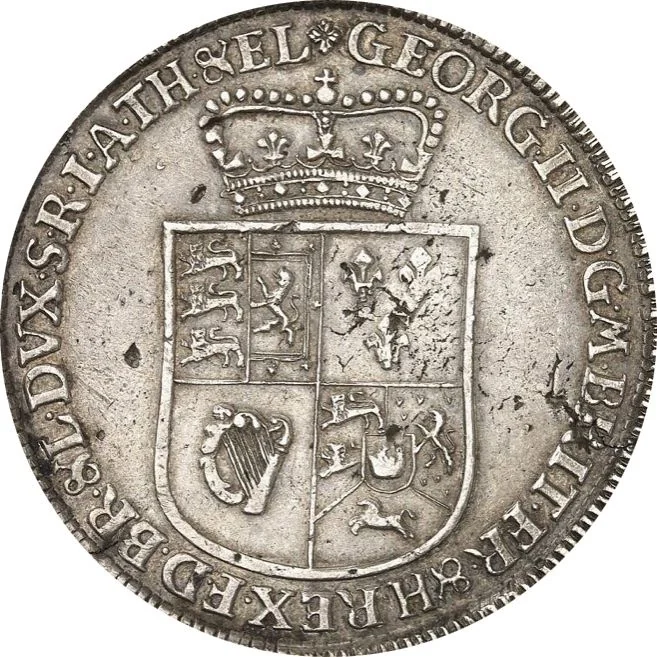
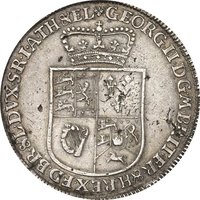
Obverse
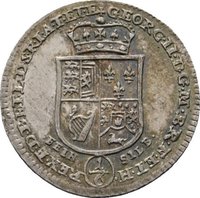
Description:
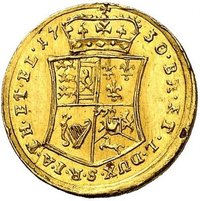
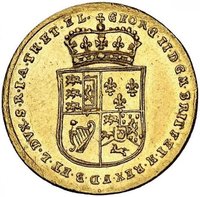
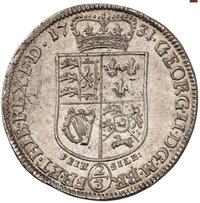
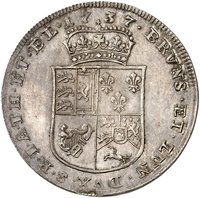
Quartered arms with crown, encircled by inscription.
Inscription:
GEORG•II•D•G•M•BRIT•FR•&H•REX •F•D•BR•&•L•DVX•S•R•I•A•TH•&EL✠
Script: Latin
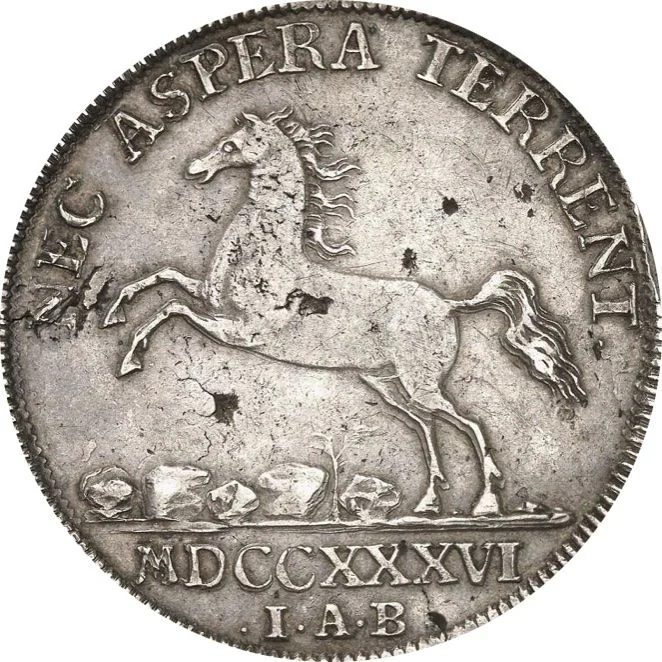
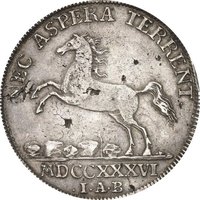
Reverse
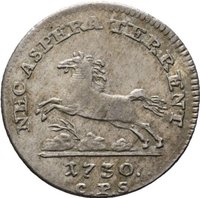
Description:
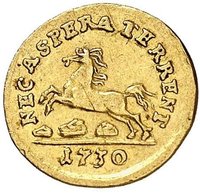
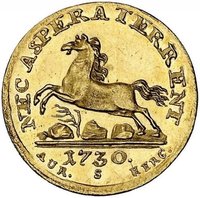
Horse leaping left over rocks and a stick. Roman numeral date and mint official's initials below, legend above.
Inscription:
NEC ASPERA TERRENT.
MDCCXXXVI
.I.A.B
MDCCXXXVI
.I.A.B
Script: Latin
Edge
Mints
| Name | Mark |
|---|---|
| Zellerfeld | — |
Mintings
| Year | Mint Mark | Mintage | Quality | Collection |
|---|---|---|---|---|
| 1730 | — | — | ||
| 1731 | — | — | ||
| 1731 | C | — | ||
| 1733 | — | — | ||
| 1734 | — | — | ||
| 1735 | — | — | ||
| 1736 | — | — | ||
| 1737 | — | — | ||
| 1738 | — | — | ||
| 1739 | — | — | ||
| 1740 | — | — | ||
| 1743 | — | — | ||
| 1745 | — | — | ||
| 1748 | — | — | ||
| 1753 | — | — |
Historical background
In 1730, the currency situation in the Duchy of Brunswick-Lüneburg, specifically the Principality of Calenberg (with its capital in Hanover), was characterized by significant complexity and instability. The region operated within the fragmented monetary system of the Holy Roman Empire, where numerous states issued their own coins. Hanover itself circulated a variety of coins, including its own Thalers, Gute Groschen, and Mariengroschen, but these competed with currencies from neighboring Brunswick-Wolfenbüttel, Brandenburg-Prussia, and various local bishoprics. This proliferation of coins of varying intrinsic metal content made trade cumbersome and fostered widespread counterfeiting.
The core problem was a chronic shortage of high-value, full-weight specie (silver Thalers), exacerbated by the outflow of silver to finance international trade deficits, particularly with the Orient. In practice, this led to a circulation dominated by debased, small-denomination coins, causing inflation and eroding public trust. The monetary chaos severely hampered economic activity, as merchants and officials constantly had to assess and negotiate exchange rates between dozens of coin types, creating a barrier to commerce and state revenue collection.
Recognizing the crisis, the Hanoverian government under the future King George II of Great Britain was actively seeking reform. The year 1730 fell within a period of preparation for a major monetary ordinance. This effort, which would culminate in the pivotal Hanoverian Coinage Standard of 1737, aimed to establish a stable, unified currency tied to the Reichsthaler standard. The goal was to retire debased coins, control minting, and align the principality's money with the broader Zinnaische and later Leipziger Fuß conventions, thereby integrating Hanover more securely into regional and international trade networks.
The core problem was a chronic shortage of high-value, full-weight specie (silver Thalers), exacerbated by the outflow of silver to finance international trade deficits, particularly with the Orient. In practice, this led to a circulation dominated by debased, small-denomination coins, causing inflation and eroding public trust. The monetary chaos severely hampered economic activity, as merchants and officials constantly had to assess and negotiate exchange rates between dozens of coin types, creating a barrier to commerce and state revenue collection.
Recognizing the crisis, the Hanoverian government under the future King George II of Great Britain was actively seeking reform. The year 1730 fell within a period of preparation for a major monetary ordinance. This effort, which would culminate in the pivotal Hanoverian Coinage Standard of 1737, aimed to establish a stable, unified currency tied to the Reichsthaler standard. The goal was to retire debased coins, control minting, and align the principality's money with the broader Zinnaische and later Leipziger Fuß conventions, thereby integrating Hanover more securely into regional and international trade networks.
✨ Legendary