

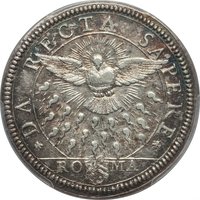
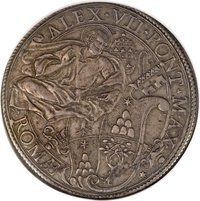
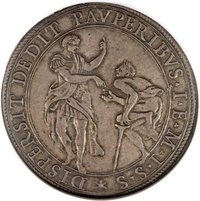
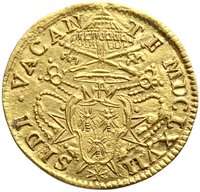
1 Teston – Papal States
Circulating commemorative coins
Commemoration: Vacant Seat 1667
Vatican City
Context
Material
References
KM: #Click to copy to clipboard308
Numista: #113840
Value
Bullion value: $25.55
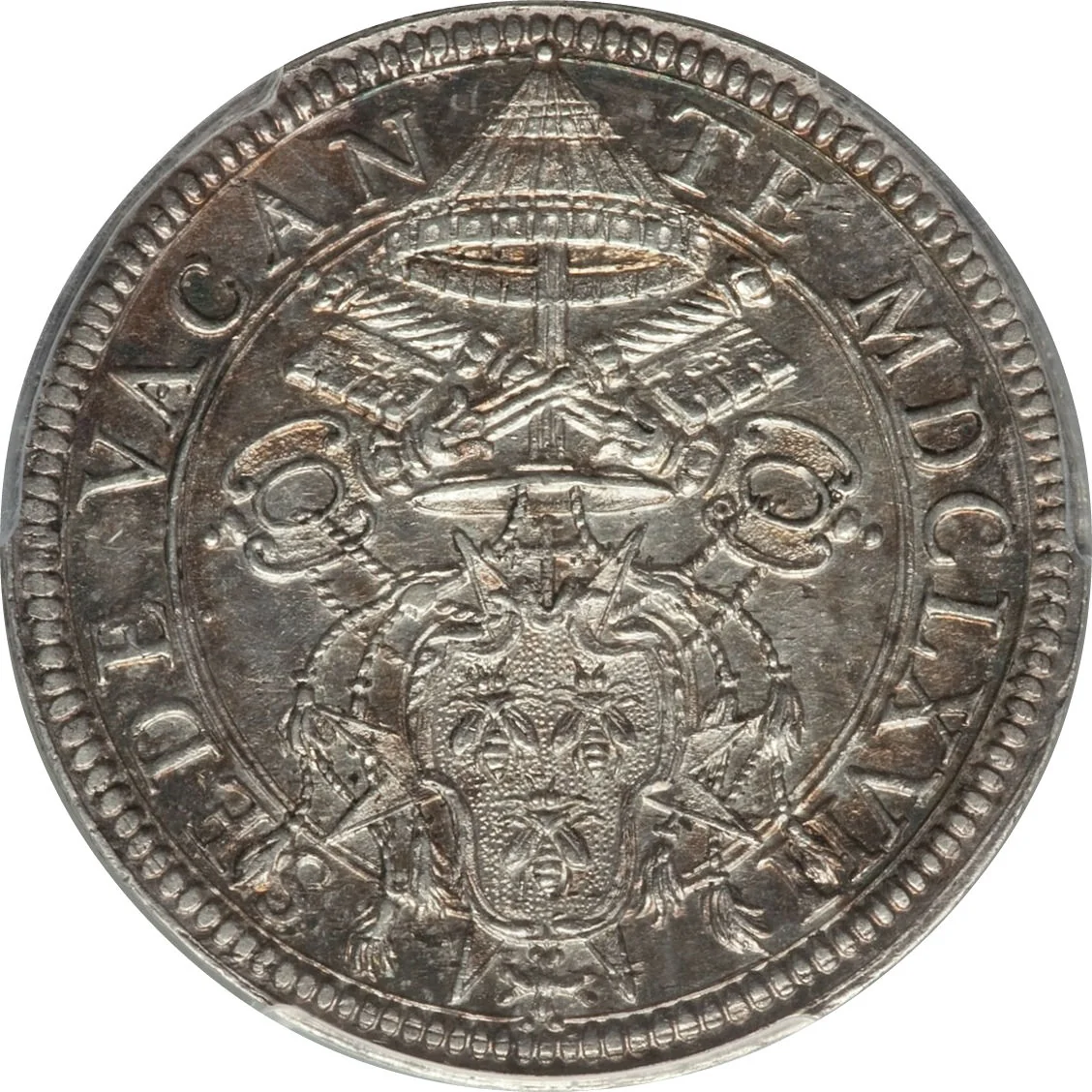
Obverse
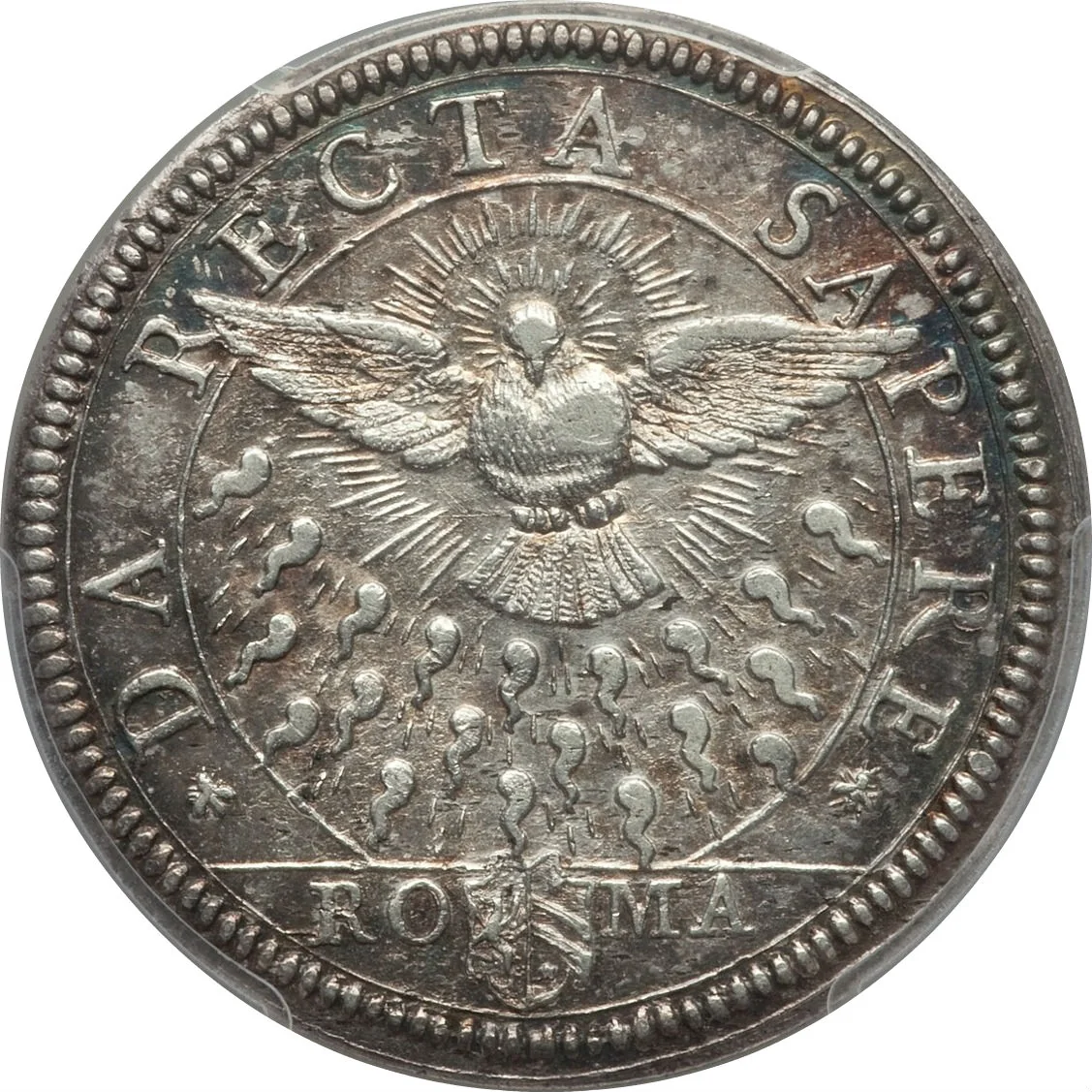
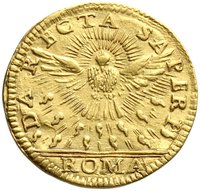
Reverse
Edge
Mints
| Name | Mark |
|---|---|
| Rome | — |
Mintings
| Year | Mint Mark | Mintage | Quality | Collection |
|---|---|---|---|---|
| 1667 | — | — |
Historical background
In 1667, the Papal States' monetary system was a complex and fragmented reflection of its political reality, operating under the authority of Pope Alexander VII. The state lacked a unified, modern currency; instead, its economy relied on a bewildering array of circulating coins. These included locally minted scudi (crowns), giuli, and baiocchi, but also a heavy influx of foreign coins from other Italian states, Spain, and the broader Mediterranean trade network. This proliferation created chronic problems of valuation and exchange, as the intrinsic metal value (specie) of a coin often differed from its official face value, leading to frequent confusion and manipulation.
The primary unit of account was the scudo, which was divided into 100 baiochi, each of which was further divided into 10 quattrini. However, the actual physical scudo coin was a large silver piece, while smaller transactions depended on a chaotic mix of copper and billon (debased silver) coins. A significant challenge was the widespread practice of "clipping" and counterfeiting, which degraded the coinage in circulation. Furthermore, the Papal Mint struggled with profitability and efficiency, often failing to produce enough small-denomination coinage for daily use, which exacerbated reliance on inferior foreign coins and led to periodic shortages that hurt the common populace.
Financially, the Papacy in this period was burdened by debt and the high costs of maintaining its capital, funding artistic projects, and administering its territories. While not in a state of acute crisis in 1667, the monetary disarray hindered commerce and state revenue collection. Efforts at reform were piecemeal and largely ineffective, as the decentralized nature of the state and the constant pressure of budgetary demands prevented a comprehensive recoinage or standardization. Thus, the currency situation remained a persistent weakness, undermining economic stability and revealing the administrative challenges facing the temporal power of the Papacy in the mid-17th century.
The primary unit of account was the scudo, which was divided into 100 baiochi, each of which was further divided into 10 quattrini. However, the actual physical scudo coin was a large silver piece, while smaller transactions depended on a chaotic mix of copper and billon (debased silver) coins. A significant challenge was the widespread practice of "clipping" and counterfeiting, which degraded the coinage in circulation. Furthermore, the Papal Mint struggled with profitability and efficiency, often failing to produce enough small-denomination coinage for daily use, which exacerbated reliance on inferior foreign coins and led to periodic shortages that hurt the common populace.
Financially, the Papacy in this period was burdened by debt and the high costs of maintaining its capital, funding artistic projects, and administering its territories. While not in a state of acute crisis in 1667, the monetary disarray hindered commerce and state revenue collection. Efforts at reform were piecemeal and largely ineffective, as the decentralized nature of the state and the constant pressure of budgetary demands prevented a comprehensive recoinage or standardization. Thus, the currency situation remained a persistent weakness, undermining economic stability and revealing the administrative challenges facing the temporal power of the Papacy in the mid-17th century.
✨ Legendary