

1 Cash – Dutch India
India

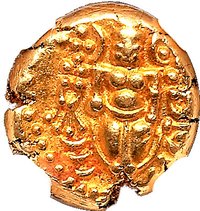
Obverse
Description:
P/VOC emblem.
Reverse
Description:
Legend, circa G (Elria).
Inscription:
PALCATE
Edge
Mintings
| Year | Mint Mark | Mintage | Quality | Collection |
|---|---|---|---|---|
| 1743 | — | — |
Historical background
In 1743, the currency situation in the Dutch East India Company (VOC) territories in India, primarily centered on the Coromandel Coast (with its capital at Nagapatnam) and Malabar (cochin), was complex and strained. The VOC operated within a multifaceted monetary ecosystem dominated by a plethora of Indian and foreign coins. The primary units of account were the Dutch rix-dollar (rijksdaalder) and the local pagoda (a gold coin), but daily transactions involved a flood of silver rupees (from Mughal and regional mints), copper cash coins (for small change), and other European currencies like Spanish Reales. This proliferation created constant challenges for valuation, exchange, and accounting, requiring published "wisselbrieven" (exchange rate bulletins) that were frequently updated.
The core of the VOC's monetary problem was a chronic shortage of specie (coined money). The Company was perpetually in a bullion deficit, as its trade in India required vast amounts of silver and gold to purchase textiles, spices, and other goods for the intra-Asian trade and export to Europe. While the VOC imported some silver from Japan and Europe, it was never sufficient. This led to a reliance on minting its own coins, such as the "Negapatnam fanams" and copper "duits," but these were often of inferior alloy and faced public distrust. Furthermore, the VOC struggled to prevent the outflow of good coinage, as merchants would hoard or export full-weight coins, leaving only debased currency in circulation—a classic example of Gresham's Law.
Consequently, the monetary landscape was one of fragmentation and debasement. The VOC's attempts to standardize currency and enforce its use were largely unsuccessful against the entrenched local and regional monetary systems. Counterfeiting was rampant, and the Company frequently had to adjust the official valuation of coins to reflect their declining metallic content, leading to price inflation and economic uncertainty. This chaotic currency environment mirrored the broader challenges of the VOC in the mid-18th century, as it faced increasing financial pressure and rising competition from other European powers, all while trying to maintain profitability in a complex Asian trading world.
The core of the VOC's monetary problem was a chronic shortage of specie (coined money). The Company was perpetually in a bullion deficit, as its trade in India required vast amounts of silver and gold to purchase textiles, spices, and other goods for the intra-Asian trade and export to Europe. While the VOC imported some silver from Japan and Europe, it was never sufficient. This led to a reliance on minting its own coins, such as the "Negapatnam fanams" and copper "duits," but these were often of inferior alloy and faced public distrust. Furthermore, the VOC struggled to prevent the outflow of good coinage, as merchants would hoard or export full-weight coins, leaving only debased currency in circulation—a classic example of Gresham's Law.
Consequently, the monetary landscape was one of fragmentation and debasement. The VOC's attempts to standardize currency and enforce its use were largely unsuccessful against the entrenched local and regional monetary systems. Counterfeiting was rampant, and the Company frequently had to adjust the official valuation of coins to reflect their declining metallic content, leading to price inflation and economic uncertainty. This chaotic currency environment mirrored the broader challenges of the VOC in the mid-18th century, as it faced increasing financial pressure and rising competition from other European powers, all while trying to maintain profitability in a complex Asian trading world.


✨ Legendary