

1 royalin – Danish India
Add to wishlist
India
Context
Years: 1767–1807
Country: India
Issuer: Danish India
Ruler: Christian VII
Currency:
(1730—1818)
Demonetized: Yes
Material
References
KM: #
Numista: #113802
Value
Bullion value: $3.70
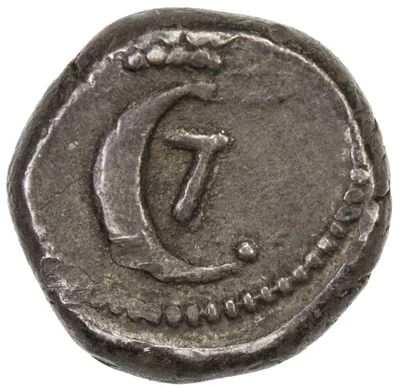
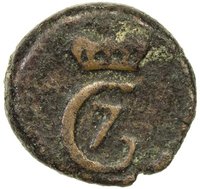
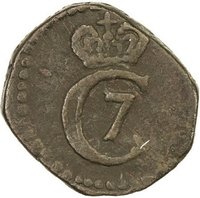
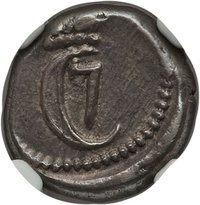
Obverse
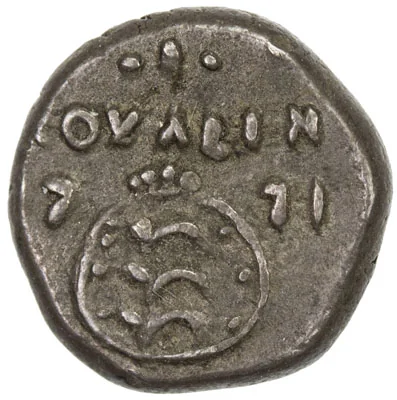
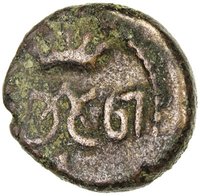
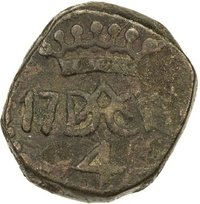
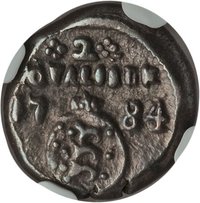
Reverse
Edge
Mintings
| Year | Mint Mark | Mintage | Quality | Collection |
|---|---|---|---|---|
| 1767 | — | — | ||
| 1768 | — | — | ||
| 1769 | — | — | ||
| 1770 | — | — | ||
| 1771 | — | — | ||
| 1772 | — | — | ||
| 1773 | — | — | ||
| 1774 | — | — | ||
| 1775 | — | — | ||
| 1776 | — | — | ||
| 1779 | — | — | ||
| 1780 | — | — | ||
| 1781 | — | — | ||
| 1783 | — | — | ||
| 1784 | — | — | ||
| 1786 | — | — | ||
| 1787 | — | — | ||
| 1788 | — | — | ||
| 1789 | — | — | ||
| 1791 | — | — | ||
| 1792 | — | — | ||
| 1793 | — | — | ||
| 1794 | — | — | ||
| 1795 | — | — | ||
| 1796 | — | — | ||
| 1797 | — | — | ||
| 1799 | — | — | ||
| 1807 | — | — |
Historical background
In 1767, the currency situation in Danish India, centered on the trading outposts of Tranquebar (Tharangambadi) and Serampore (Frederiksnagore), was characterized by profound complexity and instability. The Danish Asiatic Company, operating with limited capital and influence, did not issue a dominant local currency. Instead, the economy functioned on a multi-currency system dominated by foreign silver coins, particularly the Spanish silver dollar (piece of eight) and various Indian rupees from neighboring Mughal and regional powers. These coins circulated alongside a plethora of smaller local and regional copper coins, leading to constant difficulties in exchange rates and valuation.
This monetary chaos was exacerbated by the widespread practice of coin clipping and counterfeiting, which eroded trust in the already diverse coinage. Furthermore, the Danish settlements were minor players in a region economically dominated by the British East India Company, which was rapidly expanding its territorial and financial control. Consequently, transactions were often conducted using the most trusted and widely accepted mediums, regardless of their origin, making the Danish colonies a passive arena for the circulation of other nations' currencies.
The Danish administration attempted to bring order by periodically issuing tariff lists that fixed exchange rates between the various circulating coins, but these official rates often conflicted with fluctuating market values. The fundamental problem was a chronic shortage of reliable, high-value specie and the lack of a sovereign Danish-issued silver currency that could act as a standard. Therefore, in 1767, the monetary landscape was one of ad-hoc adaptation, where commerce proceeded despite the inefficiencies, relying on a fragile consensus among merchants on the value of heterogeneous coins in a market beyond Danish control.
This monetary chaos was exacerbated by the widespread practice of coin clipping and counterfeiting, which eroded trust in the already diverse coinage. Furthermore, the Danish settlements were minor players in a region economically dominated by the British East India Company, which was rapidly expanding its territorial and financial control. Consequently, transactions were often conducted using the most trusted and widely accepted mediums, regardless of their origin, making the Danish colonies a passive arena for the circulation of other nations' currencies.
The Danish administration attempted to bring order by periodically issuing tariff lists that fixed exchange rates between the various circulating coins, but these official rates often conflicted with fluctuating market values. The fundamental problem was a chronic shortage of reliable, high-value specie and the lack of a sovereign Danish-issued silver currency that could act as a standard. Therefore, in 1767, the monetary landscape was one of ad-hoc adaptation, where commerce proceeded despite the inefficiencies, relying on a fragile consensus among merchants on the value of heterogeneous coins in a market beyond Danish control.
✨ Legendary