

½ rupee – Arcot
Add to wishlist
India
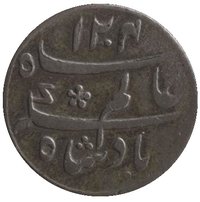
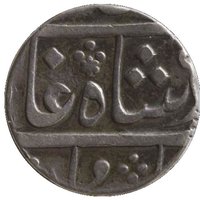
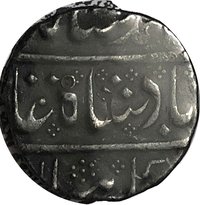
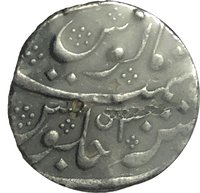
Obverse
Description:
Muhammad Shah, Qajar ruler of Persia.
Reverse
Description:
Persian - Julus mint.
Edge
Mints
| Name | Mark |
|---|---|
| Arcot | — |
Mintings
| Year | Mint Mark | Mintage | Quality | Collection |
|---|---|---|---|---|
| 1737 | — | — |
Historical background
In 1737, the Carnatic region of South India, with its capital at Arcot, was nominally a subah (province) of the declining Mughal Empire, but in practice was under the autonomous rule of its Nawab, Dost Ali Khan. The currency situation reflected this complex political reality, operating within a sophisticated and ancient Indian monetary system. The primary circulating coins were the gold pagoda, the silver rupee, and smaller copper cash coins. The Arcot rupee, a specific silver coin minted in the Nawab's territory, was gaining prominence as a standard unit of account for revenue collection and trade, competing with other regional rupees like those from Surat and Madras.
This period was one of significant economic strain and transition. The Nawab's treasury was under constant pressure from massive tribute payments demanded by the Maratha Confederacy following their raids into the Carnatic, which drained silver reserves. Furthermore, European East India Companies—primarily the British and French—were increasingly embedding themselves in local commerce and politics. They operated their own mints in coastal settlements like Madras and Pondicherry, issuing replica Arcot rupees and other coins to facilitate their trade in textiles and spices, thereby introducing another layer of monetary influence and potential debasement.
Consequently, the currency landscape in 1737 Arcot was characterized by a fragile coexistence. The traditional Mughal-derived system, managed by the Nawab's administration, was being destabilized by external military extortion and internal fiscal demands. Simultaneously, the influx of European-minted coins began to challenge local monetary sovereignty, setting the stage for the coming decades when control over currency would become a direct tool of colonial power. The coins in one's purse thus told a story of overlapping authorities, economic pressure, and a regional economy on the brink of profound transformation.
This period was one of significant economic strain and transition. The Nawab's treasury was under constant pressure from massive tribute payments demanded by the Maratha Confederacy following their raids into the Carnatic, which drained silver reserves. Furthermore, European East India Companies—primarily the British and French—were increasingly embedding themselves in local commerce and politics. They operated their own mints in coastal settlements like Madras and Pondicherry, issuing replica Arcot rupees and other coins to facilitate their trade in textiles and spices, thereby introducing another layer of monetary influence and potential debasement.
Consequently, the currency landscape in 1737 Arcot was characterized by a fragile coexistence. The traditional Mughal-derived system, managed by the Nawab's administration, was being destabilized by external military extortion and internal fiscal demands. Simultaneously, the influx of European-minted coins began to challenge local monetary sovereignty, setting the stage for the coming decades when control over currency would become a direct tool of colonial power. The coins in one's purse thus told a story of overlapping authorities, economic pressure, and a regional economy on the brink of profound transformation.

✨ Legendary