

¼ rupee – Chandannagar
Add to wishlist
India
Context
Year: 1739
Islamic (Hijri) Year:: 1151
Country: India
Issuer: Chandannagar
Currency:
Demonetized: Yes
References
KM: #
Numista: #113470
Value
Bullion value: $7.13
Obverse
Description:
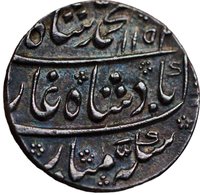
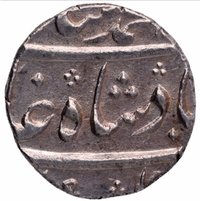
Muhammad Shah, Qajar ruler of Persia.
Reverse
Description:
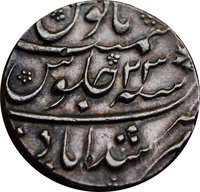
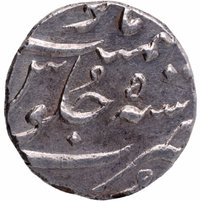
Persian - Julus mint.
Edge
Mints
| Name | Mark |
|---|---|
| Arcot | — |
Mintings
| Year | Mint Mark | Mintage | Quality | Collection |
|---|---|---|---|---|
| 1739 | — | — |
Historical background
In 1739, Chandannagar was a prosperous French colonial trading enclave on the Hooghly River in Bengal. Its currency situation was complex and pluralistic, reflecting its position at the crossroads of European commerce and the powerful Mughal economy. The primary engine of trade was the silver rupee, with the dominant coin being the Arcot rupee minted by the Nawab of Bengal, alongside other regional variants. These coins were essential for purchasing the fine textiles, silk, and sugar that were the lifeblood of Chandannagar's exports. Simultaneously, smaller transactions used cowrie shells and dam (copper coins), which formed the petty currency of the local bazaars and daily wages.
Alongside this Mughal-Indian system, European currencies circulated within the merchant and administrative circles. The French livre and écu had official standing for accounting, paying salaries to French employees, and settling contracts with the Compagnie des Indes Orientales. Furthermore, other European silver coins, particularly the Spanish Piece of Eight (or Spanish dollar), were highly valued as a reliable, widely accepted trade currency in global maritime exchange. This created a multi-layered monetary environment where merchants and officials had to be adept at calculating exchange rates between silver rupees, French livres, and Spanish dollars.
This monetary pluralism was underpinned by a critical vulnerability: Chandannagar, like other European settlements, suffered from a chronic drain of silver bullion to pay for Bengal's goods. The French settlement did not have the authority to mint its own rupees, making it dependent on the inflow of silver from Europe or acquired through regional trade. Any disruption to this flow—due to European wars, shipping losses, or political tensions with the Nawab's administration—could cause severe liquidity crises, inflate exchange rates, and hamper trade, highlighting the enclave's economic dependence within the wider Bengal system.
Alongside this Mughal-Indian system, European currencies circulated within the merchant and administrative circles. The French livre and écu had official standing for accounting, paying salaries to French employees, and settling contracts with the Compagnie des Indes Orientales. Furthermore, other European silver coins, particularly the Spanish Piece of Eight (or Spanish dollar), were highly valued as a reliable, widely accepted trade currency in global maritime exchange. This created a multi-layered monetary environment where merchants and officials had to be adept at calculating exchange rates between silver rupees, French livres, and Spanish dollars.
This monetary pluralism was underpinned by a critical vulnerability: Chandannagar, like other European settlements, suffered from a chronic drain of silver bullion to pay for Bengal's goods. The French settlement did not have the authority to mint its own rupees, making it dependent on the inflow of silver from Europe or acquired through regional trade. Any disruption to this flow—due to European wars, shipping losses, or political tensions with the Nawab's administration—could cause severe liquidity crises, inflate exchange rates, and hamper trade, highlighting the enclave's economic dependence within the wider Bengal system.
✨ Legendary