

1 Thaler – Austrian Empire
Austria

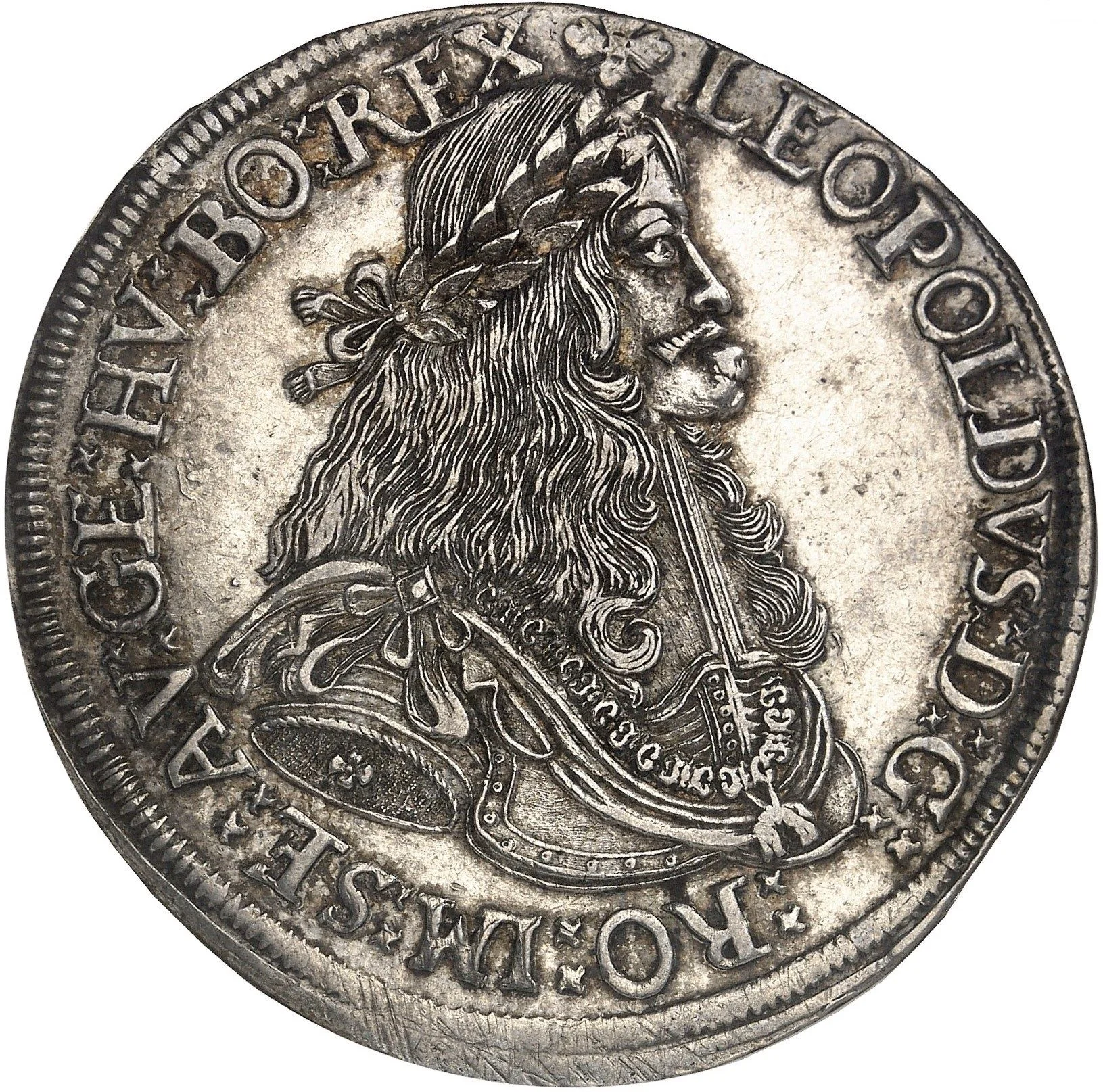
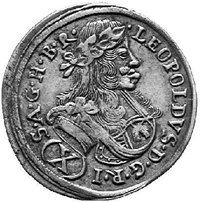
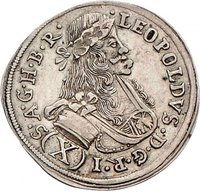
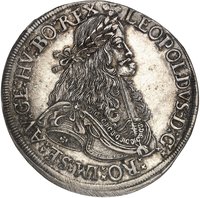
Obverse
Description:
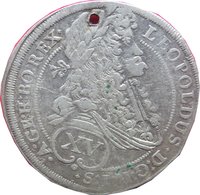
Armored laureate bust right.
Inscription:
LEOPOLDVS : D : G : RO : IM : SE : AV : GE : HV : BO : REX
Script: Latin
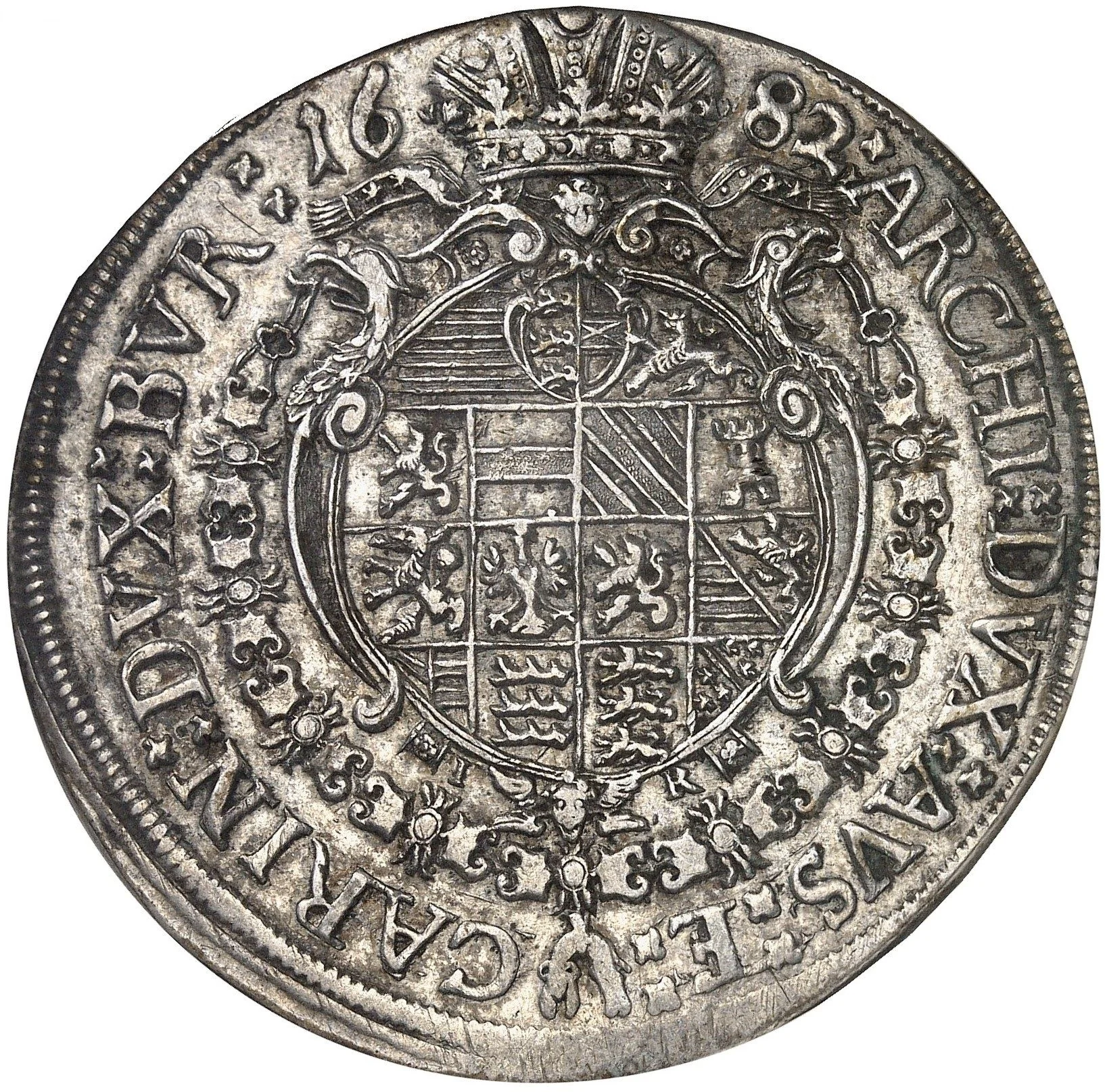
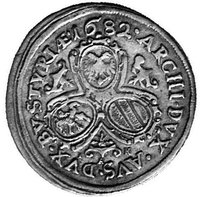
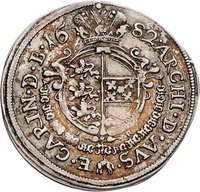
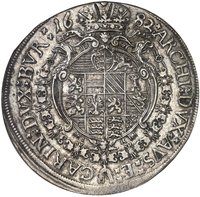
Reverse
Description:
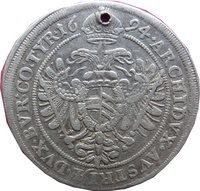
Crowned arms with collar, crown splits date.
Inscription:
ARCHI : DVX : AVS : E : CARIN : DVX : BVR : 16 82
Script: Latin
Edge
Mints
| Name | Mark |
|---|---|
| Sankt Veit | — |
Mintings
| Year | Mint Mark | Mintage | Quality | Collection |
|---|---|---|---|---|
| 1682 | IR | — | ||
| 1693 | HL | — |
Historical background
In 1682, the currency system of the Habsburg Monarchy, often referred to as the Austrian Empire, was a complex and fragmented patchwork of coins, reflecting its diverse and non-integrated territories. The primary unit was the silver Reichsthaler (Imperial Thaler), but its value and physical content were not uniformly standardized across the realm. Alongside it circulated a multitude of regional and local coins, such as Kreuzers, Guldens, and Groschen, minted by various provincial estates and cities, each with varying metallic content and exchange rates. This lack of uniformity created chronic confusion for trade and state finance, as the nominal value of coins often diverged significantly from their intrinsic silver value.
The situation was further strained by the immense financial pressures of the ongoing Great Turkish War (1683-1699). In preparation for the pivotal conflict, the Habsburg state, under Emperor Leopold I, was engaged in massive military mobilization, which drained the treasury. To raise funds, the government frequently resorted to debasement—reducing the silver content in newly minted coins while ordering them to be accepted at their old, higher face value. This practice, while providing short-term liquidity, fueled inflation, eroded public trust in the currency, and disrupted economic activity, as people hoarded older, purer coins.
Consequently, the year 1682 represents a moment of precarious financial tension on the eve of a major war. The state's fiscal apparatus was struggling to manage a dysfunctional monetary system while extracting the maximum resources for its survival. The need for reform was evident, but the immediate demands of the looming Ottoman threat, which would culminate in the Siege of Vienna in 1683, took absolute precedence, postponing any serious attempt at monetary unification for decades to come.
The situation was further strained by the immense financial pressures of the ongoing Great Turkish War (1683-1699). In preparation for the pivotal conflict, the Habsburg state, under Emperor Leopold I, was engaged in massive military mobilization, which drained the treasury. To raise funds, the government frequently resorted to debasement—reducing the silver content in newly minted coins while ordering them to be accepted at their old, higher face value. This practice, while providing short-term liquidity, fueled inflation, eroded public trust in the currency, and disrupted economic activity, as people hoarded older, purer coins.
Consequently, the year 1682 represents a moment of precarious financial tension on the eve of a major war. The state's fiscal apparatus was struggling to manage a dysfunctional monetary system while extracting the maximum resources for its survival. The need for reform was evident, but the immediate demands of the looming Ottoman threat, which would culminate in the Siege of Vienna in 1683, took absolute precedence, postponing any serious attempt at monetary unification for decades to come.
✨ Legendary