

2 skilling – Denmark
Add to wishlist
Denmark
Context
Material
References
KM: #
Numista: #42091
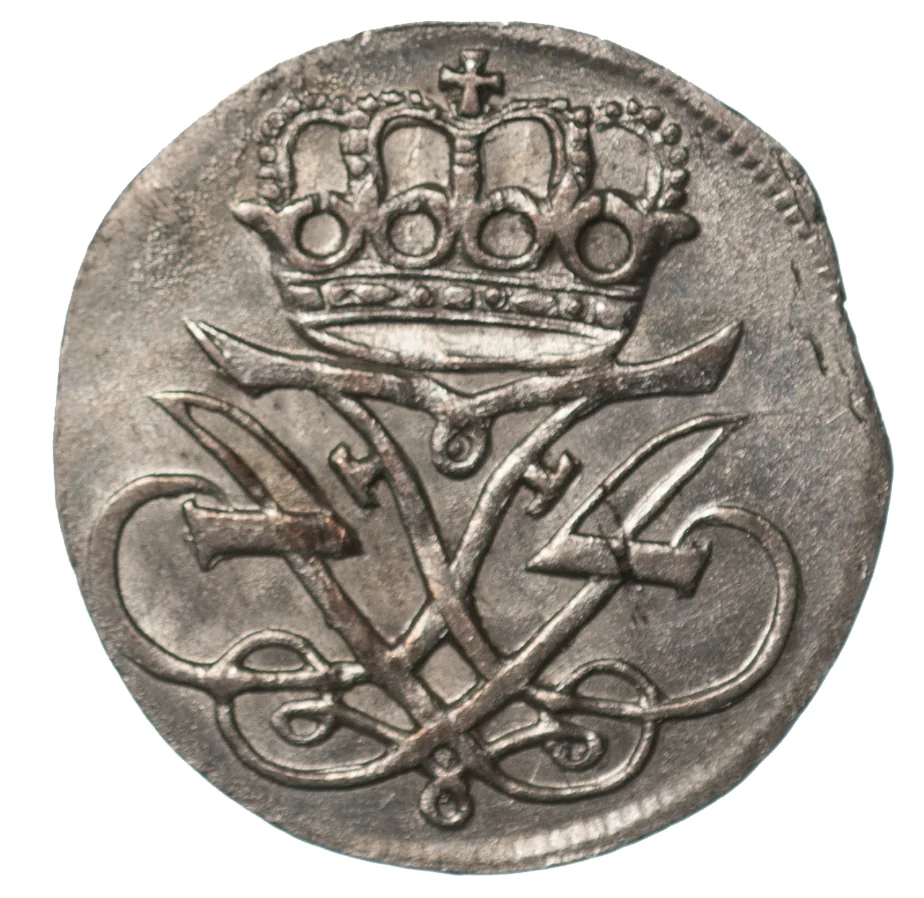
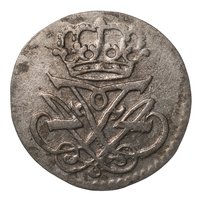
Obverse
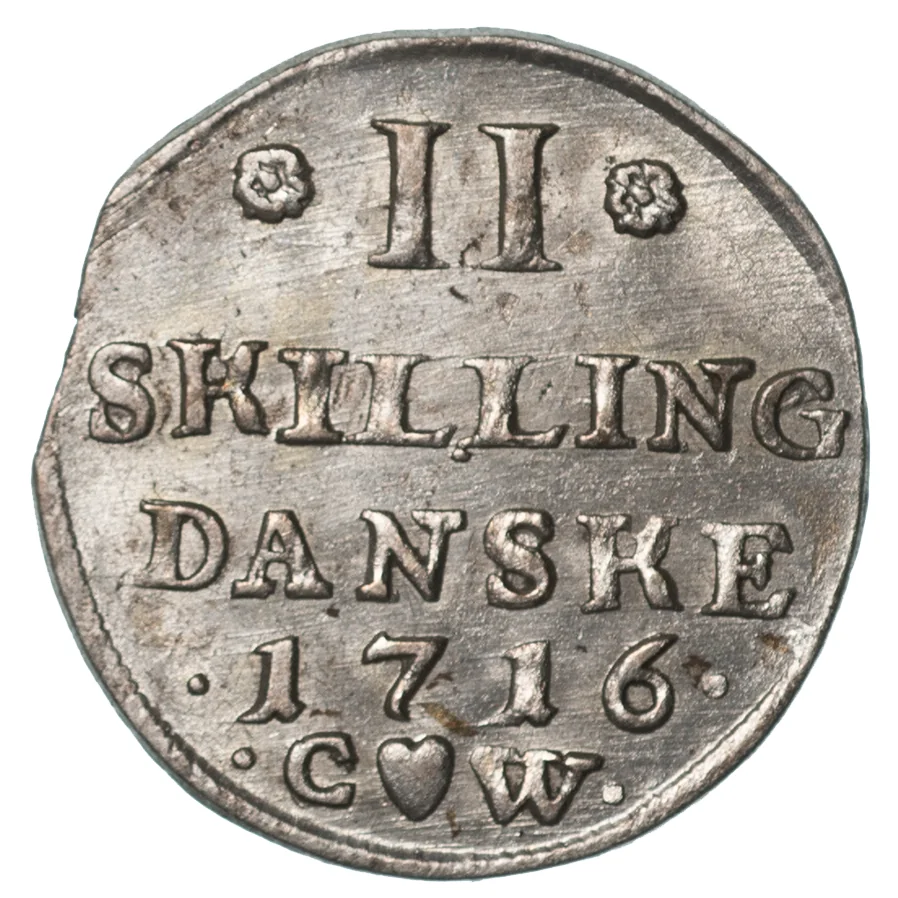
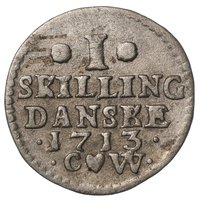
Reverse
Description:
Value and date above.
Mintmark below, centered heart.
Mintmark below, centered heart.
Inscription:
* II *
SKILLING
DANSKE
• 1712 •
• C ♥ W •
SKILLING
DANSKE
• 1712 •
• C ♥ W •
Script: Latin
Edge
Plain
Mints
| Name | Mark |
|---|---|
| Copenhagen | ♥ |
Mintings
| Year | Mint Mark | Mintage | Quality | Collection |
|---|---|---|---|---|
| 1711 | CW; | — | ||
| 1712 | CW; | — | ||
| 1713 | CW; | — | ||
| 1714 | CW; | — | ||
| 1715 | CW; | — | ||
| 1716 | CW; | — | ||
| 1718 | CW; | — | ||
| 1719 | CW; | — | ||
| 1726 | CW; | — |
Historical background
In 1711, Denmark was embroiled in the Great Northern War (1700-1721), a conflict that placed immense strain on the state's finances. King Frederick IV's government was funding a costly war on multiple fronts against Sweden, requiring vast sums for armies, navies, and subsidies to allies. This fiscal pressure led to a severe and deliberate debasement of the currency. The state mints, particularly in Copenhagen and Altona, began producing coins with a significantly reduced silver content, while maintaining their face value. This practice, essentially a form of inflation, allowed the crown to create more money from the same amount of precious metal to pay its bills, but it eroded public trust in the coinage.
The consequences were economically disruptive. As the new, inferior coins entered circulation, Gresham's Law took hold: "bad money drives out good." People hoarded the older, high-silver coins or used them for foreign trade, while the debased currency became the medium for domestic transactions. This led to a two-tiered system, price confusion, and a effective devaluation. Merchants and the public suffered as prices rose unevenly and the real value of payments fluctuated, creating uncertainty in both local markets and international commerce centered in Copenhagen.
The situation was part of a longer monetary crisis that would culminate in the major financial reforms of 1713. By 1711, the debasement was accelerating, setting the stage for the state's eventual acknowledgment that the coinage was fundamentally broken. The following years would see the introduction of a new currency system based on the kurant rigsdaler, which was a credit-based "current money" divorced from a fixed silver content. Thus, 1711 represents a peak of wartime monetary desperation, directly leading to the radical restructuring of Denmark's monetary system in the war's final decade.
The consequences were economically disruptive. As the new, inferior coins entered circulation, Gresham's Law took hold: "bad money drives out good." People hoarded the older, high-silver coins or used them for foreign trade, while the debased currency became the medium for domestic transactions. This led to a two-tiered system, price confusion, and a effective devaluation. Merchants and the public suffered as prices rose unevenly and the real value of payments fluctuated, creating uncertainty in both local markets and international commerce centered in Copenhagen.
The situation was part of a longer monetary crisis that would culminate in the major financial reforms of 1713. By 1711, the debasement was accelerating, setting the stage for the state's eventual acknowledgment that the coinage was fundamentally broken. The following years would see the introduction of a new currency system based on the kurant rigsdaler, which was a credit-based "current money" divorced from a fixed silver content. Thus, 1711 represents a peak of wartime monetary desperation, directly leading to the radical restructuring of Denmark's monetary system in the war's final decade.
💎 Very Rare